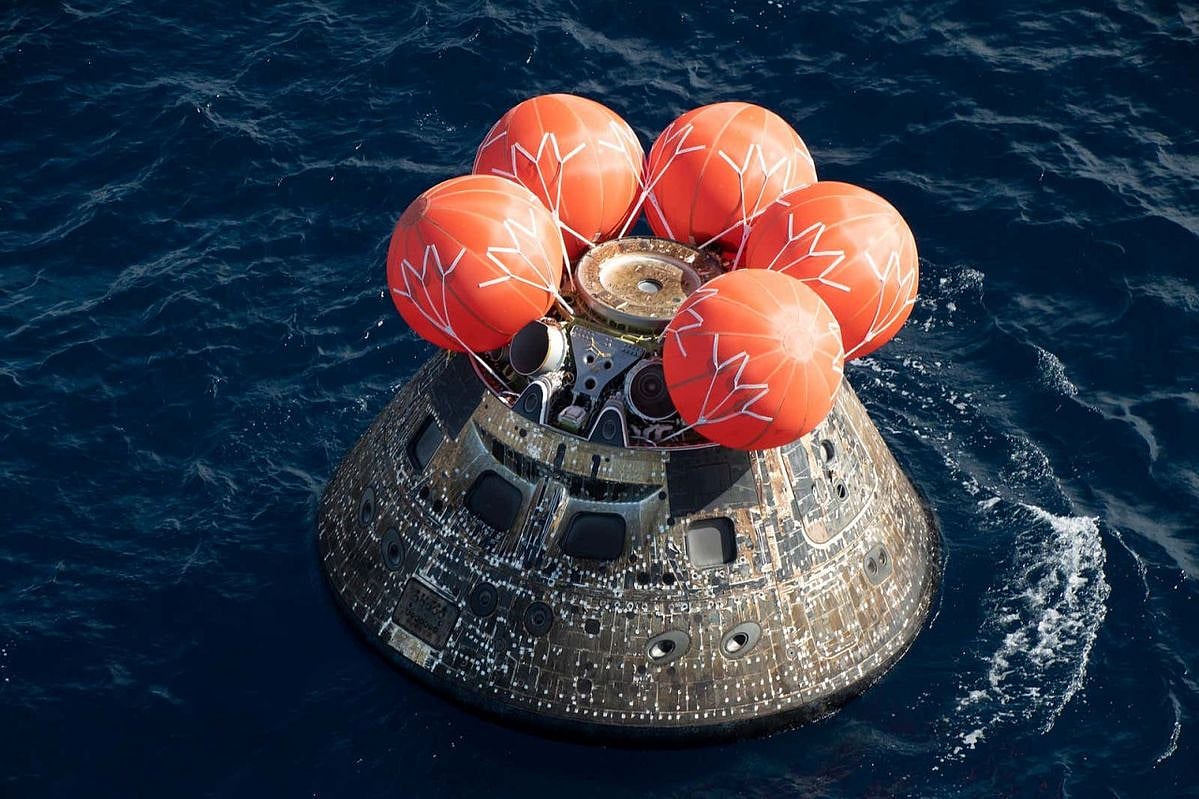
The historic return of NASA's Artemis II mission is just hours away. After successfully completing humanity's first lunar flyby in over 50 years, the four-member crew aboard the Orion spacecraft is racing back to Earth for a splashdown in the Pacific Ocean.
Artemis II marks the first crewed mission beyond low Earth orbit since Apollo 17 in 1972. The crew set a new human spaceflight distance record, reaching 252,756 miles from Earth. Splashdown is scheduled for April 10 at 8:07pm EDT in Pacific Ocean off San Diego coast. Indian viewers can watch live coverage starting at 5:37am IST on April 11.
Artemis II mission: When and where to watch in India
NASA is targeting splashdown for tonight (tomorrow morning in India). Live return coverage will be available on NASA+ and Netflix starting at 6:30pm EDT (4:00am IST). You can also watch through NASA's official YouTube channel, which offers 24/7 coverage, and follow updates on NASA's social media platforms.
Artemis II mission landing: What to expect
As Orion descends through approximately 400,000 feet, the spacecraft will enter a planned six-minute communications blackout at 7:53pm EDT as plasma forms around the capsule during peak heating.
The crew is expected to experience up to 3.9 Gs during landing. After emerging from blackout, Orion will jettison its forward bay cover, deploy its drogue parachutes near 22,000 feet, and then unfurl its three main parachutes around 6,000 feet to slow the capsule for splashdown.
This is the mission's most critical phase, as the spacecraft must withstand extreme temperatures and pressures during atmospheric re-entry.
Artemis II mission landing: Recovery operations
Within two hours after splashdown, the crew will be extracted from Orion and flown to the USS John P. Murtha. The US Navy vessel has already left San Diego port and is positioned at the recovery site.
Recovery teams will retrieve the crew using helicopters, and once aboard the ship, the astronauts will undergo post-mission medical evaluations before returning to shore to board an aircraft bound for NASA's Johnson Space Center in Houston.
Unlike typical space missions, the astronauts are scheduled to complete post-landing functional tests, including an obstacle course and a simulated spacewalk, to assess how quickly they can adapt to gravity following the mission, crucial data for future lunar and Mars operations.
The Artemis II crew- NASA astronauts Reid Wiseman, Victor Glover, Christina Koch, and Canadian Space Agency astronaut Jeremy Hansen- has already made history. On Monday, they reached 248,655 miles from Earth, surpassing the farthest distance ever traveled by humans, a record previously set by Apollo 13 in 1970.
The 10-day mission successfully tested the Orion spacecraft's systems in deep space and marked the first time humans have ventured beyond low Earth orbit since 1972, paving the way for future Artemis missions that aim to establish a sustained presence on the Moon.
