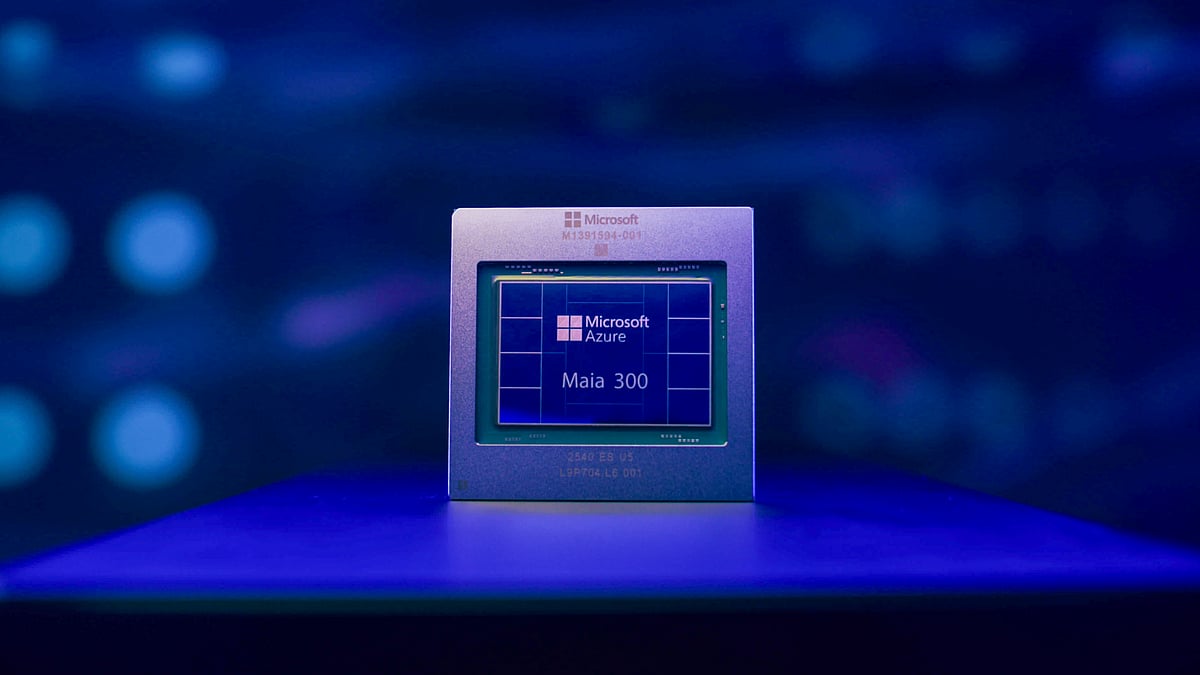
Microsoft unveiled Maia 300, the next generation of its custom AI chip, and said it will expand its Azure Maia systems to multi-gigawatt deployments beginning in 2027. The company said Maia 300 will become the primary AI inference system for Microsoft products and services. The chip was shown at the OCP Global Summit 2026 in San Jose.
What are Maia 300 AI chip's key features?
Microsoft says Maia 300 is designed for long-context reasoning, latency-sensitive conversational experiences and multi-step agentic tasks. It expects the chip to deliver 40 percent more tokens per megawatt, which would allow more AI output from the same power supply. Yahoo Finance reported Microsoft's comparison as being against 'leading GPU-based systems,' a clear reference to Nvidia. At rack scale, Microsoft expects up to seven times the token throughput of Maia 200, based on a 96-chip rack. These are expected figures from Microsoft and have not been independently tested.

Building on Maia 200
Maia 200 already runs production workloads, including Microsoft 365 Copilot, OpenAI models and Microsoft's own MAI models. Microsoft says it delivers up to 1.7 times more tokens per watt than other GPU-based systems for AI features in Teams, Copilot and other software. It says Maia 300 will speed up GitHub coding tools, model deployment through Microsoft Foundry, and interactions with Copilot, Teams and Dragon Copilot.
Why it matters
The aim is control over cost and supply. Microsoft's hyperscale peers Amazon, Google and Meta, along with AI labs OpenAI and Anthropic, either already offer or are working on custom chips. That hedges against reliance on Nvidia and AMD, and lets companies tailor silicon to their workloads. It is a potential problem for Nvidia, which regularly draws more than half of its quarterly revenue from hyperscalers. Amazon and Google now rent out their custom chips to outside customers, and Amazon is exploring selling chips for customers' own data centres, as per Bloomberg.
Reuters reports that Microsoft has been in talks with TSMC to secure capacity for more than 300,000 Maia 300 chips for delivery in 2027, with an eventual target above 1 million. Microsoft's Azure Maia general manager Andrew Wall said the reported figures "don't reflect the scale of our program." Microsoft reportedly lags Google and Amazon, and that it has discussed supplying Maia chips to Anthropic, with no deal finalised. Currently, the Nvidia hardware still handles most of Microsoft's Copilot-related workloads.

