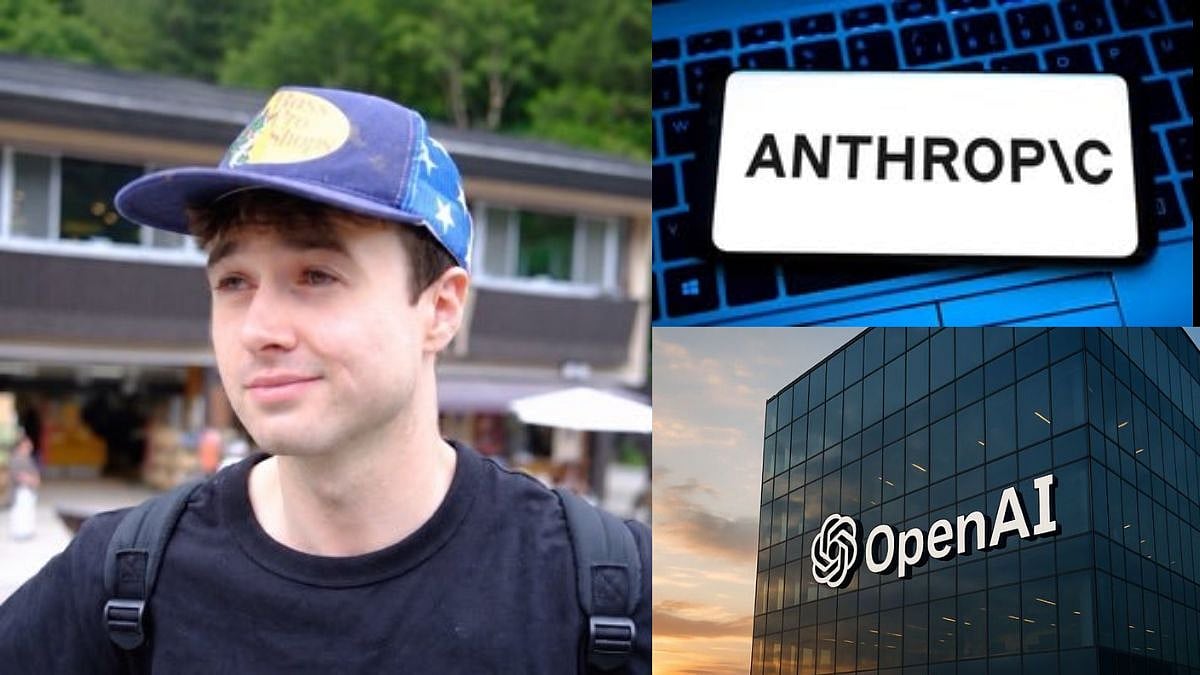
Jacob Coxon, who reportedly spent three years working on pretraining research at both OpenAI and Anthropic, announced his resignation from Anthropic on X, accusing both companies of recklessly racing toward self-improving superintelligence. He said both the companies are acting irresponsibly and are gambling with 'our lives'.
'Gambling with our lives', says this alleged AI researcher
Coxon opened his thread by stating that he resigned from Anthropic today over AI fears. He said neither company is behaving responsibly, arguing that both are charging toward self-improving systems while 'gambling with our lives'. He said the technology now approaching is not incremental -describing coming systems as capable of breaching virtually any security system and transforming entire industries overnight, with progress showing no sign of slowing.
Insiders privately fear catastrophe, he says
Coxon's central claim is that many people building frontier AI genuinely believe it could prove fatal to humanity within the decade. "The people building AI earnestly believe that it could kill us all by the end of the decade. This is not a marketing stunt. If anything, many executives and senior researchers will couch their phrasing in the press to sound sensible - but I hear the same people express fear privately. No other human activity poses this level of danger," he said.
Why do the labs keep building anyway?
Addressing the obvious question of why continue if the risk is believed to be real, Coxon drew a distinction between the two companies. At OpenAI, he said, many staff haven't fully grasped the civilisational stakes. At Anthropic, he said the risks are well understood internally, but the company is locked into a race it feels compelled to run, on the belief that if it doesn't get there first, someone less careful will.
He called this approach a 'hubristic gamble' that shouldn't be decided from inside a company's internal chat systems, adding that any attempt to compress the timeline for AI alignment should demand far greater certainty that no safer path exists.
A call for industry coordination, and a warning to researchers
" I am optimistic about the potential for coordination. Warning shots like the Hugging Face attack have made pacing agreements between US labs more viable. I don’t feel like we’re on track to prevent a global race, which may require costly actions such as a temporary ban on improving model capabilities," he said.
He closed by addressing lab researchers directly, urging them to weigh what the coming years will demand of them, including whether they're prepared to launch advanced reinforcement-learning training runs without fully understanding the systems that result, and whether to stay quiet because progress feels inevitable, or use the moment to push for different conditions.

