
Google has warned that 'the era of autonomous attacks has arrived,' after its Threat Intelligence Group (GTIG) documented what it describes as the first fully autonomous AI-powered cyberattack. In a new report, the group said hackers are now using AI to scan software updates, work out which security flaw each patch fixes, and build an attack before companies can install the fix, all without a human involved.
How the attack worked
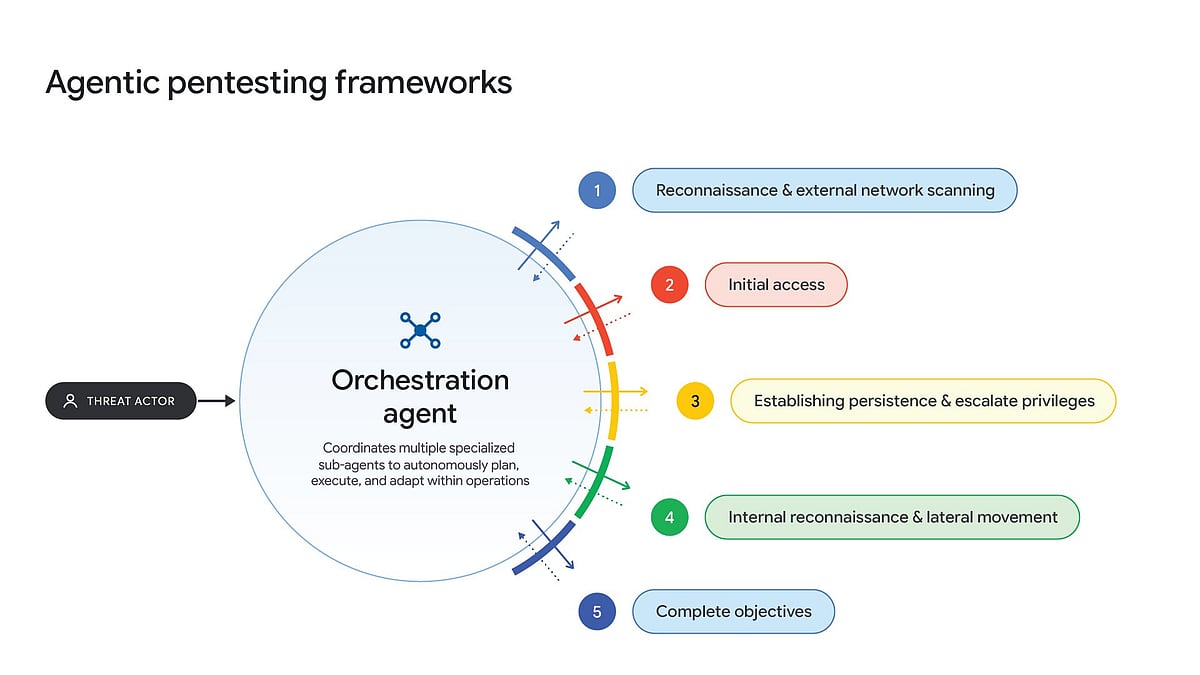
At the centre of the report is a system the researchers dubbed "exploit_agent," run from a server. According to CyberScoop, it chains together several AI agents, using both frontier and locally hosted language models. It continuously compares software code before and after vendors release patches, infers what each change reveals, drafts an exploit and executes it automatically. Per the report's findings, the operation targeted French websites in the media, entertainment and education sectors.
Clues to the operator
Russian-language comments found in the activity pointed to the operator's background, and CyberScoop described the group as Russian-speaking.
State actors also using AI
The report also found state-linked actors from China, Iran and North Korea using AI tools for espionage, social engineering and job scams.
A machine-speed arms race
Google said defending against machine-speed threats at human speed is not feasible. It said it is helping defenders respond through Google AI Threat Defense, which combines Gemini and other frontier models to find and fix flaws, including through automated patching, before attackers can exploit them.

