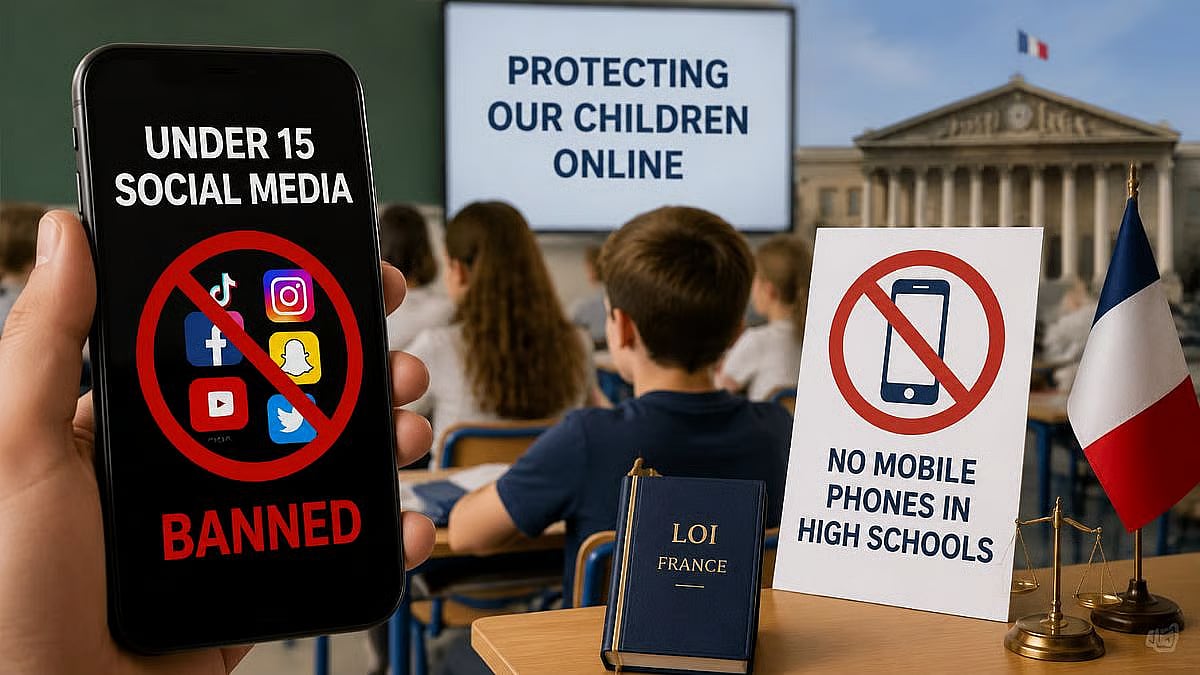
France's parliament approved a sweeping ban on social media access for children under 15, making the country the first in the European Union to pass a blanket ban on the platforms as concerns grow worldwide over the harmful effects of digital content on kids. President Emmanuel Macron, who has championed the legislation as a signature reform of his final term, called the vote a major step forward and thanked lawmakers for backing it.
Parliament gives final nod
After the Senate approved the bill earlier in the day, the National Assembly passed it by a majority of votes. Both chambers of parliament backed the measure, which also bans the use of mobile phones in high schools. Macron, reacting to the outcome on social media, said the Constitutional Council must now rule on the bill before authorities can move to make the measure a reality and protect children online.
What does the law propose?
Under the new legislation, children younger than 15 will not be allowed to open a social media account from September 1, while platforms will have another four months to close accounts that are already open. Social media companies will also be required to use age verification approved by France's privacy regulator. The rollout is expected to happen in two stages, with children under 15 first blocked from creating new accounts.
The bill excludes certain categories of platforms from its scope. The ban will not cover online encyclopedias or educational and scientific directories, ensuring students retain access to reference and learning resources.
Constitutional review could delay rollout
Macron wants the law in force in time for the new academic year, but implementation is not guaranteed to run on schedule. A review to determine whether the bill complies with the French Constitution is likely to take place and could delay its rollout. Junior minister for AI Anne Le Hénanff told senators during the debate that France was opening the way by becoming the first country in Europe to adopt what she called a 'digital majority.'
Families and campaigners welcome the move
Children's advocates and parents who have pushed for tighter rules welcomed the vote. Several families in France have sued TikTok over teen suicides they say are linked to harmful content on the platform.
Social media companies have historically resisted blanket bans of this kind. Platforms generally oppose such measures and argue they already have safeguards to protect younger users, including existing age restrictions, though they have pledged to comply once governments enact bans.
Part of a wider global push
France's move follows a broader international trend of governments tightening rules around children's social media use, with Australia's under-16 ban among the most closely watched precedents worldwide.

