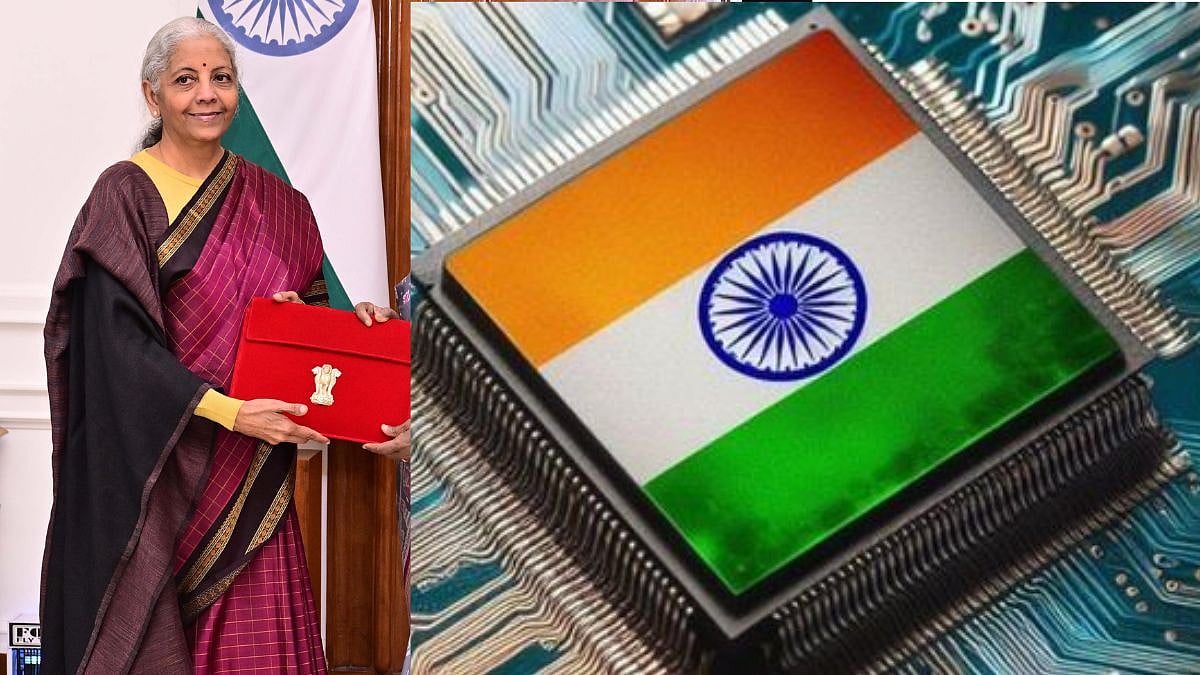
The moment Finance Minister Nirmala Sitharaman rose to present the Union Budget 2026 in Lok Sabha, millions of Indians had one question on their minds. Will my next smartphone cost less? The short answer is - not immediately. The longer answer is that the government has laid the groundwork for eventual price relief, but the path from policy to pocket savings is far from straightforward.
What was actually announced in Budget 2026
The latest Budget 2026 extended Basic Customs Duty (BCD) exemptions on capital goods used in the manufacturing of lithium-ion cells, now covering battery energy storage systems as well. Critical minerals and key components for electronics production have also been brought under reduced duty brackets. On top of that, the government announced a Rs. 40,000 crore expanded allocation under the electronics component manufacturing scheme, a significant fiscal push aimed at deepening India's domestic supply chain.
Sitharaman framed these measures as a long-term strategic investment. Speaking to the Lok Sabha, she said, "To provide further impetus to green mobility and energy security, we have extended the basic customs duty exemption on capital goods for manufacturing lithium-ion cells to include those used for battery energy storage systems."
She went on to add, "These steps, alongside the launch of India Semiconductor Mission 2.0, will support jobs, innovation, and help build a resilient domestic supply chain, making our industries more globally competitive."
A boost for manufacturers, but no direct consumer-level price cut
Here is where the nuance lies. Budget 2026 prioritises lowering input costs for electronics makers rather than delivering immediate price cuts to consumers. The customs duty exemptions and the Rs. 40,000 crore manufacturing boost are designed to reduce what it costs companies to produce devices on Indian soil, not to slash the price tags that shoppers see on retail shelves.
Previously, duties on imported raw materials and components inflated production costs, which were in turn passed on to buyers. Under the revised framework, machines and materials required for battery manufacturing and the processing of critical minerals can now be imported at lower tax rates. This reduces a significant cost burden for domestic producers.
However, whether those savings translate into cheaper smartphones, laptops, or televisions at the point of sale remains entirely at the discretion of individual brands. As industry insiders note, price changes depend on how domestic manufacturers and importers choose to adjust their pricing strategies, and there is no regulatory mechanism to compel them to do so.
Focus is on 'Make in India' and long-term supply chain resilience
The Budget's focus on capacity building aligns squarely with the government's broader Make in India initiative, the India Semiconductor Mission 2.0, and expanded Production Linked Incentive (PLI) schemes. The emphasis is on continuity of input costs and investment predictability, giving manufacturers the stability they need to commit to large-scale, long-term production in India.
This approach prioritises the health of the supply chain over short-term consumer relief.
Industry scepticism remains
Not everyone shares the government's optimism. Faisal Kawoosa, a research analyst at TechARC, paints a considerably bleaker picture for the consumer electronics sector.
"The budget announced disappoints the smartphone industry along with other consumer electronics products makers who haven't got any fiscal intervention expected to help them offset the present volatility in the supply chain affecting pricing predictability," Kawoosa stated. "The market contraction is now inevitable."
His concern is pointed: without direct fiscal relief — such as reduced GST rates or immediate duty cuts on finished goods — manufacturers are still exposed to the same pricing pressures that have been destabilising the market. The customs duty rollbacks on components and batteries are welcome at the input level, but they do not address the broader supply chain volatility that is currently making it difficult for brands to set stable retail prices.
Kawoosa's view suggests that while the government has made a structurally sound bet on domestic manufacturing, it may have underestimated the urgency felt by the industry for near-term relief.
So, will your nextphone be cheaper?
The honest answer is - possibly, but not yet. Extended customs duty exemptions on batteries and components, combined with the Rs. 40,000 crore manufacturing allocation, aim to strengthen local production and bring down costs over time. But any actual retail price drop will depend on the pricing decisions of individual brands - Apple, Samsung, Oppo, Vivo, Xiaomi, and others - none of whom are obligated to pass savings on to consumers.

