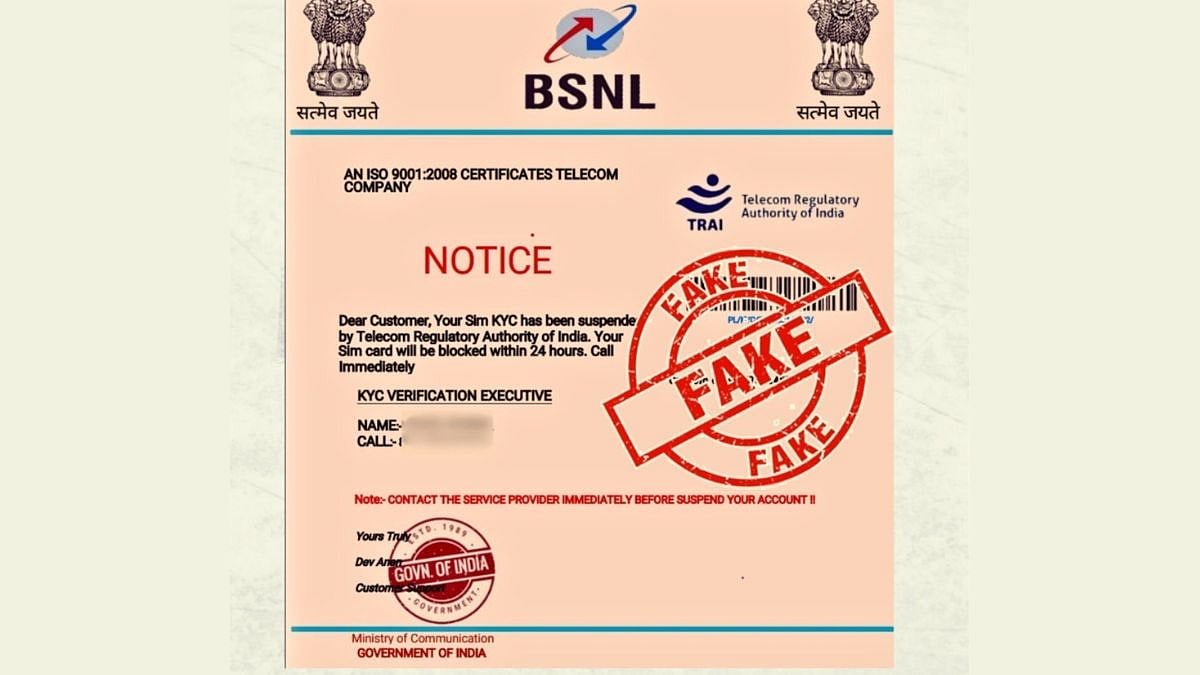
If you have received a message claiming that your BSNL SIM card's KYC has been suspended and that your connection will be blocked within 24 hours, do not act on it. The Press Information Bureau (PIB) Fact Check unit has identified a misleading message circulating among mobile users, falsely claiming to be from Bharat Sanchar Nigam Limited (BSNL) regarding suspension of customer KYC. The government has confirmed the message is a scam designed to steal personal and financial information.
What does the fake message say?
The fake notice alleges that a user's KYC has been suspended by the Telecom Regulatory Authority of India (TRAI) and warns that the SIM card will be blocked within 24 hours if verification is not completed.
In the fake notices, which are being sent on notepads bearing the BSNL letterhead, TRAI informs the customer to contact a KYC Verification Executive and share contact details. The message reads, "Dear Customer, Your SIM KYC has been suspended by Telecom Regulatory Authority of India. Your SIM card will be blocked within 24 hours. Call Immediately."
The messages also carry official-looking BSNL and TRAI logos to appear genuine and create panic among recipients.
PIB Fact Check confirmed that the notice is entirely fake and has not been issued by BSNL. PIB informed citizens that BSNL has not issued any notice related to SIM KYC. "BSNL Corporate never sends any such notices. Do not share your personal and bank details with anyone," said the PIB advisory issued along with the fact check.
The PIB also attached a graphic of the viral message with a red 'MISLEADING' stamp to prevent the spread of disinformation. The post urged the people 'not to fall for misinformation' and always verify news from official sources.
How the fraud works
The scam follows a pattern common to most cyber frauds, it weaponises fear and urgency.
The scammers are advised by PIB to be wary of these messages as the goal is to lure victims into cyber traps disguised as urgent telecom updates. Once a user calls the number or writes to the email address provided in the message, the scammer, posing as a KYC verification executive, asks for personal details. These can range from Aadhaar and account numbers to one-time passwords (OTPs).
Once obtained, scammers can use this information for digital arrest and fraud, with a straight path to account drains and identity theft.
How to stay safe
Key advice from authorities: BSNL never sends KYC suspension notices through informal channels. Always cross-check with official sources. Avoid clicking unknown links from SMS, WhatsApp, or email.
- Do not respond to any message that demands immediate action or creates undue urgency.
- Never share your OTP, bank details, Aadhaar number, or passwords with anyone over the phone or via message.
- If you receive a message that appears to be from BSNL or TRAI, contact your telecom operator directly through their official helpline or visit the nearest service centre to verify.
- Lodge complaints at designated cybercrime portals and spread awareness among friends and family.
The official website of BSNL is bsnl.co.in. Any communication claiming to be from BSNL through unofficial channels should be treated with suspicion.

