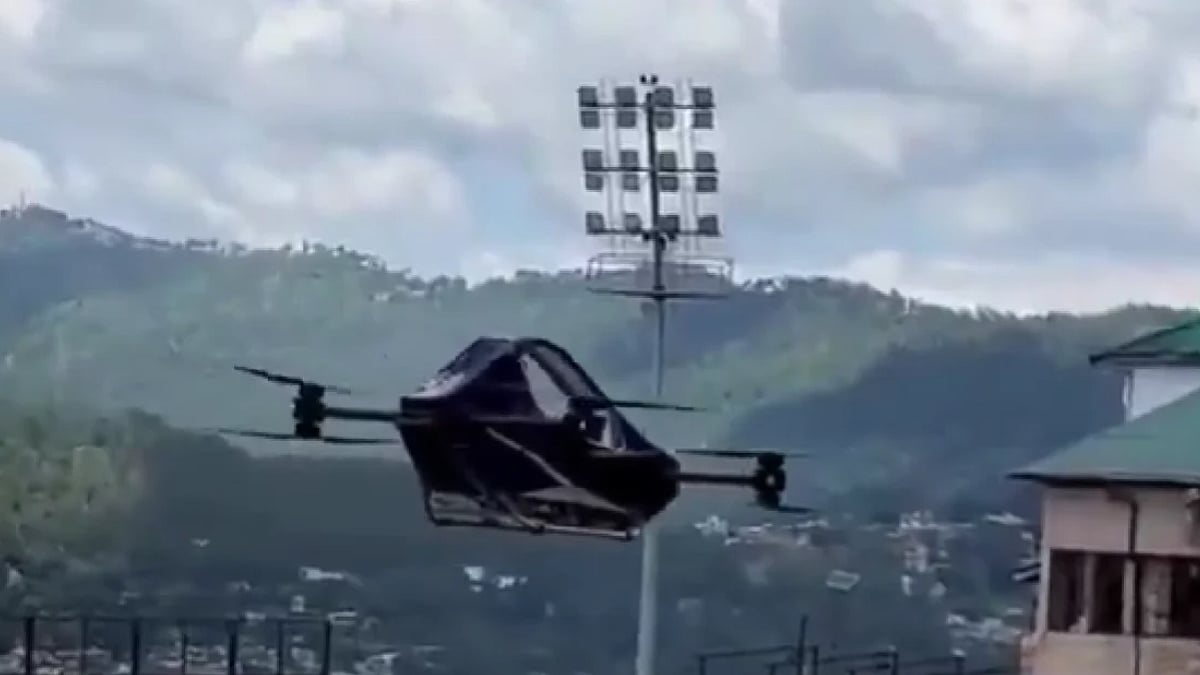
Ravi Tamta, a Bachelor of Arts graduate from Almora district in Uttarakhand, has built an electric flying vehicle prototype without any formal engineering education. He is from Kaflikhan village near Jageshwar Dham, and his startup, Hapida Sky Private Limited, developed the single-seater HAPIDA SKYNeX. The prototype completed its first test flight on August 7. The vehicle has drawn fresh attention in recent days, with outlets describing it as an Indian 'flying car'.
Built through 13 years of self-learning
Without specialised engineering training, Tamta relied on online resources, repeated experiments and family support. He began pursuing the idea in 2015. His father, Harish Ram, is a mechanic, and reports say he helped in the early stages.
Why a flying vehicle
Tamta's motivation, according to The Better India, was the difficulty of reaching hospitals across Uttarakhand's mountains. He began exploring whether a flying vehicle could help people cover such distances faster. Medical emergencies in remote hill villages are the use he has cited most often.
How the prototype works
The vehicle is designed for vertical take-off and landing, so it needs no conventional runway. That matters in terrain where level ground is scarce. Multiple electric motors and propellers mounted on external arms generate lift. It has a lightweight frame, a one-person cockpit and a transparent canopy, and runs on batteries rather than aviation fuel. Early coverage says it resembles a scaled-up drone.
Earlier inventions
HAPIDA SKYNeX is not Tamta's first project. Reports say he previously made phone-charging shoes and a smart stick for visually impaired people.
Long road to approval
The prototype is far from a product. It must receive approval from India's aviation authorities, it cannot be ordered by consumers, and no timeline for commercial availability has been announced. Further testing and regulatory approvals are required before operational use. Coverage also stresses that carrying a person raises the bar on safety testing, and calls for support for self-taught innovators like Tamta.

