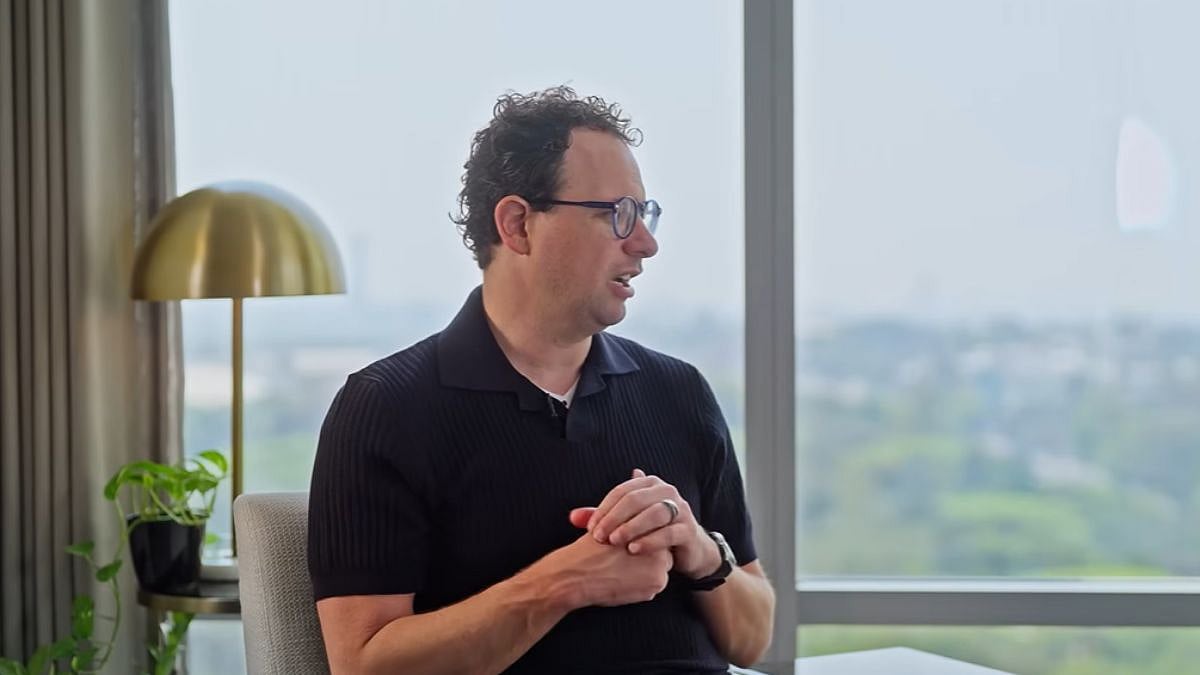
Sitting in Bangalore - the city that gave the world's IT outsourcing industry much of its backbone - Anthropic CEO Dario Amodei chose his words with care. The question before him was one that keeps boardrooms and millions of technology workers awake - will artificial intelligence kill Indian IT jobs?
His answer was neither a flat reassurance nor a dire warning. It was, characteristically, empirical - take it one step at a time, adapt fast, and watch what AI actually does - rather than what people fear it might do. But woven into that measured optimism was an admission that the long-term trajectory of AI poses a genuine challenge for everyone, not just India's IT sector.
Anthropic Sees India Differently—As a Partner, Not a Market
Amodei was in Bangalore on his second visit to India, following an October trip during which he met with the country's major IT conglomerates and industrial groups. He was deliberate in drawing a contrast between how most Western technology companies approach India and how Anthropic does.


"Many other companies come here as a consumer company, and they see India as a market, a place to obtain consumers," Amodei said. "We actually see things a little bit differently." Anthropic's pitch, he explained, is to work alongside Indian IT and consulting firms - helping them embed AI into their offerings rather than displacing what they do.
The logic is straightforward - Indian IT companies understand the Indian market, its institutions, and its clients far better than any AI lab in San Francisco ever could. Anthropic's tools, in his framing, are an accelerant for that existing expertise - not a replacement.
The steam engine qQuestion: Who becomes redundant?
Kamath pushed back with a pointed analogy. When the steam engine arrived, a human operator was essential. Then assembly lines came. Then automation reduced the human's role further. Are IT services companies not, he asked, simply today's version of the man behind the steam engine- useful now, but quietly counting down to irrelevance?
Amodei did not dismiss the concern. "Definitely the scope of automation of the agents is going to expand over time," he acknowledged. "That is definitely the case. I think that's a problem for everyone. That's a problem for us. That's a problem for consumers. It's not just a problem for the IT companies."
But he argued that as some capabilities are automated, others - previously overlooked - become more critical. He invoked Amdahl's Law, a principle from computing - when you speed up one component of a process, the bottleneck simply shifts to the next slowest component. The parts of a business that nobody thought of as competitive advantages may suddenly become the most important ones.
Relationships, Institutions, and the Human Web
When pressed on what specifically will survive the AI wave, Amodei pointed to two things: the physical world and human relationships. AI, he noted, has so far made limited inroads into robotics and the tangible world - though he expects that to change eventually.
More immediately relevant for India's IT sector, he suggested, is the dense web of institutional relationships these companies have built over decades. "Some of these IT companies are also consulting companies, and they have a big web of relationships with other humans, with other institutions here in India or across the world," he said. Knowing how institutions actually work - and being trusted by them - is something that cannot simply be automated away.
The radiologist analogy offered a concrete illustration. Geoffrey Hinton famously predicted AI would replace radiologists. AI has indeed surpassed human radiologists on technical scan analysis. Yet the number of radiologists has not fallen - because someone still needs to sit with the patient, explain the diagnosis, and provide the human context that a scan cannot capture. The most technical part of the job was automated; the human remained.
Kamath pushes back: Relationships themselves may be automated
Kamath was not entirely convinced. If AI agents can increasingly manage conversations and even maintain relationships on behalf of companies, he asked, how durable is the "relationship moat" that Indian IT firms hold? At some point in a chain that ends with consumers and people, will AI not handle most of the interaction?
Amodei conceded the challenge but held his ground on the empirical approach. "Maybe that'll happen fast," he said of AI advancing into areas where it has not yet penetrated. "I think what I will say is we should take it one step at a time." The science, he argued, demands observation over prediction.
AI may beat humans at almost everything
The most striking moment of the exchange came when Amodei was asked about the very long run. Will AI eventually surpass humans at basically everything - including the physical world, robotics, and even the much-cited human touch?
"Yeah, I think that is possible, maybe even likely," he said.
It was a remarkable statement from the head of one of the world's most consequential AI companies—and a reminder that the reassurances being offered to India's IT sector come with an asterisk.
"We need to figure this out step by step," he concluded, "and figure out how to adapt to it."
