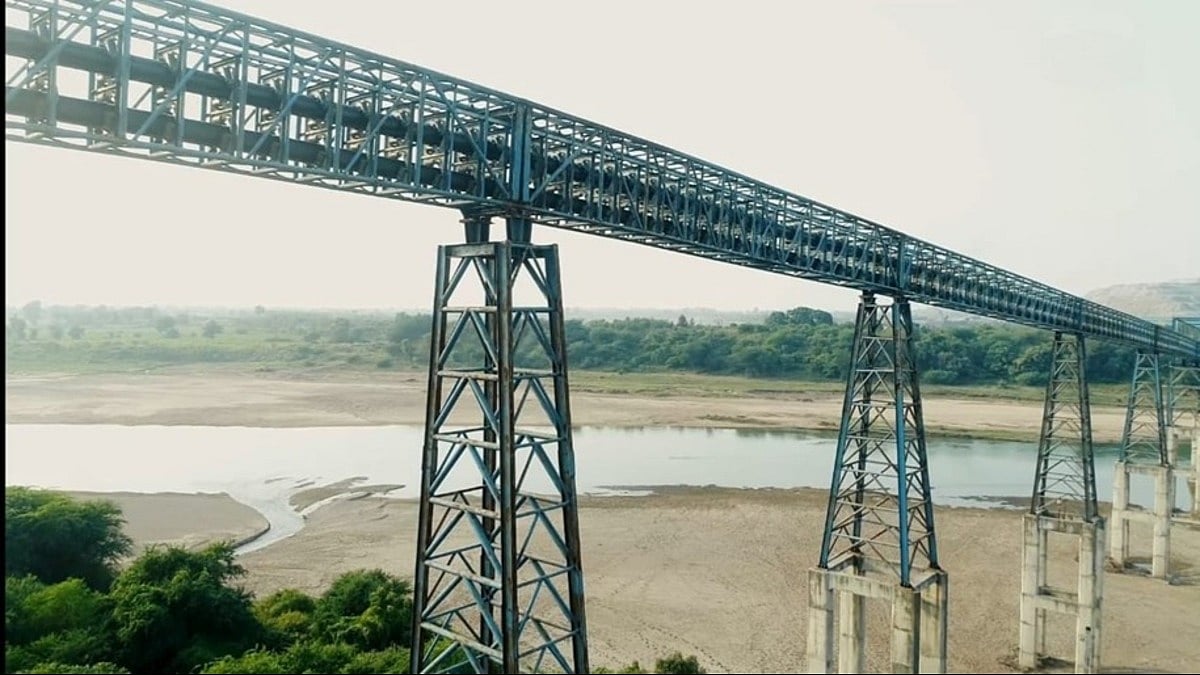
Maharashtra which is one of India’s largest energy producers, and its state-run power producer Maharashtra State Power Generation Company Limited (MAHAGENCO), have strengthened coal transportation to some of the thermal power stations through the introduction of closed pipe conveyor systems, a move aimed at improving operational efficiency while reducing pollution and coal loss.
The conveyor systems have been developed for plants including Chandrapur Thermal Power Station, Koradi Thermal Power Station and Khaperkheda Thermal Power Station, allowing coal to be transported directly from nearby mines through an enclosed network. The initiative is part of MAHAGENCO’s broader effort to generate adequate power for Maharashtra in a sustainable and socially responsible manner while keeping electricity costs competitive.
Chandrapur coal pipe conveyor system
At Chandrapur Thermal Power Station, a closed pipe conveyor has been installed to transport raw coal from the nearby Bhatadi Open Cast Mine to the plant. The system stretches 6.43 km and has a transportation capacity of 500 metric tonnes per hour. It was set up to enable the movement of coal directly from the mine to the station through a sealed system. The first trial run of the conveyor was conducted in June 2021.
By transporting coal through an enclosed pipeline, the system reduces the dispersion of coal particles during transit and also minimises coal loss that can occur in conventional transportation.
Reducing dependence on road transport
Coal supply to the Koradi and Khaperkheda thermal power stations has traditionally involved multiple modes of transportation. A significant portion of coal from nearby mines has been transported by trucks using road networks. Road transport, however, involves a high cost per kilometre per tonne of coal and leads to several social and environmental concerns, including road congestion, increased accident risks, deterioration in local air quality and higher greenhouse gas emissions.
To address these challenges, MAHAGENCO has developed an integrated coal pipe conveyor system designed to transport coal from nearby mines directly to the power stations. The system forms part of a broader network of conveying infrastructure that includes stacking and reclaiming mechanisms to route coal to the existing stations. Coal is transported through this system from mines such as Singhori Open Cast Mine, Bhanegaon Open Cast Mine and Gondegaon Open Cast Mine to Khaperkheda and Koradi thermal power stations.
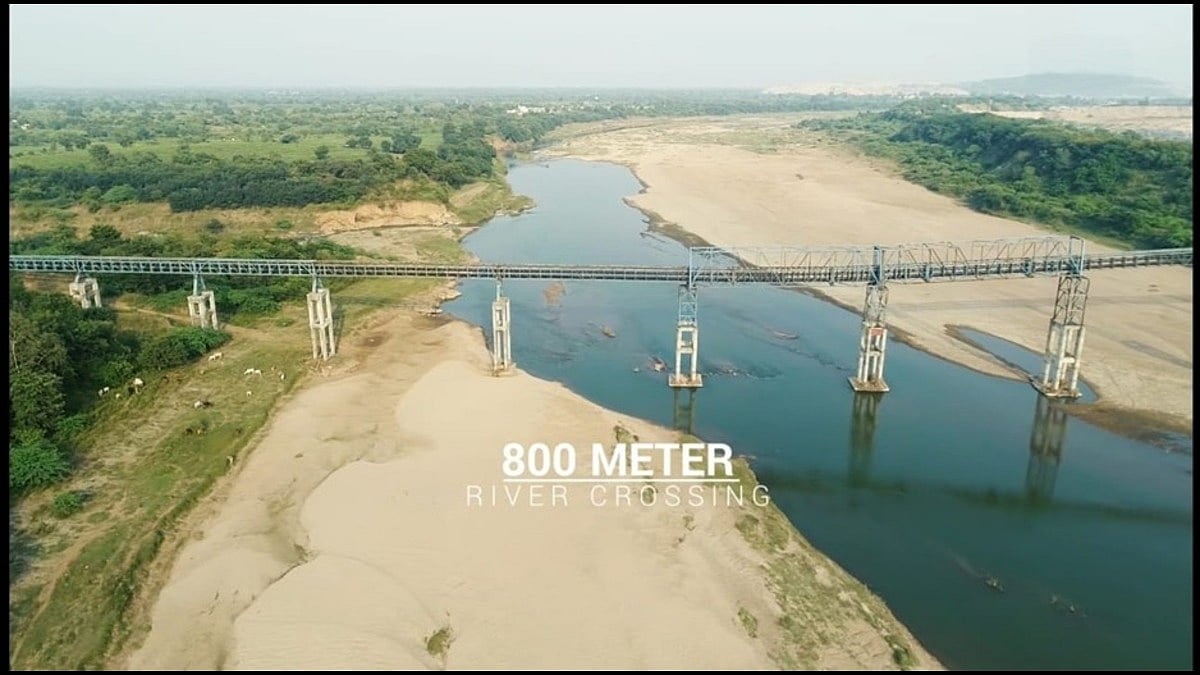
By transporting coal through an enclosed pipeline, the system reduces the dispersion of coal particles during transit |
Three-phase project
This conveyor network was implemented in three phases between 2023 and 2025, and the conveyor system has a rated capacity of 1,200 tonnes per hour while the total length of the pipe conveyor network, excluding belt conveyors, is 15.33 km. Operations and maintenance of the system are carried out by the Office of the Chief Engineer (O&M) at Khaperkheda Thermal Power Station.
Through such infrastructure initiatives, MAHAGENCO is working to meet the state’s growing energy demand while improving efficiency in coal handling and transportation. At the same time, the company has been pursuing a broader strategy of strengthening its energy portfolio by incorporating renewable sources such as solar, wind, gas and hydroelectric power alongside responsible fossil-fuel generation, while focusing on operational efficiency and cost minimisation to keep energy affordable for consumers.

