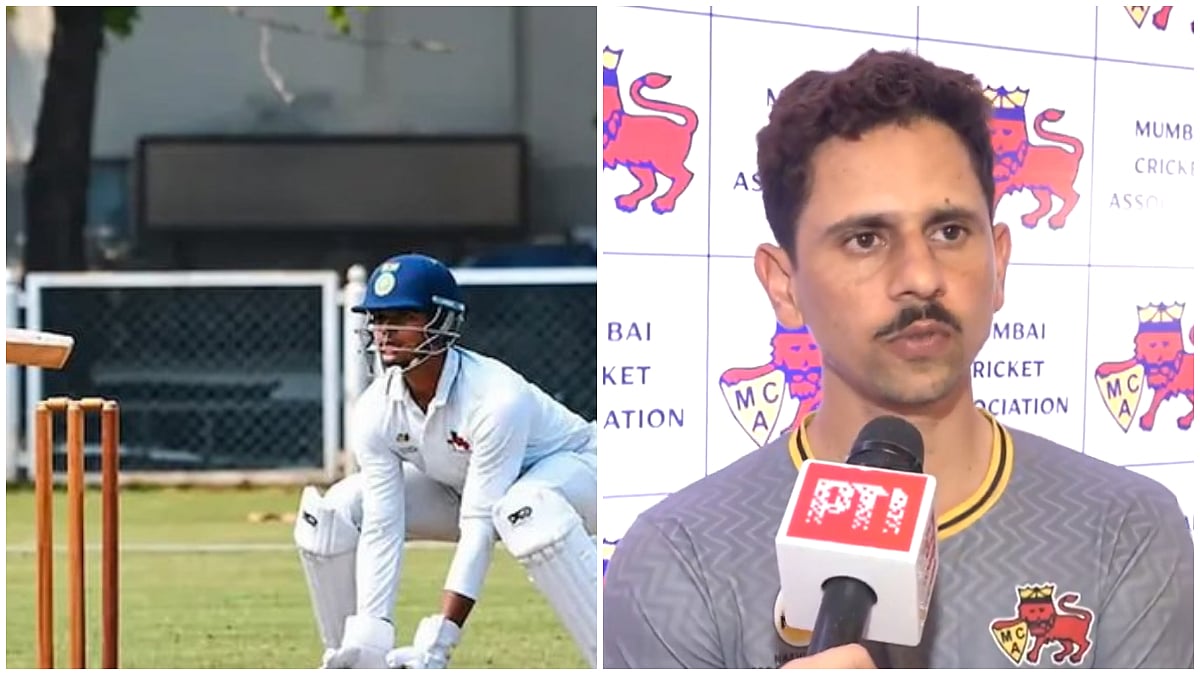
Mumbai: Yashasvi Jaiswal has already established himself as one of India's most exciting young batting talents, but the left-handed opener could soon add another dimension to his game. Mumbai teammate Siddhesh Lad has revealed that Jaiswal has started practising wicketkeeping, with an eye on potentially taking up the role for Mumbai and eventually India.
The development could have significant implications for both Mumbai and the Indian team, particularly in terms of the balance and flexibility it could offer their playing XIs.
Jaiswal, known for his aggressive strokeplay and ability to dominate bowling attacks, has primarily featured as a specialist opening batter. However, his willingness to explore wicketkeeping suggests an ambition to expand his contribution beyond scoring runs.
Wicketkeeping could strengthen team balance
For Mumbai, having a frontline batter capable of keeping wickets could provide a considerable tactical advantage. It would allow the team management to accommodate an additional specialist batter or bowler, depending on the conditions and opposition.
The same possibility becomes even more intriguing when viewed from India's perspective.
Modern-day cricket places enormous emphasis on team balance, especially in limited-overs formats, where the ability to accommodate an extra bowling option or strengthen the batting order can make a decisive difference.
If Jaiswal develops into a reliable wicketkeeper, India could potentially field an additional all-rounder or specialist bowler without compromising their batting strength.
Such flexibility could prove particularly valuable in T20 cricket, where combinations are frequently dictated by match-ups, conditions and the need for batting depth.
Transition presents technical and physical challenges
However, the transition from specialist batter to wicketkeeper is far from straightforward.
Wicketkeeping demands exceptional reflexes, footwork, concentration and technical precision. Standing up to spinners on turning Indian pitches presents an entirely different challenge from fielding in the outfield.
Jaiswal would need sustained practice and competitive match experience before he could realistically be considered a dependable option behind the stumps.
There is also the question of managing the physical demands of wicketkeeping alongside the responsibility of opening the batting.
Keeping wickets for extended periods before returning to open the innings can be physically exhausting, particularly in the longer format, where concentration and endurance are crucial.
New possibilities for India's selection
Nevertheless, the prospect of Jaiswal developing into a wicketkeeper-batter offers an interesting selection possibility.
India have traditionally relied on specialist wicketkeeper-batters, and the emergence of another option could increase competition for places while allowing selectors greater freedom in constructing their preferred XI.
For Jaiswal, the immediate priority would be to develop the necessary skills and demonstrate his capabilities at the domestic level.
Mumbai could provide the ideal environment for that progression, allowing him to sharpen his technique during practice sessions before potentially testing himself in competitive matches.
Also Watch:
Jaiswal's wicketkeeping journey remains uncertain
Lad's revelation offers an early glimpse into what could become an intriguing development in Jaiswal's career.
Whether the experiment eventually translates into a permanent role remains uncertain, but the potential benefits are substantial.
For now, Jaiswal remains a specialist opening batter exploring an additional skill. If he succeeds, however, he could offer Mumbai and India something particularly valuable: greater freedom to balance their playing XIs without sacrificing the firepower he brings at the top of the order.
To get details on exclusive and budget-friendly property deals in Mumbai & surrounding regions, do visit: https://budgetproperties.in/

