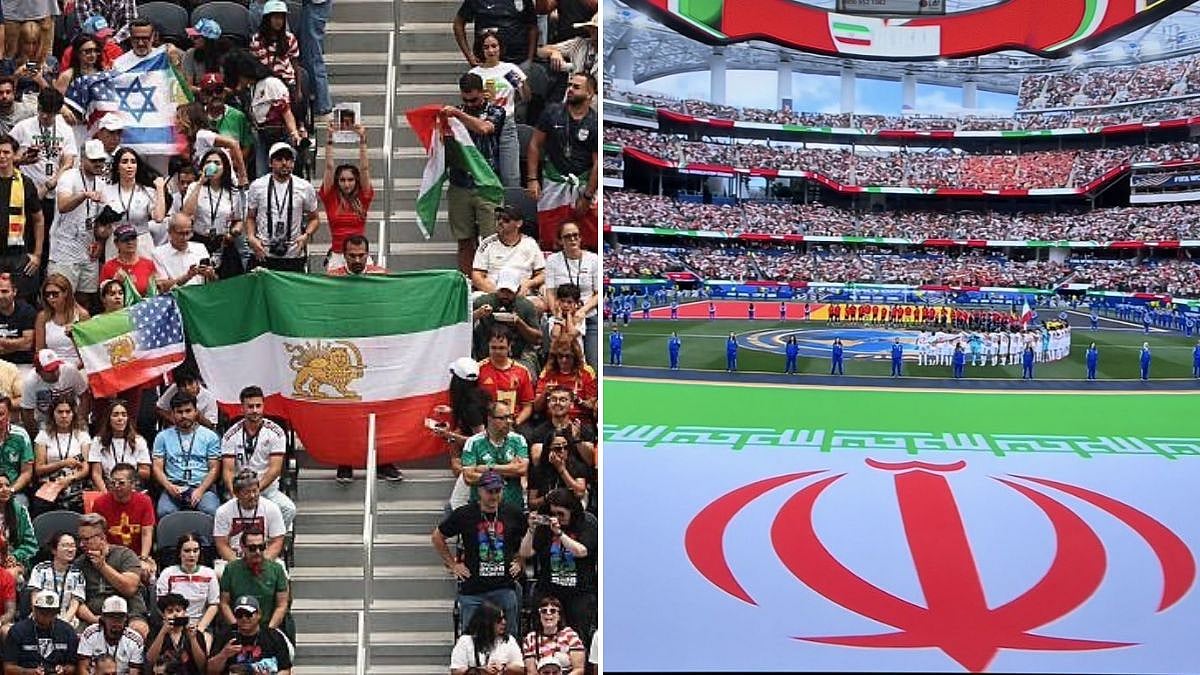
Fans waved Iran's banned pre-revolutionary Lion and Sun flags during the country's goalless FIFA World Cup draw against Belgium on Saturday, despite FIFA's restrictions on politically charged symbols. The display underscored the continued challenge for tournament organisers to enforce the ban and highlighted the political divisions that continue to follow Iran's campaign.
What is the Lion and Sun flag?
The Lion and Sun flag served as Iran's official national flag until the 1979 Islamic Revolution, when the monarchy was overthrown and the Islamic Republic adopted the current emblem featuring the stylised symbol of "Allah".
Although the Lion and Sun dates back centuries in Persian history, it has acquired a distinctly political meaning in recent decades. For many Iranians living abroad, it represents Iranian national identity separate from the current regime. Others associate it with the former Pahlavi monarchy, making it a potent symbol of opposition to the Islamic Republic.
Why has FIFA banned it?
FIFA prohibits the display of political symbols inside World Cup stadiums under its Stadium Code of Conduct. The world governing body considers the Lion and Sun flag politically charged because of its widespread use by opposition groups and anti-government activists.
Ahead of the tournament, FIFA instructed stadium operators and local organisers to prevent spectators from bringing the flag into venues. However, as seen during Iran's match against Belgium, enforcement has been inconsistent, with several banners making it past security checks.
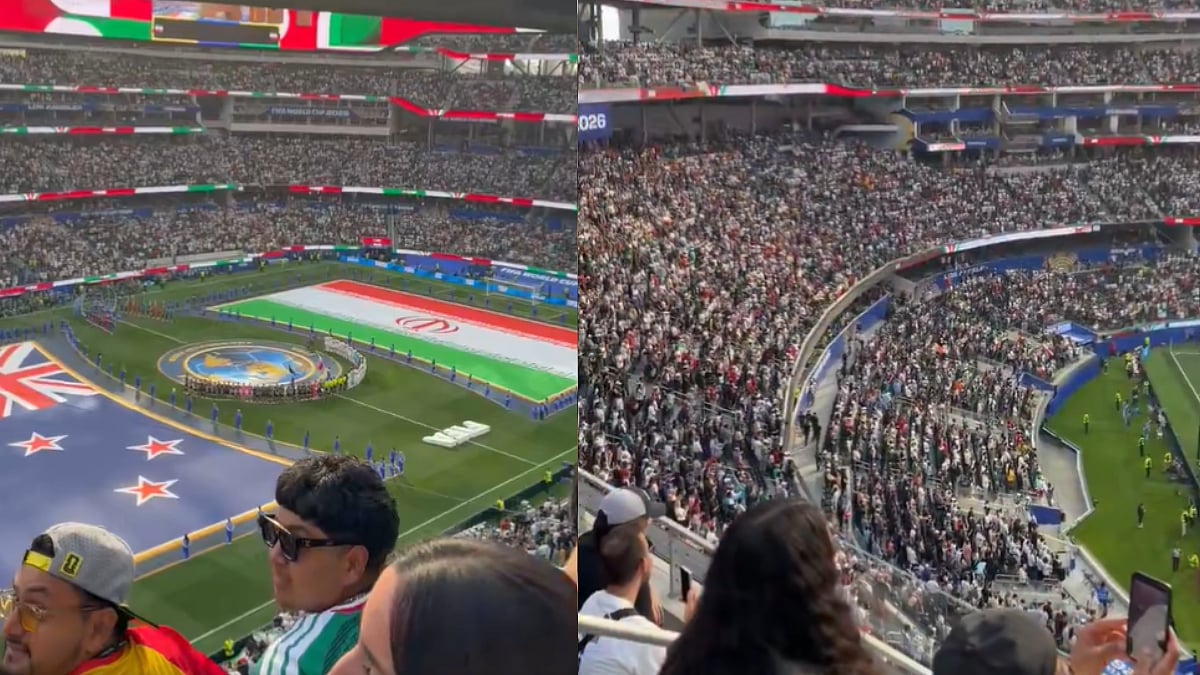
Similar scenes were witnessed during Iran's opening World Cup fixture against New Zealand, where security personnel confiscated some flags while many others remained visible inside the stadium.
Why are supporters still waving it?
The United States is home to one of the world's largest Iranian diaspora communities, particularly in Southern California. Many expatriate Iranians oppose the current government in Tehran and have used World Cup matches as a global platform to express that sentiment.
For many fans, displaying the Lion and Sun flag is a statement that they support Iran as a nation but not the Islamic Republic. Others wave it simply because they consider it a historical national symbol rather than a political emblem.
The debate over the flag has become one of the defining off-field stories of Iran's World Cup campaign, reflecting the deep political divisions within the global Iranian community.
Iran's participation in the 2026 FIFA World Cup has been accompanied by political controversy beyond the stadium stands. Owing to U.S. travel restrictions, the Iranian team has been based in Tijuana, Mexico, travelling into the United States only for matches. Iranian officials and head coach Amir Ghalenoei have criticised the arrangement, saying it has disrupted preparations.

