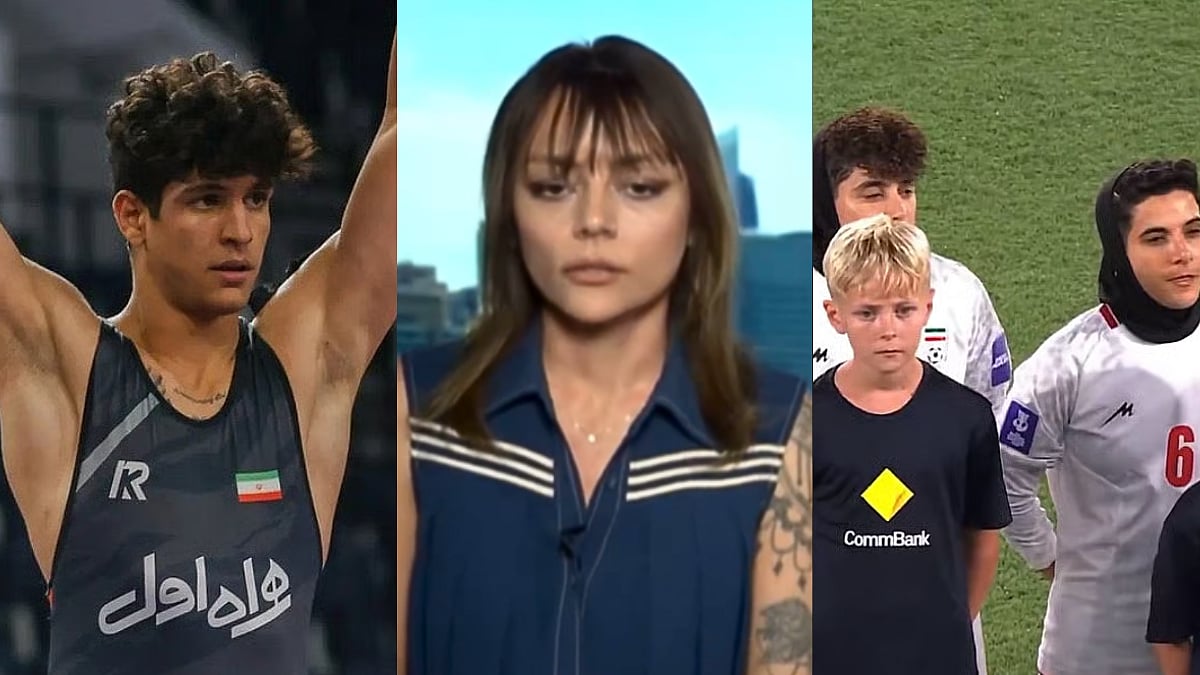
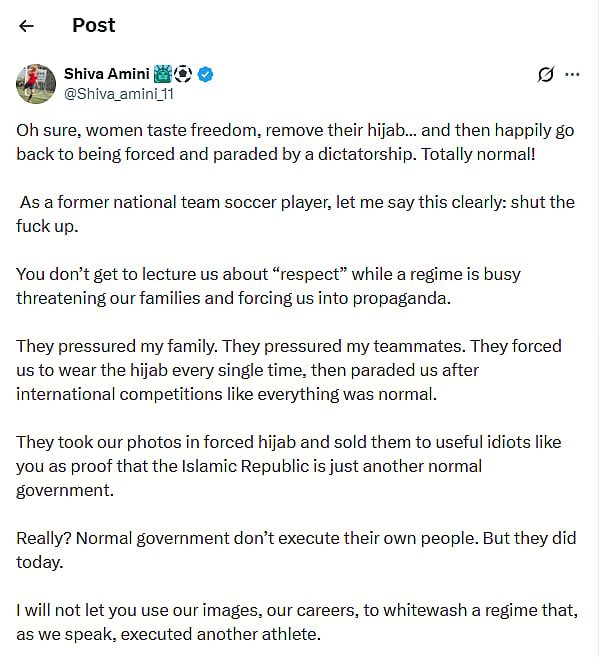
Former Iranian national footballer Shiva Amini has strongly condemned the Iranian regime following the execution of 19-year-old wrestler Saleh Mohammadi. On X, Amini criticized how athletes are forced into hijabs and used for propaganda, denouncing international voices that normalize the regime’s actions.
The controversy follows an incident during the AFC Women’s Asian Cup 2026, where members of the Iran women’s national football team refused to sing the national anthem in Australia, prompting fears of retaliation. Despite being offered humanitarian visas, Iranian players later chose to return home, highlighting the difficult choices athletes face under political pressure.
Shiva Amini
These developments underscore the growing tension between sports, politics, and human rights in Iran, drawing global attention to the risks athletes encounter when challenging state expectations. Amini’s comments and the team’s experiences reflect ongoing struggles for freedom, safety, and dignity in Iranian sports.
US-Iran-Israel War: 3 Iranian Women Footballers Turn Down Asylum In Australia, Decide To Return Home
Three members of the Iran women's national football team who had earlier accepted humanitarian visas in Australia have decided to return home, reversing their initial decision to seek asylum after competing in the AFC Women's Asian Cup 2026. The development comes days after several players sought protection amid fears of retaliation if they returned to Iran.
The Iranian squad had traveled to Australia for the continental tournament when a controversy erupted after some players refused to sing the national anthem before a match. The gesture raised concerns about possible consequences from authorities back home and prompted calls from activists and international figures for the athletes to receive protection.
Following the incident, a group of players and a support staff member accepted humanitarian visas offered by the Australian government and were taken to a secure location. However, according to officials, three of those who initially agreed to remain in Australia later decided to change course and return to Iran to reunite with the rest of the team and their families.
Australian Home Affairs Minister Tony Burke said the players were repeatedly given opportunities to reconsider their decision and discuss the options available to them. Despite the offer of safety and protection, the athletes chose to leave Australia and travel to Kuala Lumpur to rejoin the national team before returning to Iran.
The situation has drawn global attention because of the risks athletes could face after publicly challenging state expectations. Iranian media described the players’ return as a victory against Western influence, while activists and members of the Iranian diaspora have expressed concerns that pressure or threats may have influenced the decision.
