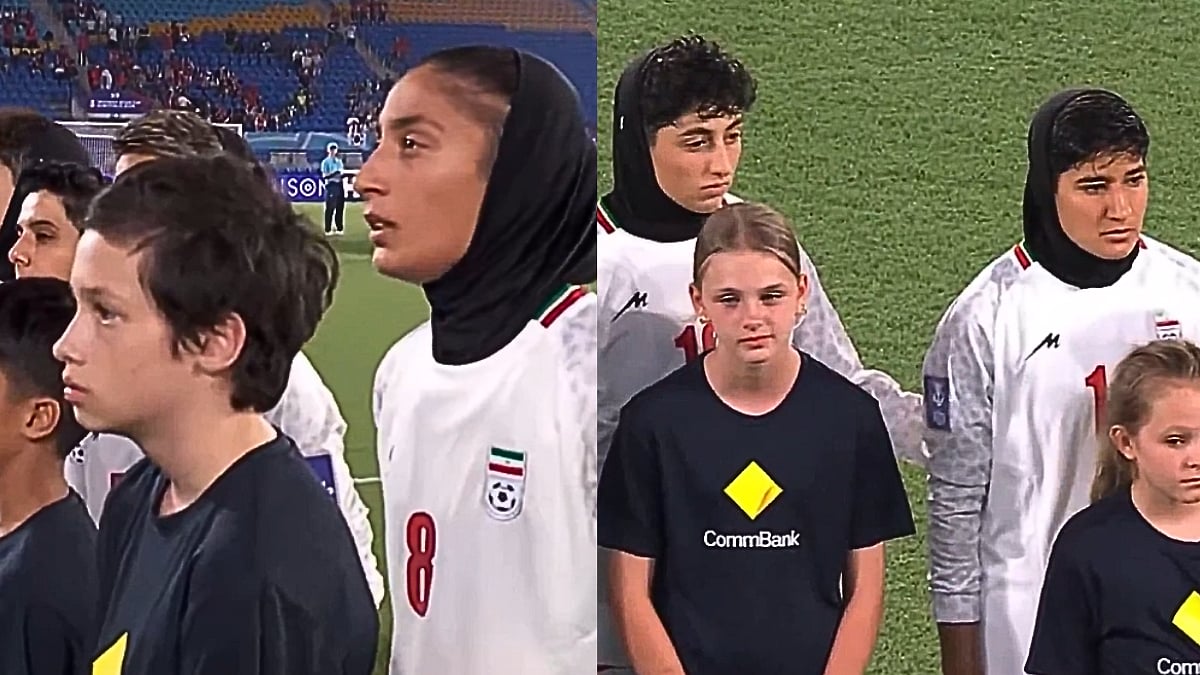
At the 2026 AFC Women’s Asian Cup in Australia, members of the Iran women's national football team stood silently during their national anthem ahead of their opening match against South Korea, an act that has drawn widespread attention amid intense political turmoil and conflict affecting their home country. Although they did not sing or mouth the anthem, the Iranian squad showed solemn respect by standing as the anthem played, a moment captured against the backdrop of a 3-0 defeat.
The gesture, which many observers have interpreted as poignant and symbolic, came amid a charged atmosphere following recent military escalations involving Iran and ongoing internal unrest. Some supporters in the stadium waved flags associated with Iran’s pre-Islamic revolution era, signalling dissent with the current regime, while others watched in silence.
On the sidelines, head coach Marziyeh Jafari declined to comment on the national crisis or the anthem situation, choosing to focus on football and the team’s performance. Regardless, the anthem silence has sparked discussion across global sports and political commentary circles, seen by some as an act of quiet defiance and by others as a respectful yet profoundly emotional response to events affecting Iran and its people.
'Support The Country You Live In...': Yuzvendra Chahal's Social Media Post Ignites Heated Debate Amid US-Iran-Israel War
Indian cricketer Yuzvendra Chahal has become the centre of an unexpected online controversy following a cryptic social media post that many interpreted against the backdrop of the escalating US–Iran–Israel conflict and the confirmed death of Ayatollah Ali Khamenei. Iranian state media confirmed that Khamenei was killed in joint military strikes by the United States and Israel, a development that has sent shockwaves across global geopolitics and triggered protests and reactions worldwide.
In the immediate aftermath, Chahal shared a message on social platforms that read, “Support the country you live in or live in the country you support.” Although he did not explicitly reference the conflict or the Iranian leader’s death, the timing of his post led many users to link his words with the ongoing war and rising nationalistic sentiment. This interpretation sparked a wave of reactions, with supporters arguing Chahal’s message emphasised patriotism amid global uncertainty, while critics felt he was unnecessarily drawing public attention into sensitive international affairs.
The episode highlights how even seemingly neutral statements by high-profile athletes can become flashpoints in charged political climates. As tensions continue to simmer in the Middle East and global discourse grows more polarised, Chahal has not offered further clarification on his intent, leaving social media debates to continue without resolution.

