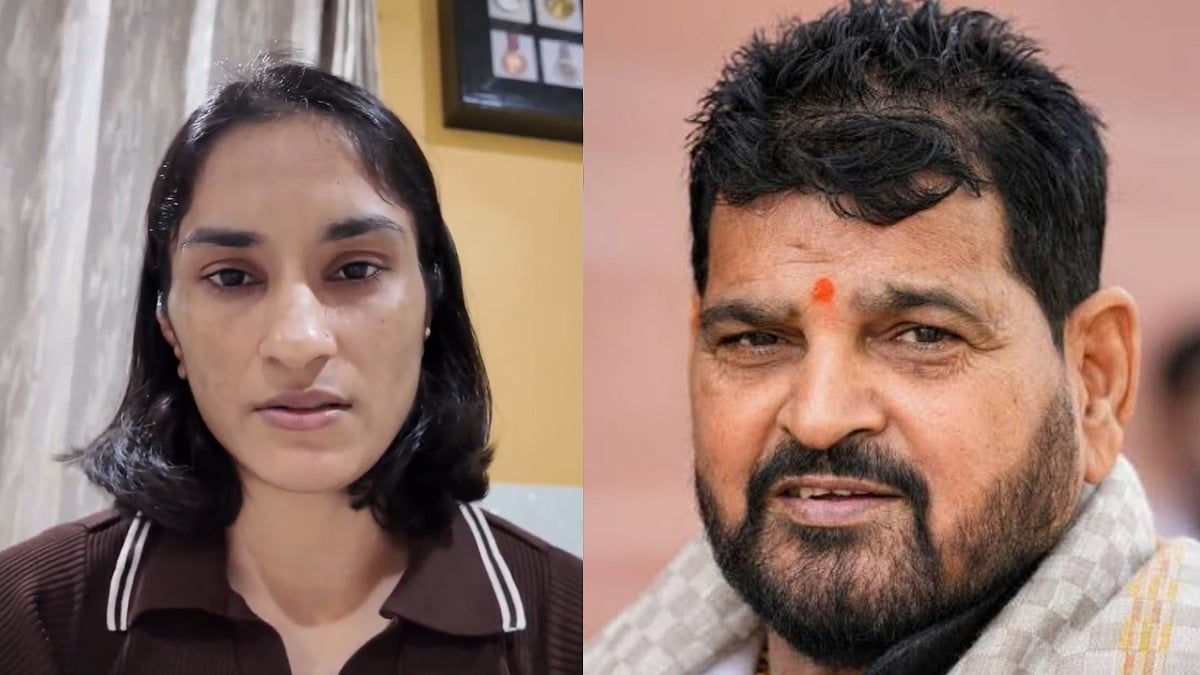
A major development has emerged in the ongoing wrestling controversy involving Vinesh Phogat, as the Olympian publicly identified herself as one of the victims in the sexual harassment case against former Wrestling Federation of India chief Brij Bhushan Sharan Singh.
In a strong and emotional statement, Phogat revealed that she is among the six women who filed complaints in the case, marking the first time she has openly acknowledged her identity as a victim. She explained that she had initially chosen to remain anonymous in line with legal guidelines protecting victims’ dignity, but felt compelled to speak out due to recent developments.
Phogat linked her decision to what she described as a deliberate attempt to block her return to competitive wrestling ahead of the 2026 Asian Games. She raised concerns over the Wrestling Federation of India’s decision to conduct selection trials in Gonda, a location associated with Brij Bhushan, alleging that such a setting could compromise fairness. According to her, organizing trials at a venue linked to the accused makes it “almost impossible” for athletes to expect an unbiased process.
The decorated wrestler, who has been one of the most prominent faces of protests against the former WFI chief, emphasized the emotional and mental toll such circumstances have on athletes. She noted that competing while dealing with such issues is extremely challenging, particularly for women who have experienced similar situations.
The case against Brij Bhushan Sharan Singh remains ongoing, with testimonies still being recorded. Over the years, multiple wrestlers have accused him of serious misconduct, allegations he has denied.
Phogat’s latest revelation has once again brought the issue of athlete safety and governance in Indian wrestling into sharp focus. As she prepares for a potential comeback, her statements underline the continuing tensions between athletes and the federation, while also highlighting the broader conversation around accountability and fairness in sport.

