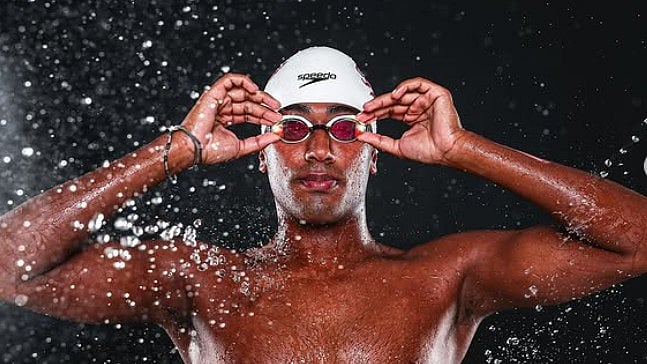
Indian swimmer Utkarsh Patil opened up about his remarkable journey from jumping into an apartment pool at the age of three to competing at the Asian Games, where he reached the finals of both the men’s 100m and 200m backstroke events and clocked personal bests. Speaking to The Free Press Journal, Patil reflected on his journey, Asian Games experience, Olympic ambitions and the need for greater depth and modern training in Indian swimming.
Excerpts...
1. Could you tell us about your childhood and how you were first introduced to swimming?
I actually first started swimming on my own. We had a pool in our apartment, and I was maybe three years old. My parents were at work, and I decided to put on a life jacket and jump into the pool because I always loved the water. The funny part is I forgot to inflate the life jacket, so when my parents came home, they found me swimming around without any air in it.
My first proper introduction to swimming came a few years later during a summer camp in school when I was in second or third grade. Swimming came very naturally to me, and my coach told me I should start competing as a sub-junior swimmer. That’s really where it all began. I actually started out as a butterfly swimmer before eventually moving to backstroke.
2. What inspired you to take up swimming competitively, and when did you realise that you could pursue it professionally?
It wasn’t really one defining moment. When my coach at the summer camp told me that I had talent and should pursue swimming competitively, I decided to give it a shot. From there I just kept improving, and that’s when I realized this could become something much bigger than just a hobby.
3. Who were the biggest influences in your early swimming journey, and how important has your family’s support been?
I wouldn’t say I was inspired by one particular athlete or person. I’ve always been someone who’s motivated more by my own goals and circumstances than by external inspiration.
That said, my family’s support has been incredible. They’ve been like a rock throughout my entire journey and have given me a really strong foundation. I honestly don’t think I’d be where I am today without them.
4. What were the biggest challenges you faced while transitioning from a young swimmer to a national-level athlete?
Honestly, I didn’t face many challenges during that transition because it happened really quickly. I started swimming around January, and by June or July I was already competing at my first National Championships. Everything progressed so fast that I never really felt there was a difficult transition.
5. How did you develop a specialisation in backstroke, and what attracted you to the 100m and 200m events?
I actually started off as a butterfly swimmer. Over time I realized that backstroke just came much more naturally to me. I was putting in less effort but improving faster, and my stroke felt much smoother. Eventually it became obvious that backstroke suited me better, and that’s how I naturally specialized in the 100m and 200m events.
6. What do you remember about your first major national or international competition?
I remember being a kid and racing for seven straight days. By the end of the meet I was completely exhausted and honestly just wanted it to be over. I was so tired that I almost felt like giving up by the end of the competition.
7. Which performance or achievement has been the most significant milestone in your career so far?
I’d say my performance at the Asian Games has been the biggest milestone so far. I made the finals in both of my events and swam personal bests in both races, so that was definitely one of the proudest moments of my career.
8. How does it feel to have competed at the Asian Games?
It feels great, but more than excitement, it gives me a sense of responsibility. At the same time, I try not to let the occasion get to my head. I like keeping myself grounded before big competitions because, at the end of the day, it’s still just me and the pool.
9. You competed in both the men’s 100m and 200m backstroke. How do the demands of these two events differ?
They’re definitely different races, but I’ve trained specifically for both of them. The 100m demands more speed and explosiveness, while the 200m requires a lot more pacing and control. I’ve prepared for both, so I feel confident racing either event.
10. What are the key technical areas you have been working on, particularly your start, underwater phase, turns and finish?
The biggest area I’ve worked on has been my underwater phase. Training in the U.S. has really helped me develop that part of my race, and it’s become one of my biggest strengths.
11. Could you take us through a typical training day?
A typical day starts with morning practice. After that I come home, recover, eat breakfast, and get some work done. Then I have lunch, usually take a short 30-minute nap, have some fruit or a snack, and head back for evening practice. After training I have dinner, finish up any remaining work, and then get to bed.
12. How do you balance pool sessions with gym work, strength training and conditioning?
My schedule is built around making sure everything complements my swimming. Between pool sessions, gym work, recovery, and work outside the pool, everything follows a routine so I can consistently perform at a high level without overloading myself.
13. What does your diet and nutrition routine look like during an intense training phase?
I like to keep things pretty simple. I just eat clean and make sure I’m hitting my macros. I don’t follow anything overly complicated, I just focus on giving my body what it needs to recover and perform.
14. How do you manage recovery, sleep and fatigue when training loads are high?
Recovery is a huge priority. I make sure I eat as soon as possible after training, get enough sleep, and I usually get a massage once a week to help with recovery. Staying consistent with those things helps me manage the training load.
15. Swimming can be a lonely and mentally demanding sport. How do you stay motivated during difficult phases of preparation?
Swimming is definitely mentally demanding. One thing that’s really helped me is staying grounded. I’ve found Krishna and my faith to be something that keeps me centered and helps me avoid carrying too much mental stress. That perspective has been really valuable throughout my career.
16. How do you mentally prepare yourself before stepping onto the blocks for an important race?
I don’t try to overcomplicate it. I keep myself calm and grounded and remind myself that it’s just me and the pool. I try not to think about the occasion or the expectations and instead focus only on executing my race.
17. How are you dealing with the pressure and expectations that come with representing India at a major event?
I honestly don’t think about the pressure very often. The only time representing India really comes into my mind is when I’m making everyday choices; whether it’s skipping dessert, going to bed on time, or staying disciplined. That’s when I remind myself of the responsibility I have. But once I get behind the blocks, it’s just me and the pool.
18. What is your reaction on the performance at the Asian Games?
I was really happy with my performance at the Asian Games. Making two finals and swimming personal bests in both events was a big step forward. But regardless of the result, my Olympic ambitions stay exactly the same. Every swimmer is working towards that goal, and I am too.
19. How do you assess the growth of Indian swimming, particularly in the backstroke events, over the past few years?
I think Indian backstroke has improved a lot, but we still lack depth. We have a few swimmers performing at a very high level, but after that there’s a fairly big gap. Building more depth in the event would make Indian swimming much stronger overall.
20. What changes or improvements do you think are necessary to help Indian swimmers compete consistently at the highest international level?
I think infrastructure and having the right system in place are the biggest things. My coach in the U.S., who has coached multiple Olympic champions and world record holders, always told me that Indian swimmers are naturally gifted physically. The talent is there.
The challenge is making sure the resources and funding are used in the right way and that our training methods keep evolving with the rest of the world. A lot of the training I still see in India is based on methods that were common in the U.S. decades ago. We need to stay updated and continue learning if we want to consistently compete with the best.
21. Finally, what message would you like to share with young swimmers who dream of representing India?
If you really want to do it, don’t listen to anyone else, just believe in yourself and keep working. At the same time, if you genuinely don’t enjoy swimming, be honest about that too. I see a lot of kids who are pressured into the sport and end up hating it. Whatever you choose, make sure it’s your decision. And if it is your dream, then don’t let anyone tell you that you can’t achieve it.

