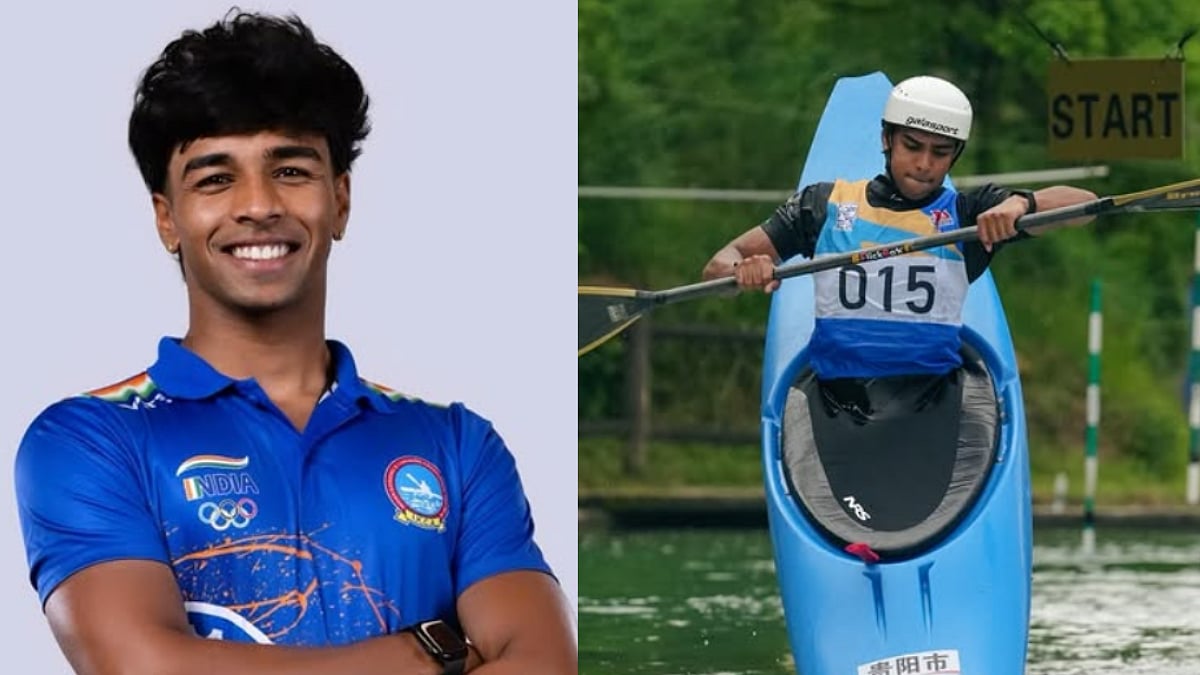
Indian canoe athlete Pradhyumna Singh Rathod is set to represent the country at the Asian Games 2026, carrying with him years of experience in water sports and a deep-rooted athletic mindset. Speaking to The Free Press Journal, Rathod opened up about his journey from swimming and water polo to canoeing, his preparation for the continental showpiece, and the challenges he has overcome along the way.
Born into an athletic household, Rathod was introduced to sport at a very young age. His father is an international swimmer, and Rathod started swimming when he was just two years old. Before making canoeing his primary focus, he pursued swimming and water polo professionally, experiences that helped shape the mindset he believes an athlete needs.
Excerpts...
1. Could you tell us a little about your childhood and your life before canoeing became your main focus?
I was born into an athletic household. My father is an international swimmer, and I started swimming at the age of two. So, the mindset an athlete needs has been instilled in me from a young age. Before shifting my focus mainly to canoeing, I was swimming and playing water polo professionally.
2. How did you first discover canoeing, and what convinced you to take it up competitively?
I discovered canoeing when my father took me to watch it two hours away from my house, in a different city. Looking at the white water and the rush it created, I wanted to sit in the boat and experience it myself. When I got into the boat, I could feel the adrenaline, and I loved it.
3. How supportive has your family been throughout your sporting journey?
My family has shown me nothing but support since day one, always making sure I have whatever I need to get better at what I do.
4. What does a normal training day look like for you?
On a normal training day, I wake up early in the morning and prepare my breakfast before my first water training session. Then I come back, attend my university classes and have lunch. After that, I leave for the gym, which is usually my second session of the afternoon and lasts for two hours. To end my day, I have a third training session, which is also a water session but less intense.
5. What kind of physical preparation goes into getting ready for a competition?
Physical preparation is also one of the major aspects because my sport is very technical. I cannot be overweight, as it would hamper my technique, and our strength should be at least three times our body weight. Since we are paddling through the water, we require a lot of shoulder strength to hold the boat against the flowing water.
6. How do you prepare yourself mentally before a major race?
Mental preparation, in my opinion, is the most important aspect. I specifically prepare myself by listening to a lot of music and doing some meditation.
7. What have been some of the biggest setbacks or challenges you have faced, and what did they teach you?
The last couple of years have been very inconsistent for me performance-wise. My training was at its peak, but on race day, I couldn’t execute it properly. Those experiences taught me the importance of better mind control and self-confidence, which are very important for me.
8. What does it mean to you to represent India at the Asian Games?
The Asian Games mean the most to me right now, and representing my country is the best feeling I could ask for. I have been waiting for this moment since the last Asian Games, so it means a lot to me.
9. Is there a particular athlete who inspires you or someone you look up to in canoeing?
No particular athlete inspires me, but there are a lot of European paddlers whom I look up to and try to learn from by studying their techniques.
10. What is one thing about canoeing that you wish more people understood?
The one thing I wish people would understand is that canoe slalom, which is my particular event, takes place in flowing white water and requires a lot of skill. But from the outside, it may look like art.
11. Looking back, what has been the most memorable moment of your career so far?
There have been a lot of good moments, but the most memorable one was seeing my name officially on the Asian Games list.
12. What message would you like to give to young Indians who want to pursue less-mainstream Olympic sports?
The one message I would like to give is that in India, every athlete needs just one medal on a big stage to take their sport from being less mainstream to mainstream. So, whichever sport you choose, just give it your 100 per cent. Once you achieve something, everyone will be behind you and support you.

