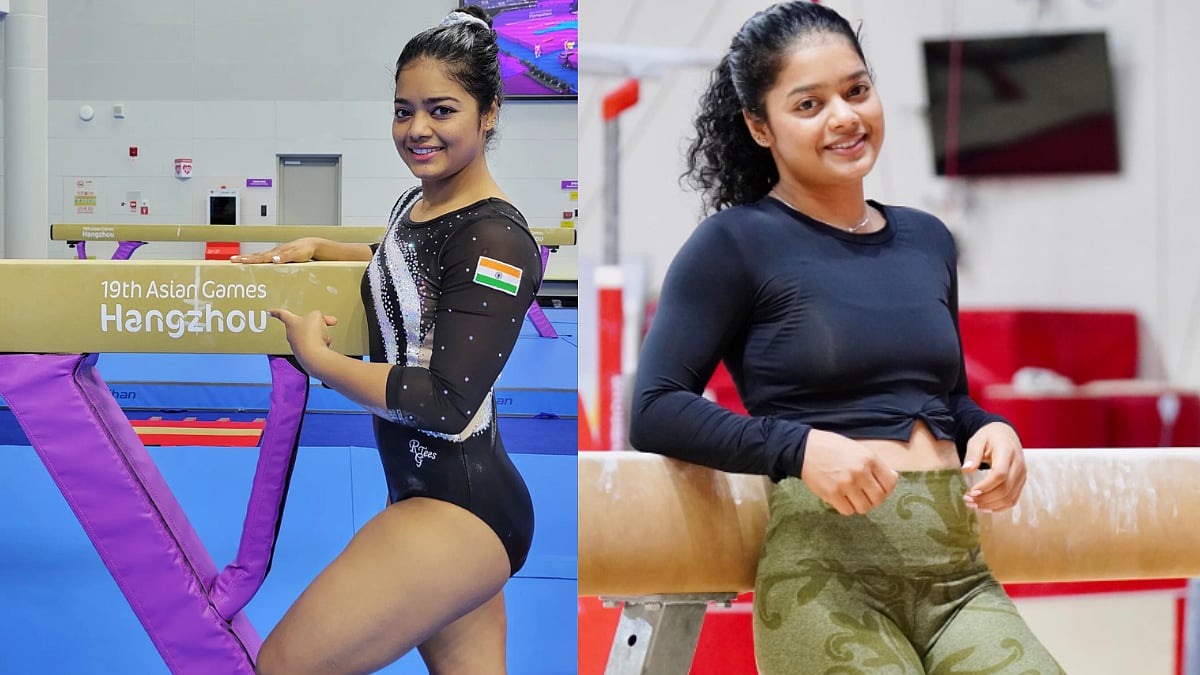
Indian gymnast Pranati Nayak is set to represent the country at the Asian Games, marking another significant chapter in a career that has taken her from a simple childhood in West Bengal to the biggest stages in international gymnastics.
Speaking exclusively to The Free Press Journal, Nayak opened up about her journey, the challenges she faced, her Olympic experience, preparation and expectations ahead of her fourth Asian Games.
Excerpts...
1) Take us back to your childhood in West Bengal. What was Pranati like as a young girl before gymnastics became such a big part of your life?
Growing up in West Bengal, I was a very simple, energetic and playful girl. I loved being active and spending time with my family and friends. Gymnastics slowly became a part of my life, and over time, it became my passion and my biggest journey. Looking back, I feel proud of how far that little girl has come.
2) You have said that you initially started gymnastics because you thought it was similar to yoga. Do you remember the moment when you realised that gymnastics could actually become your career?
Initially, I joined gymnastics thinking it would be something simple, like yoga. But when I started competing and winning medals, I realized that this could actually become my career. That’s when I started taking gymnastics seriously and dreaming bigger.
3) You moved to Kolkata at a very young age for training. How difficult was it emotionally to leave home and adapt to a completely different environment?
Moving out of Kolkata at such a young age was not easy. I missed my family and home a lot, and adapting to a new environment was challenging. But gymnastics gave me a purpose, and slowly I learned to become independent, strong and focused on my dreams.
4) When you look back at your journey so far, what stands out the most defining phase of your career?
Looking back at my journey, I think the biggest push in my career came from the difficult moments. There were times when I faced injuries, setbacks and doubts, but I never allowed those moments to define me. Every challenge made me stronger and taught me to believe in myself even more. My dream, my family’s support and my love for gymnastics kept me going. I think that determination to never give up is what has truly shaped my career.
5) At Tokyo 2020, you became only the second female Indian gymnast after Dipa Karmakar to represent India at the Olympics. How was the feeling?
It was honestly a very emotional and proud moment for me. Becoming only the second Indian female gymnast after Dipa Karmakar to represent India at the Olympics was a dream come true. I could feel the weight of all the hard work, sacrifices, and my family’s support behind that moment. When I finally stepped onto the Olympic floor in Tokyo, I wasn’t just representing myself, I felt I was representing my family, my coaches, and everyone who believed in me. It was a moment I will always cherish.
6) Your first Asian Games came in 2014. What are your strongest memories from that experience?
2014 was very special for me because it was my first Asian Games. Competing in such a big event and representing India was a very proud and emotional moment. I competed in the all-around and qualified for the final, which was a big achievement for me at that stage of my career. I was extremely happy and, more importantly, I gained a lot of experience and confidence from that competition. It taught me how to handle pressure and believe in myself on a big stage. That Asian Games will always have a very special place in my journey.
7) When you are about to do your routine, what goes through your mind?
Just before my routine, I try to keep my mind calm and focused. I don’t think too much about the result or the pressure. I focus on my first skill, my breathing, and remind myself to trust all the hard work I’ve put in during training. At that moment, I just tell myself, “Stay focused, trust yourself, and give your best.”
8) Do you practise meditation, breathing exercises or any form of mindfulness to improve your concentration?
Yes, I do. I really enjoy meditation, and I feel it has become an important part of my journey as an athlete. Especially when we go through injuries, setbacks or difficult phases, meditation helps us stay calm and mentally strong. I believe our mind has a big impact on how our body responds, so keeping the mind positive and strong is very important. It helps me stay focused, control my emotions and come back stronger. That’s why I feel meditation is just as important as physical training, and I make sure to include it in my routine.
9) Can you walk us through your usual training routine and what sort of diet plan you tend to follow?
Yes, I am very particular about my diet and I try to follow it consistently. I always prefer simple, balanced and healthy food because, as a gymnast, maintaining a strong yet light and lean body is very important. The lighter and more controlled I feel, the better I can move, perform my skills and maintain my technique. So I try to be disciplined with my food, especially during competition periods, and avoid unnecessary sweets, oily or unhealthy food. For me, diet is not just about looking fit, it is about keeping my body healthy, strong and ready to perform at my best.
10) Off season, Do you allow yourself cheat meals and enjoy your favourite foods?
Honestly, I’m not really a big fan of fast food, and I think that’s actually a plus point for me. I mostly prefer simple, home-cooked food, especially rice and regular Bengali meals, which I normally eat anyway. During competition periods, I follow my diet quite strictly, and sometimes the hardest thing for me is giving up ice cream because I really love it! So when I’m in the off-season and there’s no competition coming up, I do enjoy having some ice cream. I believe it’s all about balance, you can enjoy your favourite food sometimes, while still staying disciplined with your fitness and training.
11) You are now one of India's most experienced female gymnasts. Do you feel your role has changed from simply being a competitor to also being someone mentor to younger gymnasts ?
Yes, definitely. When I started gymnastics, I was just a beginner, focused on learning, improving and competing. But after so many years in the sport, I feel my role has changed. Today, I not only think about my own performance, but I also feel a responsibility towards the younger gymnasts. I try to share whatever I have learned from my experiences; both the good moments and the difficult ones. If I can guide them, motivate them, or help them avoid some of the mistakes I made in my journey, that makes me really happy. I feel proud that I can now give something back to the sport that has given me so much.
12) A lot of times, we see players competing incredibly well in trials, national and international competitions, but when it comes to the Olympics or Asian Games, they struggle to convert those performances into a medal. Why do you think that happens?
I think the pressure and expectations are much higher at major competitions like the Olympics and Asian Games. So, along with physical preparation, mental preparation is equally important. You have to trust your training and focus on your performance rather than thinking too much about the medal. I believe the first goal should always be to give your best performance, and the result will follow.
13) We’ve seen Bollywood movies inspired by real athletes, like Dangal and Mary Kom. Do you think your journey could be made into a film?
Of course, why wouldn’t I want that? Like everyone else, it would also be a dream for me to see my journey on screen. But more than just my story, I would love for people to understand the life of a gymnast: the hard work, discipline, flexibility, training and sacrifices that go behind the sport. I think it could inspire and help people who don’t really know much about gymnastics to understand what a gymnast’s life is actually like. So, if something like that happens someday, I would be very happy. And I believe whatever God plans will always be for the best.
14) This is your 4th Asian Games so what are your expectation going into Japan
Yes, this will be my fourth Asian Games, and I feel very proud to continue representing India at this level. I’m truly grateful to WalesPAN for continuously supporting me, and to my coach, my parents, and everyone at the High Performance Centre where I train. Without their constant support, I wouldn’t have been able to prepare for this competition. I will go there with a positive mindset and give my very best.
15) Final message for the Indian fans
I just want to say a big thank you to all my Indian fans for always believing in me and supporting me throughout my journey. Your love and encouragement give me so much strength, especially during difficult times. I will continue to work hard, give my best and make the country proud. Please keep supporting me and keep believing in me. Thank you so much!
With another major international challenge ahead, the experienced gymnast will hope to turn years of perseverance, preparation and experience into another memorable performance for India.

