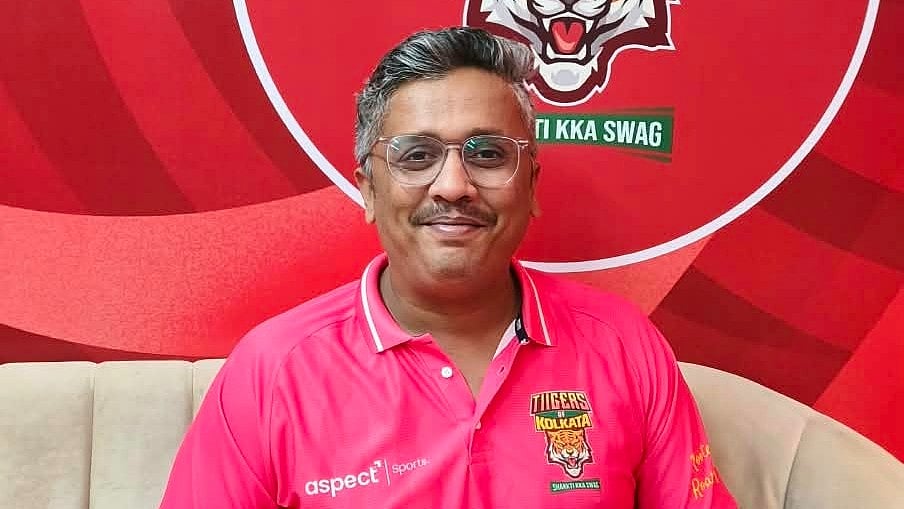
Prathamesh Pawar is ready to embrace a new challenge with Tiigers of Kolkata as he takes over as head coach for Season 4 of the Indian Street Premier League (ISPL). Having previously led the franchise to its maiden championship in the inaugural season, Pawar will now look to replicate that success from the dugout.
In an exclusive conversation with The Free Press Journal, he opened up about his transition from captain to coach, his vision for the upcoming season and the team's ambitions of returning to the top.
1. You were instrumental in leading Tiigers of Kolkata to their maiden ISPL title. Looking back at that inaugural campaign, what was the defining moment when you felt this team could go all the way and become champions?
When I was even given that role and looked at the team I had, I knew from day one that if these guys play according to their potential, we can definitely win this championship. Because we had really good match-winners in the team, and they were clicking at the right time too, which made my job easier because the players were actually following the roles given to them. So from day one I was confident that we could make this team champions.
2. Tiigers faced setbacks during the league stage, losing two of their five matches, but managed to bounce back and win the title. What did you do as captain to keep the team mentally strong and ensure that those defeats didn't affect the dressing-room atmosphere?
No, definitely, if you look at our matches from the first season, none of our matches were one-sided. All of them were very close, going right down to the last ball. So they were nail-biting matches. So there wasn’t much reason to be disheartened there, because my team was playing well in every match. Because of that, even the matches we lost were close losses. So there was nothing really to demotivate the players. The players knew they had given their full efforts. The result didn’t go our way, but we knew what we were doing and that we were going the right way. Because of that, we could perform well in those remaining three matches and then qualify.
3. You earned the nickname ‘Captain Cool’ for your calmness under pressure. How important is staying composed in a fast-paced format like tennis-ball cricket, where one over or one moment can completely change the game?
That's a good question, because tennis ball cricket is a very fast game; you don’t get time here at all. But I’ve actually had captaincy experience for a long time. I’ve captained in leather-ball cricket as well and have been doing it in tennis-ball cricket before ISPL too. So I knew how to handle the team that came to me or the players in my team, or how to motivate them in a given situation and get things done from them. Basically, a captain needs to know what their players’ strengths are. Once you understand that, your job becomes very easy. So whenever you get leadership of any team, it’s your team that determines what you can do. A captain alone can’t do anything. So I knew what my team was like, how to handle them, who to use in which situation, or when difficult situations arose, which players could get you out of there. So I basically had that knowledge, and having captained before made it very easy for me.
4. Having experienced the pressure of leading the team on the field, how different is it now to transition into the role of head coach? What has been the biggest adjustment for you so far?
Definitely, definitely. It’s a challenge for me, this transition from a player to a coach is a very big challenge for me. But so far, whatever I’ve done or however I’m working with the team and management, I’m getting to know exactly what I should do, how to handle the players, and how I can actually help them from the outside. I’m finding all of this out, and for me it’s in process right now. So it’s a long way to go for me, but I’m enjoying the role.
5. As a coach, you are no longer making decisions for yourself on the field but preparing players to make those decisions. How do you plan to translate your experience as a captain into helping players develop their own game awareness, confidence and leadership?
No, definitely, you’ll see just as much of it, because basically what you do before the league is what matters. Whatever camp or practice sessions happen before the league, how you build the team then also heavily depends on how you enter the league. So we’re trying, in these camps we’ve organized, to prepare the players as a team. Because right now they’ve come there as individuals, but when this camp ends they’ll go home as a team. So our effort is that whatever we won’t be able to do during the league, we cover completely in the camp.
6. What are the abilities that you’re going to transfer into a player apart from cricket knowledge? What other special technique or thing do you have that you’ll tell your players, and how will that help Tiigers of Kolkata?
No, definitely, basically in tennis-ball cricket, players are also very aggressive or, as they say, hot-headed. They take decisions very fast, and sometimes those decisions turn out wrong for us. Basically, I’m going to try to pick a captain who stays cool-headed even in pressure situations and handles all of that, handles the team. Because it’s a short format, things keep happening quickly. Sometimes one over goes your way, and the next over can go the opposing team’s way. So how to get out of that; for that, your senior players and the captain in the team have a very big role. So I’ll try to make my seniors and the captain understand that thing and mould them into it, preparing them mentally. In this, your work, actually a coach’s work in tennis-ball cricket, is how you prepare them mentally.
7. Tiigers finished runners-up last season. With a championship-winning legacy from the inaugural season and a strong finish last year, how do you balance the expectations of winning with the need to build a team that performs consistently throughout the tournament?
Definitely, actually I almost have last year’s core team back. Seven to eight players who were in this team last year have returned to me now. So I do have a core team. My core team has returned to me, and there’s a big difference between expectations and reality. So basically my message to them will be to stay in reality. Let’s go one match at a time, because if we think too far ahead right away, all these in-between things will become very difficult. So my plan is going to be that we focus on each single match one by one; what can be done in that match, what plans can be made. So that’s going to be the plan basically.
8. With returning players and new additions to the squad, how do you go about building team chemistry, identifying individual strengths and creating a playing combination that works under pressure?
I think more than individual strength, my focus is going to be more on how the team can come together, gel, and play as a team, because I’m not a big believer in individual performance, an individual can win you a single match, but when a team comes together and starts playing, it’s very hard to beat them.
9. As you begin this new chapter as head coach, what is your vision for Tiigers of Kolkata in Season 4? Do you want to build a team that is remembered not just for winning titles, but for establishing a distinct identity and culture in the ISPL?
Definitely, first I’m grateful to Tigers of Kolkata owner Aksha Ma’am and Aspect Sports that they gave me this role and placed their trust in me once again. Just like they gave me the captaincy in the first season, they have given me that role as head coach in the fourth season. So I’m very thankful to Aksha Ma’am and the whole Aspect Sports management, and of course my vision and my goal is just one: my team should be seen playing on the final day and lifting the championship trophy, whatever was left incomplete for them last year, we’ll definitely try to complete that this year. I’ll add on that identity is very important, that, as they say, we should leave a stamp of our own team, build a culture in ISPL that “This is Kolkata, this is from this culture, this is how they play cricket,” and within that zone, this is definitely a final-winning team.
10. How has the management of the Tigers of Kolkata been, and how has Aspect Sports supported you?
Frankly speaking, there’s a big difference between the first year and the fourth year, because in the first year they were very raw and now it’s very polished. The team management is very thorough; they know what they have to do, how everyone’s individual roles are assigned, you have backup management, they pay attention to everything, what players need, where players have a need, what coaches’ needs are, they’ve fulfilled all of that and organized camps. So I think now it’s really, as they say, upgraded a lot, Aspect Sports, and now they’ve got six teams too. Basically from one team they’ve gone to six teams now in one year. So Aspect Sports is growing a lot and really doing great work. The way they’re trying to give exposure to new talent, I think upcoming sports management/sports companies should promote players that much.
Level up your brain the fun way. Play daily games and quizzes on FPJ Smart!

