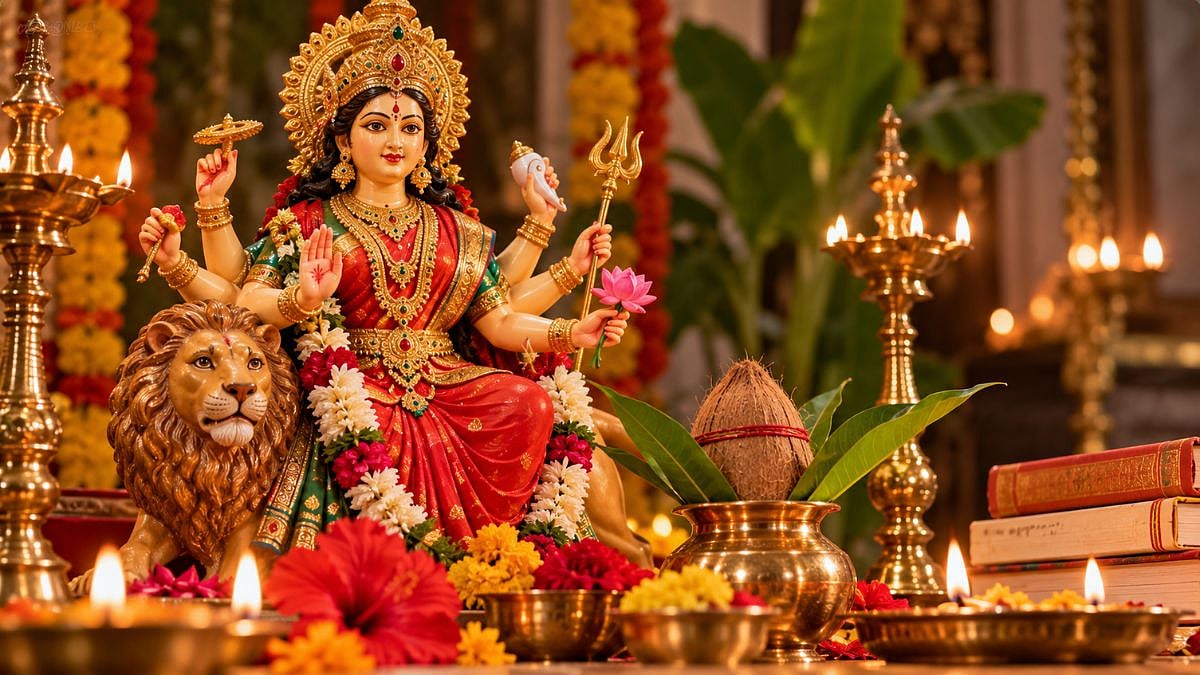
Devi is Goddess. She is trigunatmika. She is Parvati, Lakshmi, Saraswati in one. She controls our manas, vaacha, and karma. In other words, she governs our thoughts, speech, and the actions that flow through us. Paksha is the fortnight. Devi Paksha is the fortnight that immediately follows the “Pitru Paksha”. The pitrus initially get their share of worship and then Devi gets glorified.
During the nine days of the Devi Paksha, the navaratris are celebrated. On the tenth day, Vijaya Dashami is celebrated. Subsequently, the paath / jaap continues, and with full moon day or the Purnimasya, the Devi paksha ends.
The word Devi’s is from “div”, meaning is, “to shine”. The one shines and helps you shine in turn is Devi, in stree form. In the Purusha format, it is Deva. In the Arthanareeshwara Swaroopa, the deva and devi are in the same pratyaksha form. The purusha rupa on the right side indicates Shiva tattvam. On the left part, we have feminine energy personified as Parvati.
From the shareera shastra, the left body is controlled by the right side and vice-versa. Thus, the logical, calculative part which corresponds to the left part of the brain is on the right side as male part. The heart or hrudaya part which is kinder and encompassing with compassion is present on left. The right brain corresponds to the holistic thinking and inspiration. Devi paksha encourages us to become more holistic, kinder, and inclusive. That shall be the true Vijaya. And, Lakshmi shall follow.
(Dr. S. Ainavolu is a Mumbai-based teacher. Topic and views are inspired.)

