A healthy, middle aged woman wakes up one day to realise that all the warmth has left her body. It’s not death, no, but coupled with her aching muscles and unfounded fatigue, she seeks to find a cure. To her dismay, there is no permanent solution to relieve her problems. When, in the foreseeable future, will patients no longer have to struggle like this?
This issue matters because apart from the direct side effects of Hashimoto’s Thyroiditis, current therapies do not fully address the issues within the immune system’s mechanisms. The usage of current long term therapies have particular social problems such as trouble finding optimal and efficient doses of artificial hormones. As gene and stem cell therapy continues to grow, understanding how these technologies can be applied to treat Hashimoto’s becomes essential for finding a permanent cure.
The research firstly identified pathophysiology, risk factors related to Hashimoto Thyroiditis, and diagnostic methods based on clinical manifestations seen in patients. There was a further analysis of emerging treatment methods of similar autoimmune diseases, focusing on both pharmacological and non-pharmacological treatments. Researchers used electronic databases, namely Google Scholar, to study the causes, effects and solutions of Hashimoto’s. The study involved various journals over the past 4 years.
Many findings were collected throughout the study, with a few examples shown below.
The study found that supervision of phenolic, polyphenol, glucose and micro-supplement intake reduced thyroid antibody levels. As a result, immune cells would be less likely to release autoantibodies and damage the thyroid tissue, allowing it to function better in both patients and non-patients.
Another key finding was the usage of IL-6 inhibitors. There have been promising outcomes, showing that it has successfully blocked inflammatory pathways in studies of patients with Rheumatoid Arthritis, allowing the preservation of thyroid cells and function for patients in their early stages.
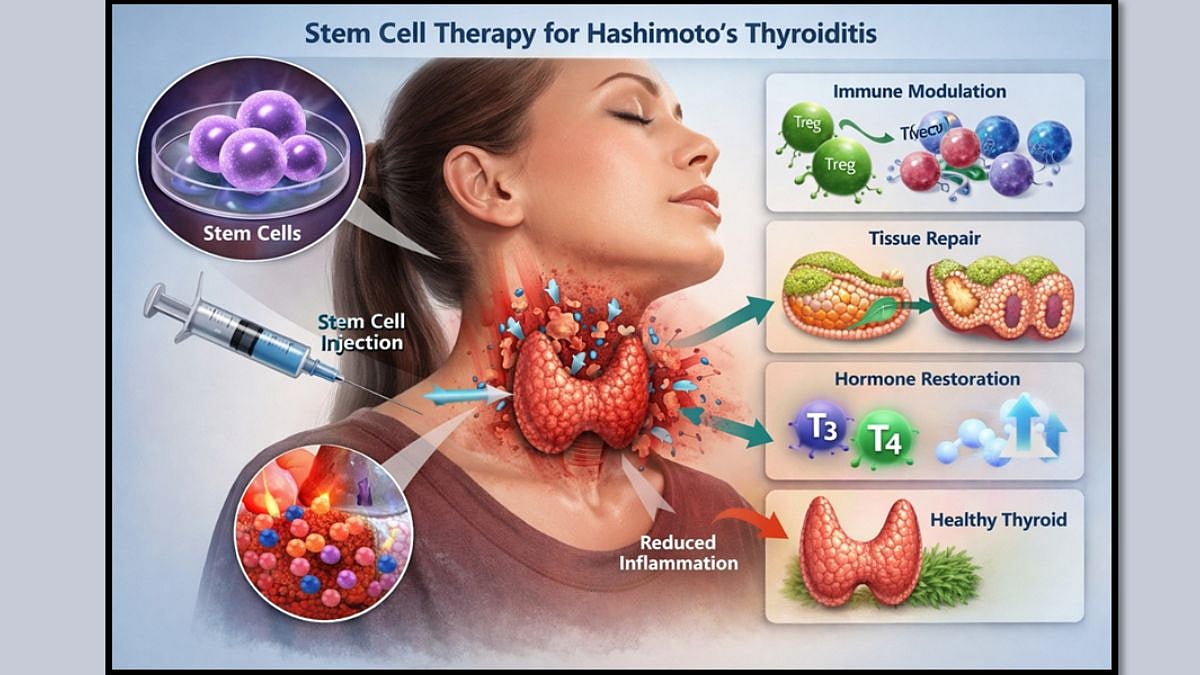
The research also revealed that there is a possibility that adopting a combination of gene and stem cell therapies can enhance immune response, specifically using genetically modified cells that differentiate into bone marrow, fat and muscle.
Overall, this research highlights generally optimistic findings for the future of thyroid treatment. The search results suggest that few trials have been conducted specifically for patients with Hashimoto’s. Hence, specific investigations should be carried out as diseases with similar mechanisms of Hashimoto’s have seen promising results. However, a greater emphasis must be equally placed on patient education and well-being. Going forward, this raises a question on how to balance between the upcoming selection of treatment methods.
For the full paper, click here.
(Author is a Grade 11 student at Dubai International Academy, Al Barsha, Dubai. She is a motivated student with a strong interest in Chemistry and Biology, due to its objective, yet impactful nature. Apart from her ongoing scientific pursuits, she thoroughly enjoys music and art as an outlet for her creativity.)
