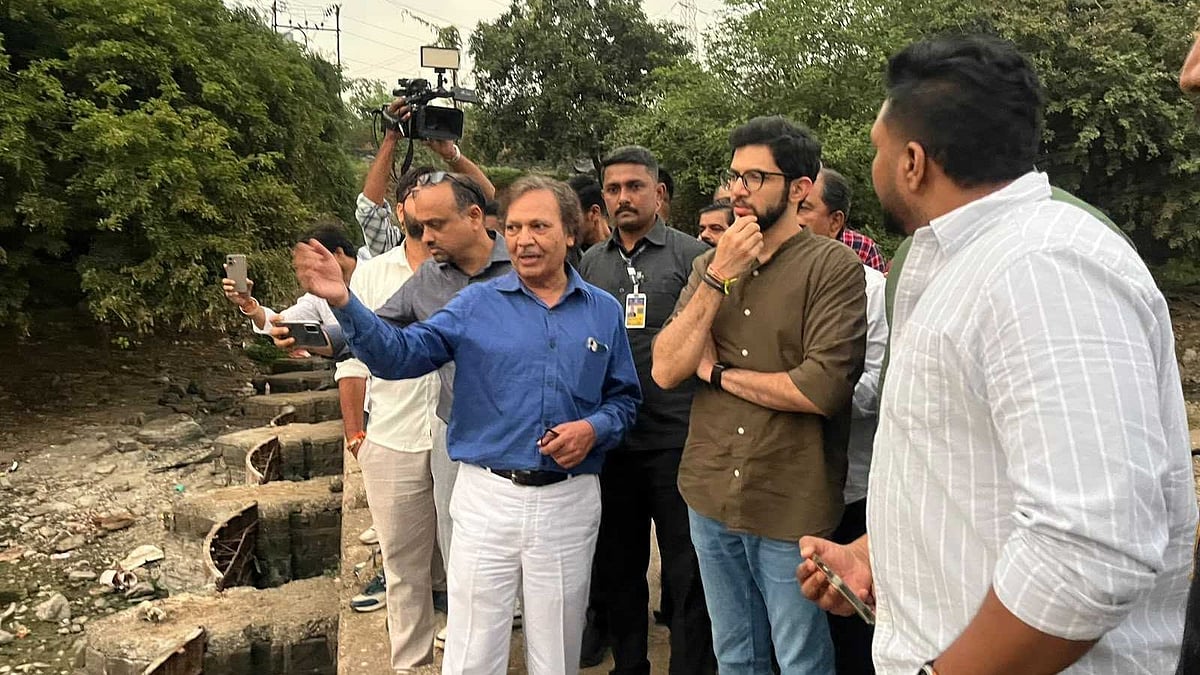
Pune: Shiv Sena (UBT) leader, Aaditya Thackeray on Sunday slammed the Maharashtra government over contaminated drinking water, delays in starting Hinjewadi Metro services and inadequate civic infrastructure, urging residents to unite for a non-political protest to press for their demands.
Mula River Inspected
During his visit to the Hinjewadi area, Thackeray inspected the Mula River following complaints of contaminated water supply and suggested that residents organise a human chain between metro stations to draw the government’s attention to their grievances.
Calling for collective action, Thackeray said residents should come together beyond political affiliations to make the government accountable. “You can organise a human chain protest if everyone comes together and raises their voice against the government. The protest can move from one metro station to another within this area to show the government that if metro services are not functioning, people can still come together and do something to get their demands fulfilled,” he said.
Metro Inauguration Date Uncertain
Thackeray also said that the agitation should remain non-political and focus on the problems faced by residents. He also questioned the uncertainty surrounding the commencement of metro services, pointing out that November 3 had been discussed as a tentative inauguration date, but there was no confirmed date at present.
“If the government wants to organise a grand inauguration, it can do so later. The metro should be started for the convenience of local residents,” he said, demanding that commuters should not be made to wait for a formal inauguration while essential services remained unavailable.
Infrastructure Gaps Near Stations
The Shiv Sena (UBT) leader also criticised the inadequate infrastructure around metro stations, demanding that pending works related to roads, footpaths, auto-rickshaw stands and streetlights be completed. He pointed to construction debris and dust in the area, questioning the quality of infrastructure being provided alongside the metro project.
Raising concerns over contaminated water, Thackeray called for restrictions on new construction in the area until residents’ water requirements were addressed. He argued that water being used for construction activities should instead be made available to people facing difficulties accessing safe drinking water.
Prioritise Residents' Water Needs
“New construction should be banned, and the water being used for construction should be given to residents for their use,” he said, highlighting the need to prioritise citizens’ basic requirements amid complaints of contaminated water supply.
During his inspection of the Mula River, Thackeray raised concerns over pollution and its potential impact on public health. Complaints of contaminated water being supplied through taps have triggered anxiety among residential societies in the Hinjewadi IT Park area, with residents seeking intervention to ensure access to clean and safe drinking water.
He also questioned the government’s approach towards employment-generating hubs such as Hinjewadi, Chakan, Lote and Ambad, alleging that these areas were being neglected despite their contribution to the state’s economy.

He further questioned the government’s earlier assurances that Hinjewadi would receive special attention, noting that residents continued to face unresolved civic problems. He also alleged that officials had not been meeting citizens for around one-and-a-half months, citing the Model Code of Conduct, and argued that it should not prevent authorities from addressing routine public grievances.
Beyond Hinjewadi’s civic issues, Thackeray raised concerns over the environmental impact of major development projects, including tree felling linked to projects associated with the Adani group and the proposed Gargai dam. He questioned the implications of large-scale tree cutting and the availability of water amid changing climatic conditions.
On data centres, he sought clarity on the investment, employment generation and economic benefits expected for Maharashtra, arguing that projects requiring substantial quantities of water and electricity needed careful assessment, particularly in water-scarce areas. He also raised concerns over the protection of mangroves and the flamingo sanctuary, referring to decisions involving ecologically sensitive areas and infrastructure projects such as the Thane Coastal Road.

