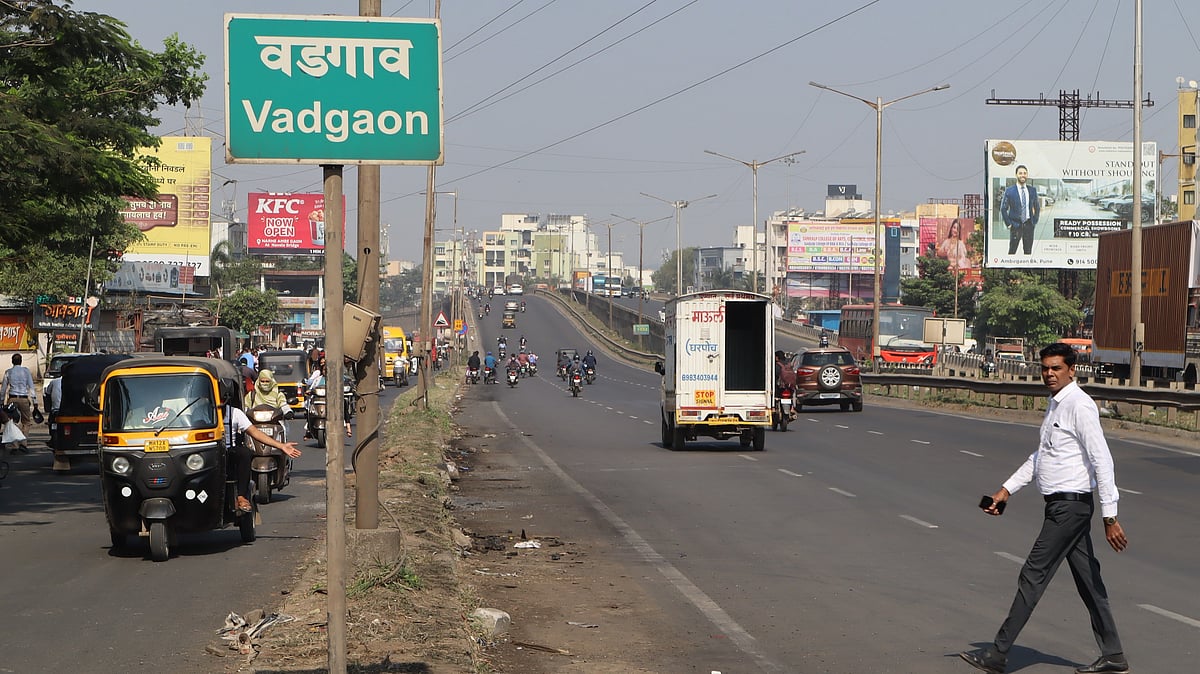
Pune: A recent study found that specially designed road markings can reduce vehicle speeds by more than 40% on Pune's accident-prone Navale Bridge stretch, offering a simple, low-cost solution to improve road safety.
The study, titled "Variable Thickness & Spacing in Cold-Applied Plastic TBMs: Effective Overspeeding Mitigation for Black Spot Remediation", was published in February 2026. It was led by Dr Ashish Dhamaniya of Sardar Vallabhbhai National Institute of Technology (SVNIT), Surat, along with researchers Vineet Jain, Sai Ganesh and Harikiran Silveri.
What Did The Research Find Out?
The transverse bar markings used in the study were developed and implemented by Kataline Limited as part of the field intervention. Amit Thatte, Managing Director of Kataline Limited, said the findings highlight the potential of evidence-based, low-cost road safety measures at accident-prone locations.
Amit Thatte said, “Navale Bridge has emerged as a key focus area for improving road safety due to the recurring pattern of high-speed incidents on the downhill approach. When we studied the stretch closely, we found that the issue was not just the road geometry, but also driver behavior. At Kataline Limited, we focused on introducing interventions that would encourage drivers to recognize the risk earlier and reduce speed before reaching the critical zone."
He added, "The results clearly demonstrate that relatively simple, data-driven measures can positively influence driver behavior, significantly reduce vehicle speeds, and create safer conditions for all road users without requiring major infrastructure modifications.”
The research focused on the downhill stretch from the tunnel exit near Navale Bridge towards Pune city. The location has witnessed several fatal and multi-vehicle crashes over the years, mainly because heavy vehicles often lose braking control while descending the slope.
To study traffic behaviour, the research team carried out field surveys in December 2025 using drones and radar guns. They monitored vehicle movements and speeds before and after the installation of Transverse Bar Markings (TBMs), which are raised road markings made of cold-applied plastic.
The Results…
The markings were installed in different thicknesses and spacing patterns to create both visual and vibration-based warnings for drivers. The aim was to encourage motorists to slow down before reaching the high-risk section.
According to the study, the average traffic speed dropped by 40.8%, from 56.44 kmph to 33.43 kmph, after the markings were installed. Light commercial vehicles recorded the highest reduction of 46.7%, while heavy commercial vehicles slowed by 44.6%. Cars and two-wheelers also showed significant reductions, although some motorcycle riders were seen avoiding the markings by using the road shoulder.
The study also found that the highest vehicle speeds were reduced by up to 41%, while overall traffic flow became more stable. Researchers said this could lower the chances of sudden braking and rear-end collisions.
Crash Severity Can Be Reduced…
Using a kinetic energy model, the researchers estimated that a 40% reduction in speed can reduce crash severity by nearly 64%. They noted that even a small increase in speed sharply increases the force of impact during accidents.
The study recommends installing thicker 20-mm transverse bar markings in future projects to provide stronger visual and vibration warnings. It also suggests placing the markings around 100 to 150 metres before the tunnel exit so drivers have more time and distance to slow down safely.
The researchers concluded that such road markings can serve as an effective traffic-calming measure at accident black spots and could be adopted at similar high-risk locations across the country.
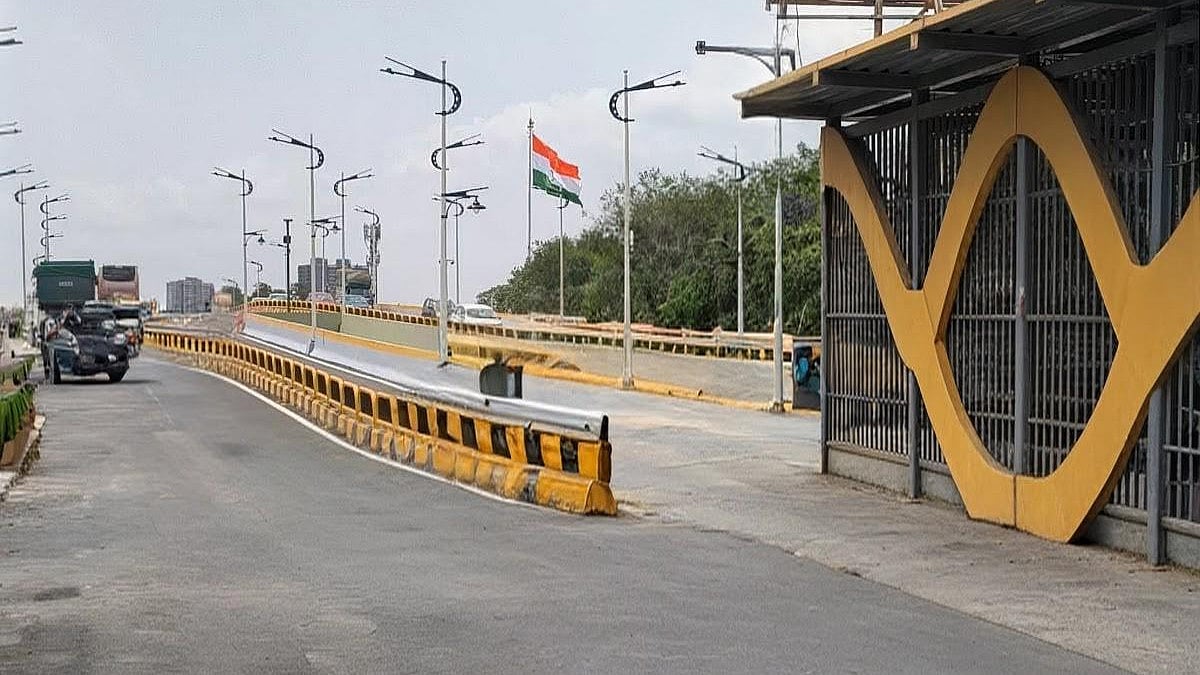
What’s The Current Situation At Navale Bridge?
Although the frequency of major crashes on the Navale Bridge stretch has reduced compared to the 2022–24 period due to stricter enforcement and engineering measures, it continues to remain one of Pune’s most accident-prone black spots.
Fatal accidents, particularly involving heavy vehicles losing braking control on the downhill section towards Katraj, are still reported, while minor collisions and traffic pile-ups remain common. Authorities have introduced measures such as increased traffic policing, speed enforcement, rumble strips, warning signage and regular inspections of heavy vehicles. However, this still doesn't make the Navale Bridge a “safe stretch".
However, experts believe long-term solutions, including improved road engineering and diversion of heavy traffic through the proposed Pune Ring Road, are needed to significantly reduce accident risks. The research study has been provided to the Pune Police. But the police officials still haven't clarified what changes they have made based on it.
