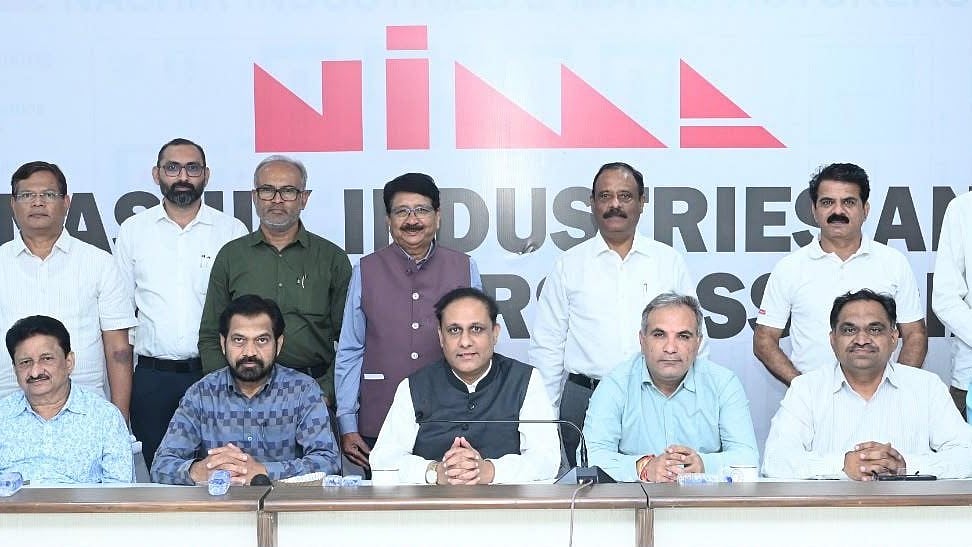
Nashik: Industrialists and business associations have decided to jointly oppose seven proposed new and amended regulations issued by the Maharashtra Electricity Regulatory Commission (MERC), citing their potential adverse impact on industries, electricity consumers and the renewable energy sector.
At a joint meeting held at NIMA House, representatives of various industrial and commercial organisations resolved to conduct a detailed study of the draft regulations and submit as many objections and suggestions as possible to the commission before the Oct 26, 2026, deadline.
The meeting was attended by NIMA President Ashish Nahar, Vice-President Manish Rawal, Secretary Rajendra Ahire, Treasurer Rajendra Wadnere, AIMA Energy Committee Chairman Ravindra Zope and MASMA President Amit Kulkarni, along with representatives of NIMA, AIMA, CREDAI, the Maharashtra Chamber of Commerce, Laghu Udyog Bharati and several other organisations.

The seven proposed regulations cover intra-state electricity transmission and general network access, open access in the distribution sector, rooftop solar energy, electricity storage systems, forecasting and scheduling of power generation, renewable purchase obligations and the state electricity grid code.
Industry representatives expressed concern that the proposed changes could increase financial and administrative burdens on industrial consumers, micro, small and medium enterprises, solar power projects and businesses using open access or generating electricity for captive consumption.
Particular concerns were raised over electricity banking, adjustment of surplus power, banking charges, open access arrangements, deviations in power generation, net metering and energy storage systems.
NIMA President Ashish Nahar warned that higher electricity costs could undermine the competitiveness of Maharashtra's industries and adversely affect industrial development and investment.
MASMA President Amit Kulkarni stressed the need to maintain regulatory stability, policy continuity, transparency and consumer interests while ensuring that the new rules remain technically feasible and economically viable.

