.jpeg?width=1200)
Chhatrapati Sambhajinagar: A central government team has begun assessing drought-related crop damage in Maharashtra’s Chhatrapati Sambhajinagar and Beed districts, where distressed farmers have demanded immediate financial assistance of up to ₹60,000 per acre.
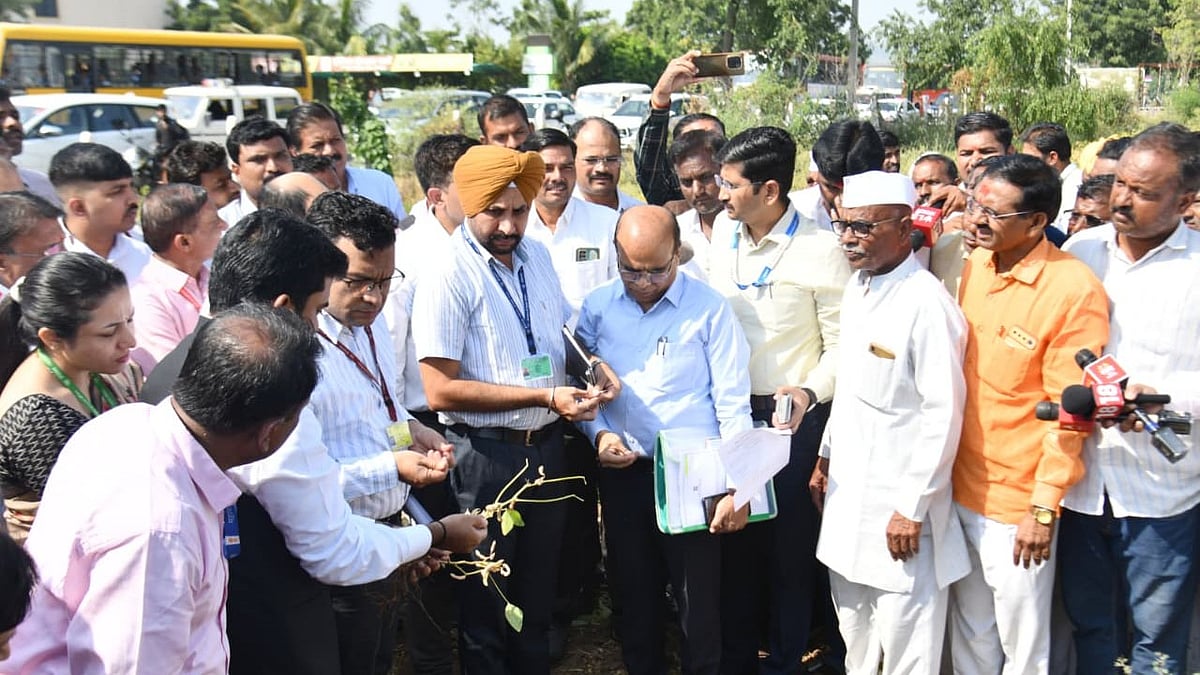
The team, led by Muktanand Agrawal, Joint Secretary in the Agriculture and Farmers Welfare Department, inspected damaged fields and interacted with cultivators whose crops have been destroyed by prolonged dry spells.
Central team inspects damaged crops
During the visit, the team inspected the farm of Vilas Shinde in Demni village, where soybean crops spread across more than one hectare were reportedly destroyed. The assessment will continue at several locations over the next three to four days, after which the team will submit its report.
Farmers said they had invested ₹50,000 to ₹60,000 per acre but lost their entire harvest. They urged the government to expedite relief payments and clear pending crop insurance claims, some of which have remained unpaid for two years. Cotton, soybean, maize, sugarcane and mulberry crops have suffered extensive damage due to a significant rainfall deficit since early July.
Farmers seek water conservation measures
In Beed district, the team visited affected farms in Georai and other areas. Farmers also demanded check dams, desilting and groundwater recharge measures as water storage in the Majalgaon dam has fallen to 26 per cent of its average capacity.
Drought verification expanded to 18 talukas
Meanwhile, the Maharashtra government has approved ground verification of drought severity in 18 additional talukas. Surveys covering 20 per cent of the five major crops in these areas will compare satellite imagery and computer-generated data with actual field conditions.
Chhatrapati Sambhajinagar division has the highest number of drought-affected talukas in the state, at 74, followed by Amravati with 56 and Nashik with 49. The expanded verification exercise aims to establish a more accurate assessment of the drought situation and help determine appropriate relief measures.

