Jalgaon: The world is changing due to artificial intelligence, and our lives are changing rapidly. Information, preparation, proper use, human-centred technology, and sustainable solutions regarding artificial intelligence are the key to a bright future, opined V.K. Singh, Senior Advisor to the Government of India's NITI Aayog.
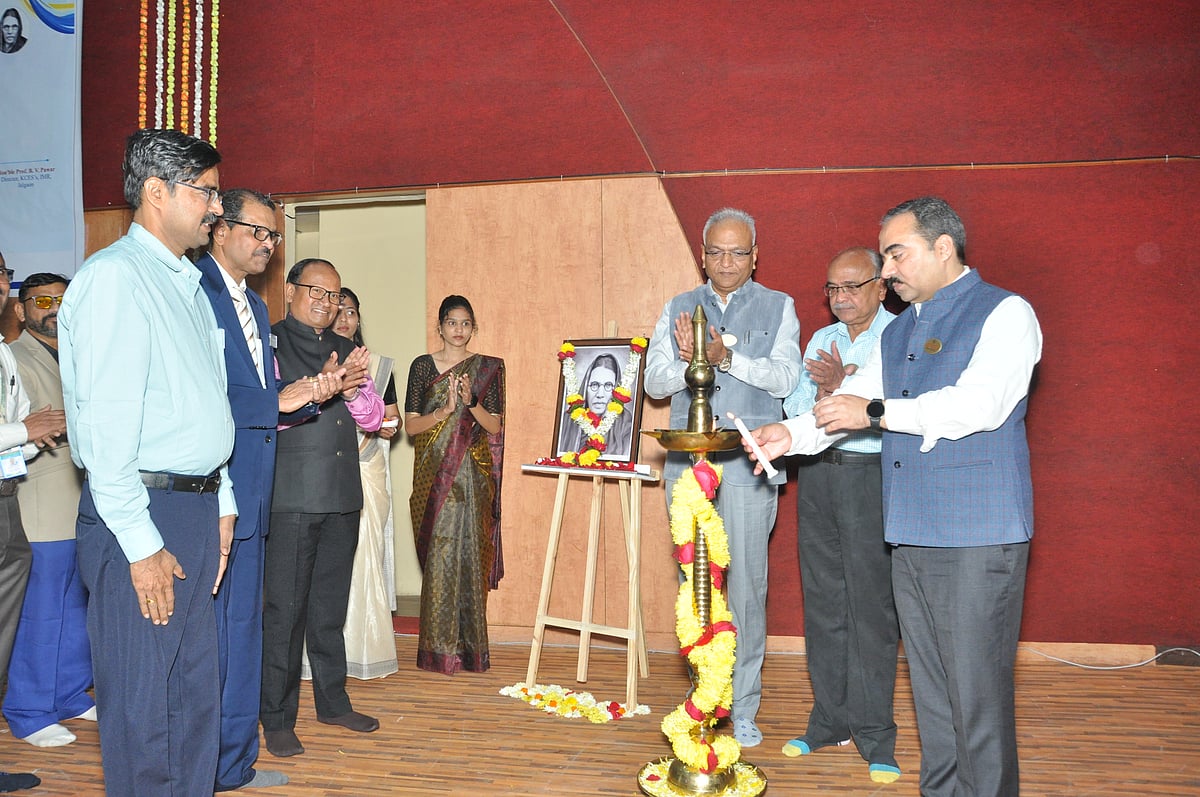
Jalgaon: International Conference On AI And Human Cognition Held At North Maharashtra University |
He was speaking at the inauguration of the international conference on "Cognition, Human and Artificial Intelligence" organized by the School of Computer Science of Kavayitri Bahinabai Chaudhari North Maharashtra University and under PM Usha. Present on the dais were the Vice-Chancellor Prof. S.T. Ingle, as the president, and as chief guests, Prof. Manish Joshi, Secretary of the University Grants Commission, Prof. G. R. Sinha, Vice-Chancellor of GSFC University Vadodara, Prof. B.V. Pawar, the chief convener of the international conference and Director of the School of Computer Science Prof. Rakesh Ramteke, Prof. S.R. Kolhe, Secretary Dr. Ajay Surwade, and coordinator Dr. Ram Bhavsar.
Speaking on this occasion, Prof. Singh presented a detailed account of the opportunities, challenges, and risks related to artificial intelligence. He also provided information about various research being conducted in India and the current status of AI. He clarified that while artificial intelligence (AI) technology is creating tremendous opportunities, it is also creating new challenges and risks.
Although AI is affecting employment, new opportunities are being created on a large scale, and becoming literate in AI is the need of the hour. It is necessary to use AI properly and ethically because misuse is coming to light through deepfakes and other methods. Finding sustainable solutions for AI is also important. In India, the use of AI has begun in all sectors.
Therefore, the government has taken steps to empower India with AI, he said. Professor Manish Joshi, Secretary of the University Grants Commission, cited the ancient tradition of Indian knowledge. Efforts are underway through the University Grants Commission to increase the impact of AI in society and to disseminate AI knowledge to the common people in the form of books. He also said that everyone's contribution is important for a developed India.
In his presidential concluding remarks, Pro-Vice-Chancellor Prof. S.T. Ingale said that the Government of India has been moving forward with a national policy on AI since 2018. AI is necessary in all fields, and its use will be crucial for India. However, ethics and social awareness are essential when using AI. He said that since AI is multidisciplinary, it has been included in the new education policy. On this occasion, a book containing the research papers received was published.
In the introductory remarks, the chief convener of the international conference and director of the School of Computer Science, Prof. Rakesh Ramteke, explained the rationale behind the organization of the conference. The citation was read by Manjiri Patil. The program was conducted by Prof. Sunita Jena and Prof. Mansi Vaidya, and the vote of thanks was given by Prof. Ram Bhavsar.
After the inauguration, Prof. G. R. Sinha, Vice-Chancellor of GSFC University, Vadodara, and Prof. Rajiv Wankar from the University of Hyderabad provided guidance. Dr. Jonathan Dunne from Ireland and Prof. Kenji Doya from Japan also provided guidance online.
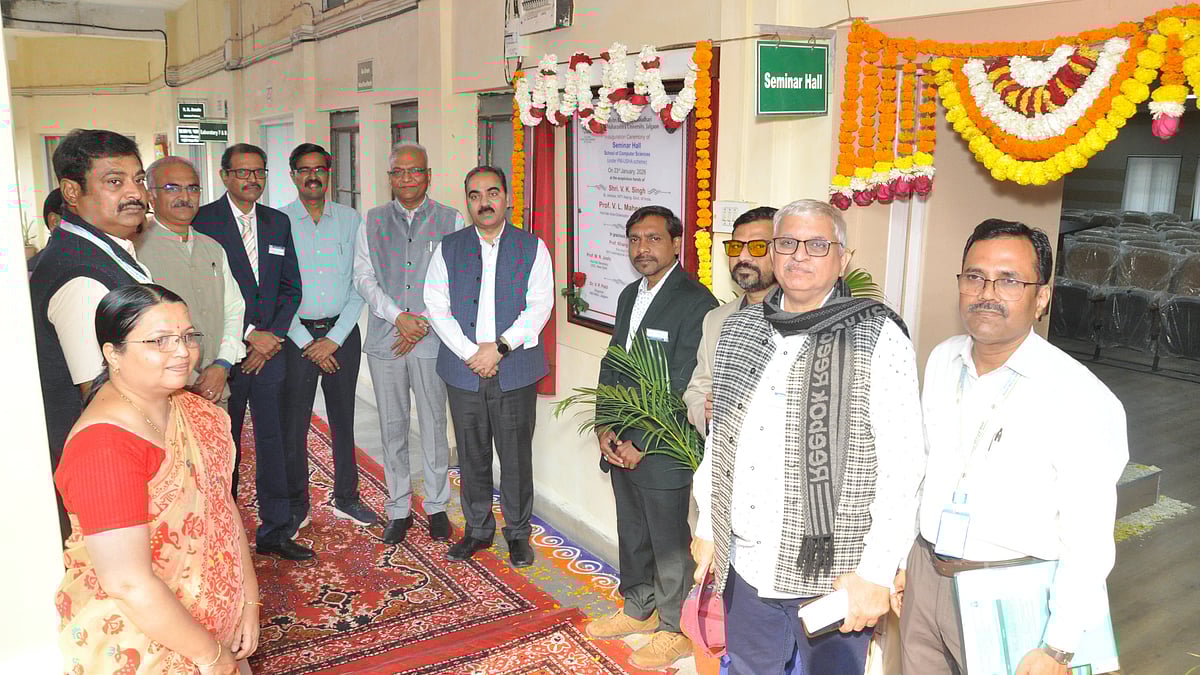
Inauguration of the state-of-the-art conference hall in the School of Computer Science: The well-equipped and state-of-the-art conference hall created in the School of Computer Science was inaugurated today, January 23rd.
On this occasion, V.K. Singh, Senior Advisor of NITI Aayog, Government of India, and Vice-Chancellor Prof. S.T. Ingle, the Secretary of the University Grants Commission, Prof. Manish Joshi, the Vice-Chancellor of GSFC University Vadodara, Prof. G. R. Sinha, Registrar Dr. Vinod Patil, Director of the School of Computer Science Prof. Rakesh Ramteke, Prof. S.R. Kolhe, Prof. Dr. Ajay Patil, Secretary Dr. Ajay Surwade, and Coordinator Dr. Ram Bhavsar were present.

