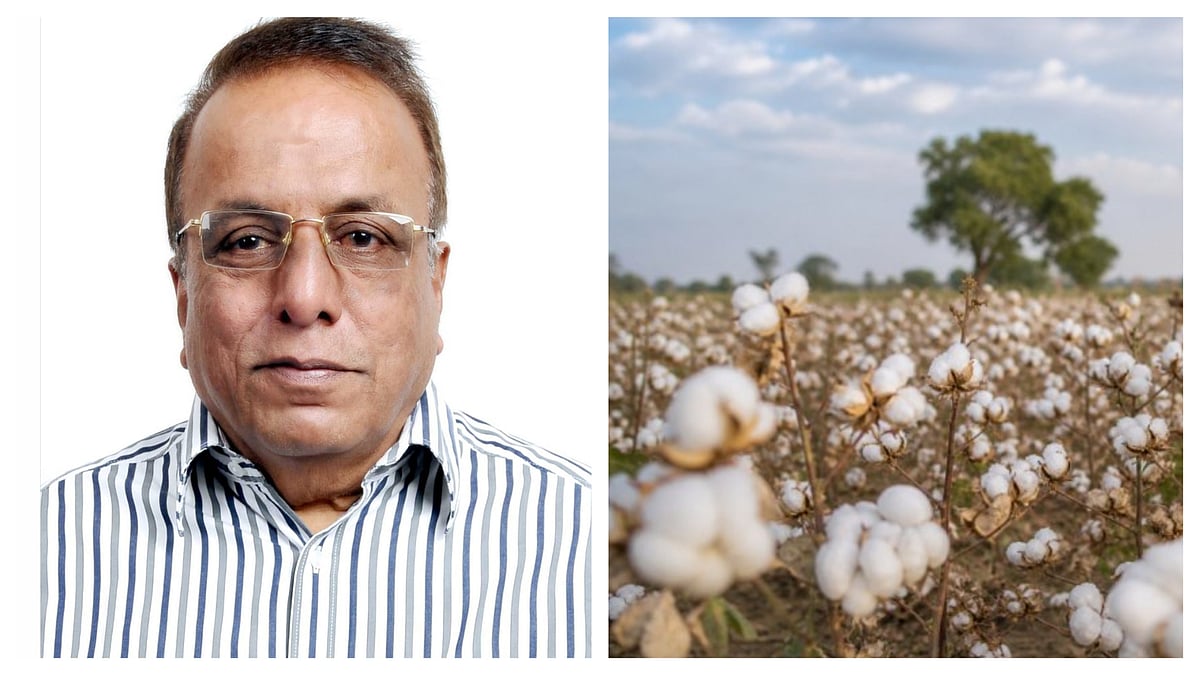
Jalgaon: The use of outdated cotton seeds and old farming technology is severely affecting cotton productivity across the country, causing major financial losses to both farmers and the cotton ginning industry, said Pradeep Jain, Founder-President of the Khandesh Ginning and Pressing Factory Owners' Association.
Speaking to FPJ, Jain stressed the urgent need for advanced cotton seeds and modern agricultural technology to improve cotton yields and strengthen the textile sector. He also welcomed the Central Government’s approval of the ₹5,659 crore Cotton Productivity Mission, calling it a major positive step for the country’s cotton and ginning industries.
According to Jain, farmers in Maharashtra, especially in the Khandesh region, continue to use outdated BT-2 cotton seeds that have now become ineffective. He pointed out that countries such as Brazil and Australia are using advanced varieties like BT-7, enabling farmers there to achieve cotton yields of nearly 35 quintals per acre. In comparison, farmers in Khandesh are producing only 8 to 10 quintals per acre.
He said this huge gap in productivity is causing serious financial losses for farmers. Jain also noted that the disease resistance capacity of the seeds currently being used has weakened significantly, leading to rising bollworm attacks and excessive dependence on chemical pesticides.
He stated that if advanced seeds such as BT-7 were introduced in India, cotton production would increase substantially and farmers would receive better returns for their crops.
Jain further explained that the crisis has also affected the ginning and pressing industry in Khandesh. The region currently has more than 150 ginning and pressing factories with a combined capacity to produce nearly 40 lakh cotton bales. However, only around 10 lakh bales are being produced at present.
“Factories that earlier operated in three shifts are now functioning in only one shift. Many units are on the verge of closure,” he said.
Welcoming the Cotton Productivity Mission, Jain said the initiative would help improve cotton quality through modern farming practices and technology. He added that better-quality cotton would support efficient ginning and pressing, improve yarn production in spinning mills, and boost the manufacturing of finished fabrics through weaving and knitting industries.
He said the development would also strengthen garment branding and exports in international markets while creating more employment opportunities and improving the economic condition of farmers.
Pradeep Jain urged the Central Government to immediately focus on introducing advanced cotton seeds and removing administrative hurdles related to seed approvals and rights. He warned that the cotton cultivation area is gradually declining due to poor market returns and said the trend can only be reversed by providing farmers with modern technology and high-yield seed varieties.
