On November 18, 2001, Vijay and Sadhana Phalnikar made a desperate call for an ambulance as their only son, Vaibhav, faced a medical emergency from cancer. The ambulance didn’t arrive in time at their Warje Malwadi home in Pune. In their darkest hour of grief, the couple made a promise: no other family in Pune’s underserved villages would face the same tragedy.
Over two decades later, that promise has blossomed into Apla Ghar, a charitable trust operating five projects that serve orphaned children, destitute elderly, and thousands of rural patients who otherwise have very limited resources to seek help.
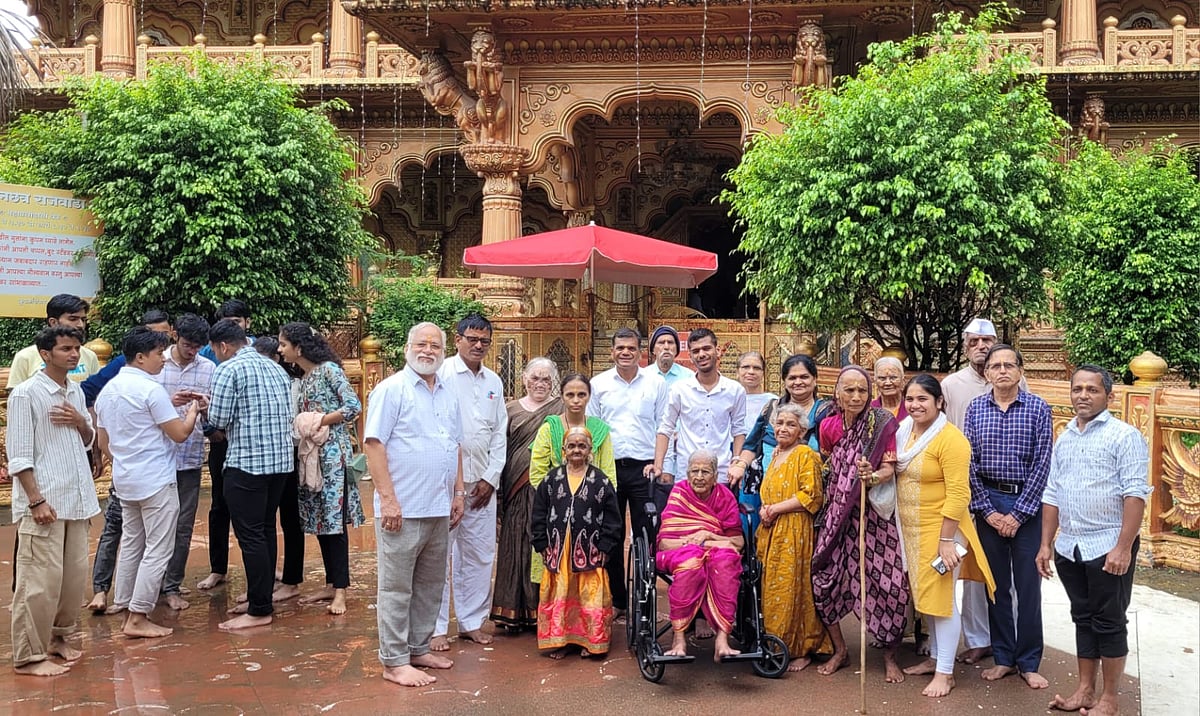
Vijay Phalnikar with elderly living from Apla Ghar's old-age home |
A Promise Born from Loss
Vijay Phalnikar knows what it means to be forgotten by society. Born in Nagpur, he spent his early years in a Mumbai orphanage, surviving on leftover food near the Mumbadevi and neighbouring temples. “Being an orphan, I initially lived in the temple premises, surviving on scraps,” he recalls. “However, Yashwantrao Kale, who I consider my guru, saw my struggle and enrolled me in the Children’s Aid Society, which brought my life on track.”
That second chance shaped everything that followed. Phalnikar built a stable life, working for two years at Nagpur Doordarshan before joining Balchitravani Pune, where he spent 29 years before opting for voluntary retirement in 2005. He married Sadhana and together had a son, Vaibhav.
When the Ambulance Failed
Vaibhav was diagnosed with cancer while the family lived in Pune’s Warje Malwadi area. This revelation turned their world upside down, but nothing prepared them for November 18, 2001.
“We faced a medical emergency and called an ambulance, but it failed to arrive on time. And with the turn of events, unfortunately, we lost our only son,” Phalnikar said.
In their grief, the couple saw a pattern they couldn’t ignore: rural and semi-urban areas around Pune, like Velhe, Khed Shivapur, the foothills of Sinhagad and other areas had virtually no access to prompt medical care.
“That day they decided to start a free ambulance service,” Phalnikar said. “We wanted to be an active agent of change and help avoid losing lives due to the absence of swift medical facilities.”
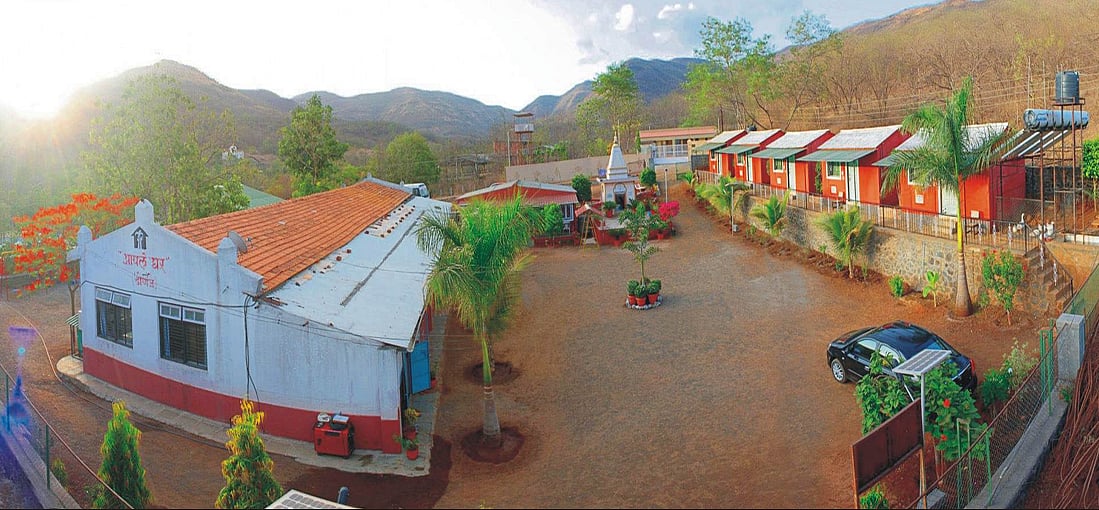
Apla Ghar centre at Golewadi, Donje, Sinhagad Road, Pune |
Building Apla Ghar
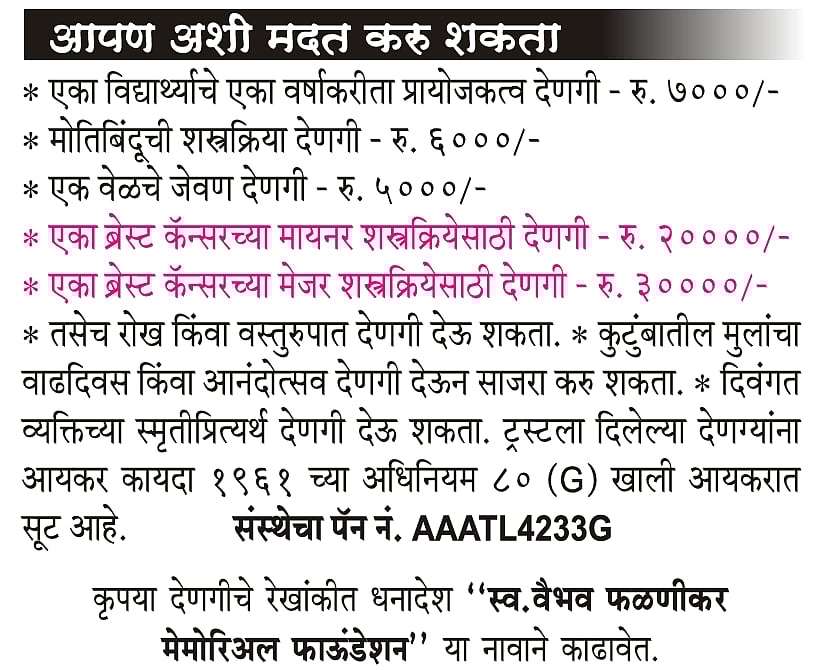
In February 2002, the couple started the ‘Late Vaibhav Phalnikar Memorial Foundation,’ a charitable trust, where Phalnikar serves as its founder and president, with Sadhana serving as a trustee.
The foundation started modestly, using insurance money from Vaibhav’s death to fund a free ambulance service for economically weaker sections of society. But gradually that seed of compassion has grown larger.
Today, on a 3-acre plot in Donje, at the foothills of Sinhagad in Pune, five projects have been operational, which include an orphanage, an old age home, a vocational training centre, a free mobile clinic covering 16 remote villages, and the state-of-the-art multi-speciality Shrimati Kausalya Karad Hospital in Pune’s Golewadi.
A Home for the Forgotten
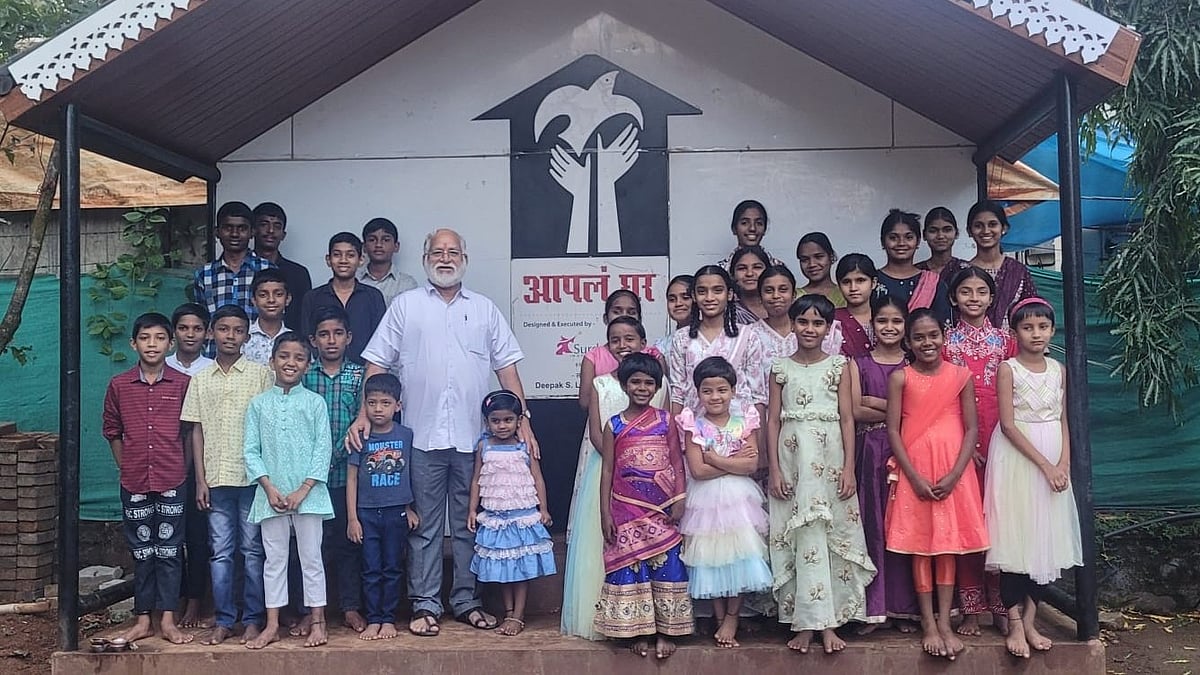
At the heart of the foundation is Apla Ghar (Our Home), an orphanage that currently houses 42 children. The organisation provides free accommodation, food, clothing, education, and medical care. The children attend schools affiliated with the Maharashtra State Board of Secondary and Higher Secondary Education (MSBSHSE).
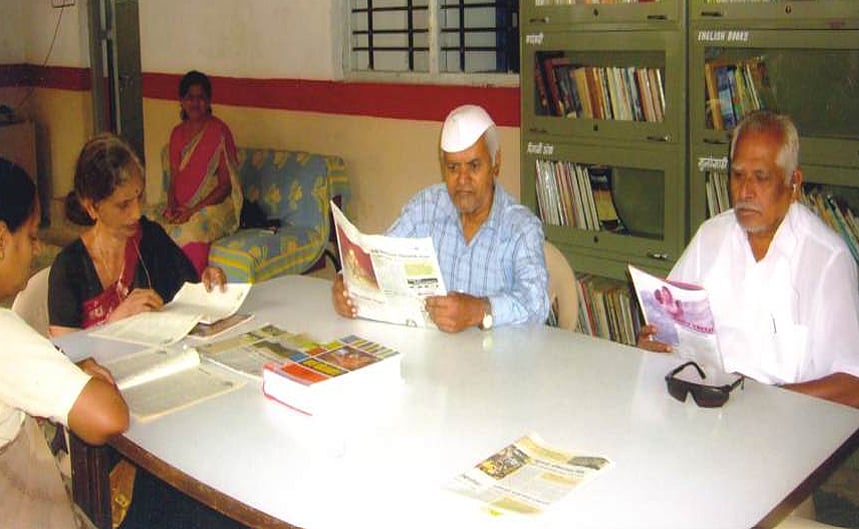
Senior citizens at Apla Ghar old age home |
“Social, moral, and cultural values are instilled in the kids through various social programs. To date, many of the children who grew up at Apla Ghar have become financially independent, contributing members of society, some even joining the police force and other professions.
The old-age home on the same campus cares for 10 destitute elderly people, all of whom receive the same level of care, which is also free of cost.
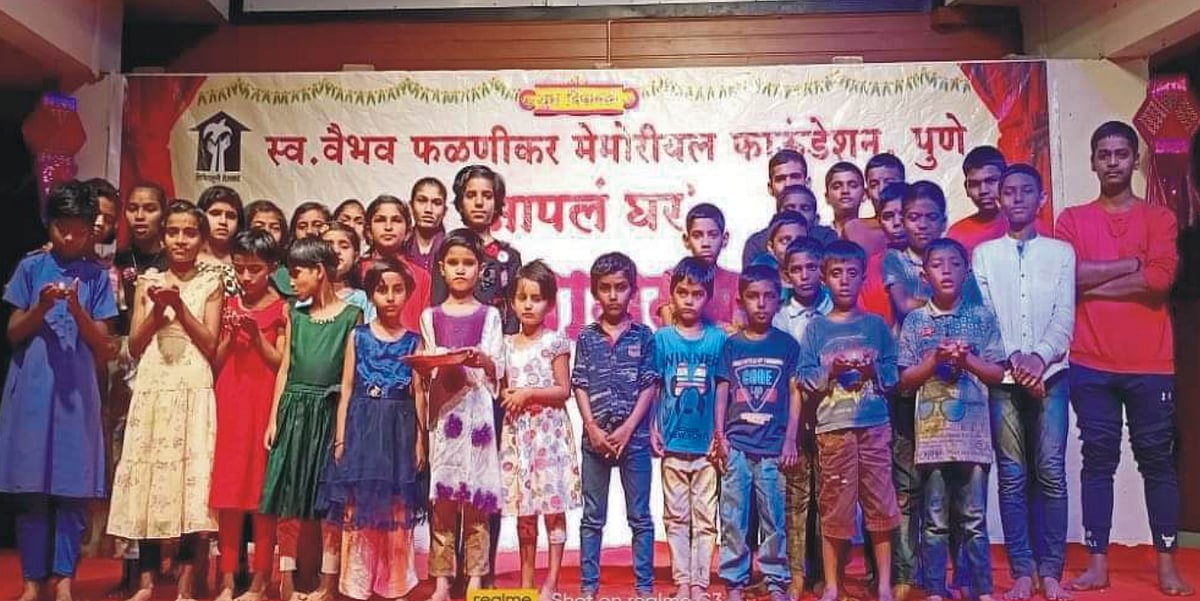
Kids celebrating cultural activities at Apla Ghar |
Healthcare for Rural Communities
The foundation’s Kausalya Karad Charitable Hospital is the only facility in the Ghera Sinhagad area equipped with state-of-the-art medical technology and expert doctors. Here, farm labourers and poor patients from rural areas, as well as members of the Katkari and tribal communities, receive medical treatment and surgeries at affordable rates.
This hospital has several operating rooms, incubators, sonography, color Doppler, 2D echo, colonoscopy, endoscopy, laparoscopy, digital (DR) X-ray, ECG, and well-equipped separate departments for eyes and dentistry, along with expert doctors, surgeons, and nurses.
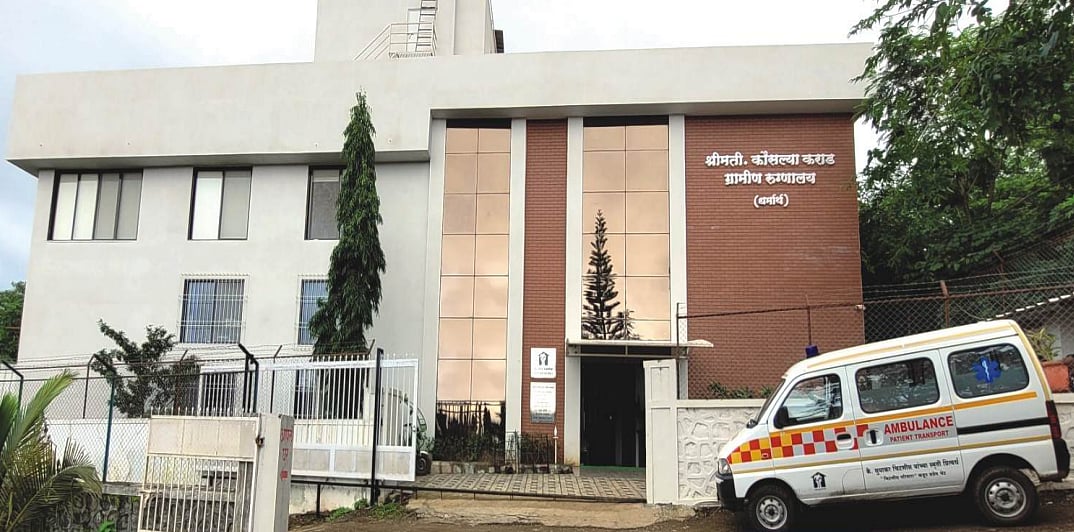
Kausalya Karad Charitable Hospital at Ghera Sinhagad, Pune |
Beyond routine treatments, the hospital offers eye examinations and cataract surgeries, along with joint pain therapy. A meal facility is available for patients and their relatives for ₹10, and a free e-rickshaw service for transporting patients from Golewadi to the hospital.
The mobile clinic extends this care further, reaching 16 remote villages that would otherwise have no access to healthcare.
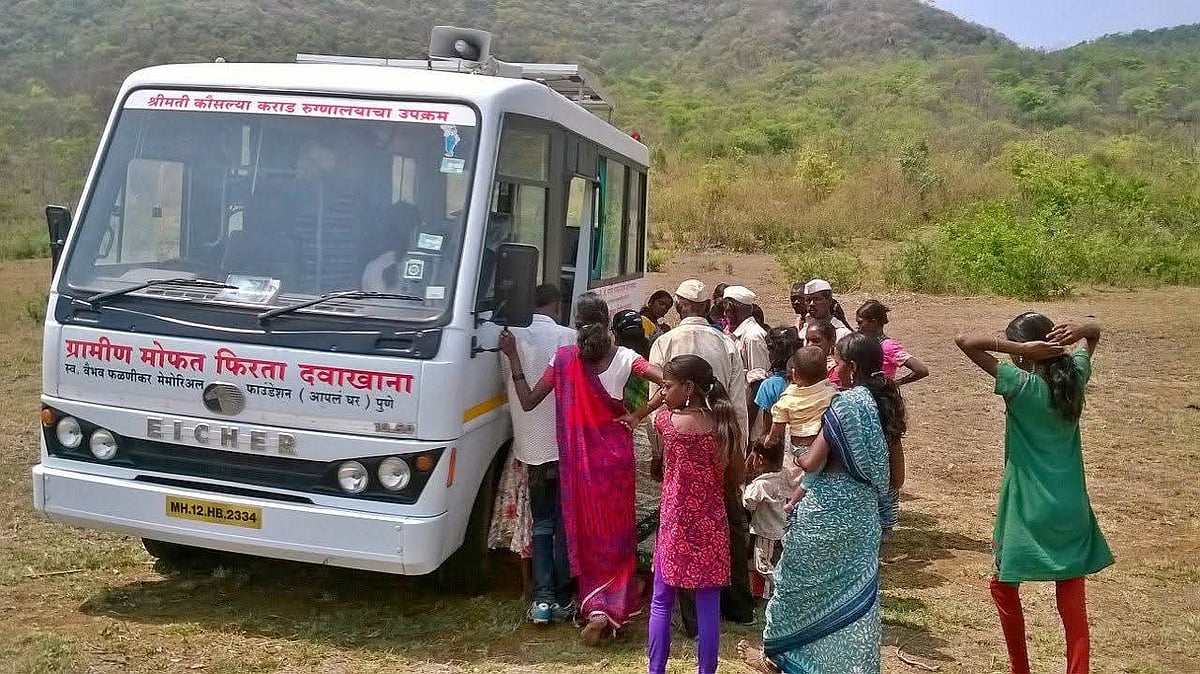
Mobile clinic van visiting villages near Pune |
The Struggle to Sustain
Despite serving thousands, Apla Ghar operates without government support. As a charitable trust, it depends entirely on donations.
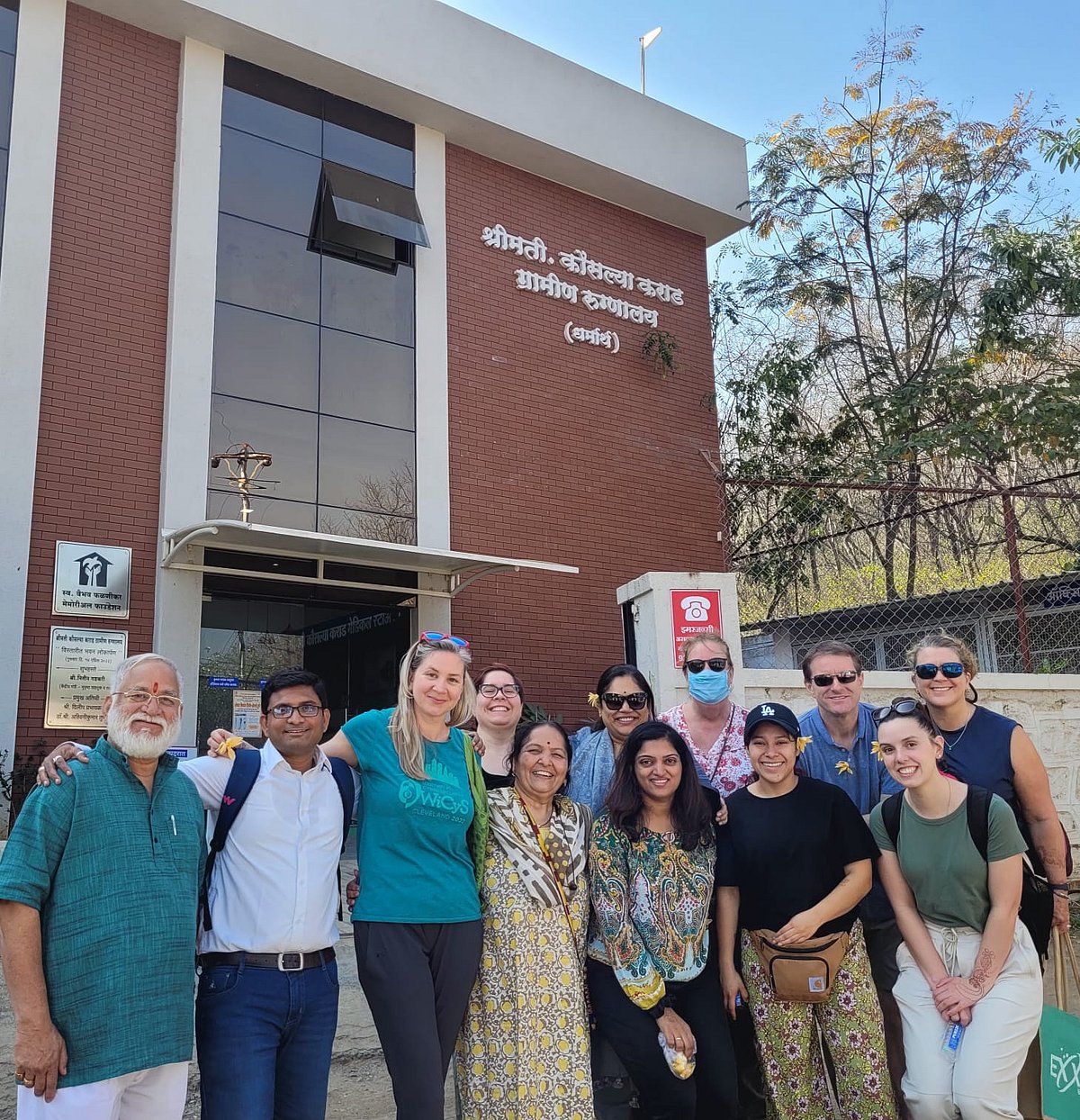
Foreign dignitaries visiting Kausalya Karad Charitable Hospital |
“Apla Ghar project has been possible only by generous donations in cash and kind from our supporters, well-wishers and corporations. And we will keep serving the needy, unserved part of our society who need healthcare, which has given us energy to survive till date,” says Phalnikar.