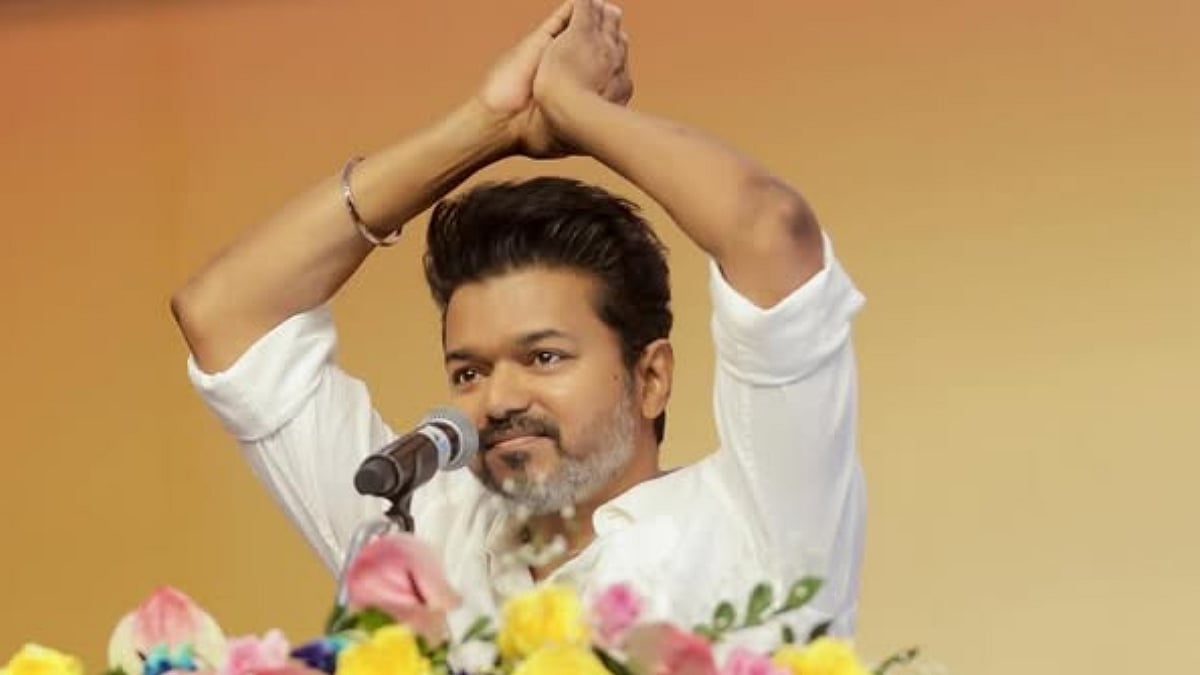
The meteoric rise of Vijay’s Tamilaga Vettri Kazhagam has transitioned from a cinematic dream run to a sobering political stalemate, perfectly capturing the agony of falling just short of the finish line. While the superstar-turned-politician successfully dismantled the decades-old DMK and AIADMK duopoly by securing 108 seats, the achievement remains bittersweet. With the 234-member assembly requiring a 118-seat majority for a mandate, TVK finds itself a frustrating 10 seats shy of total control, leaving the state’s political future suspended in a tense "so near, yet so far" limbo.
The path forward grew even more arduous on Thursday when Governor Rajendra Vishwanath Arlekar delivered a firm reality check, stating unequivocally that Vijay must prove he has the necessary numbers before any invitation to form a government is extended. In response to this deadlock, the TVK leadership is reportedly contemplating a mass resignation of all 108 party MLAs, a move designed to collapse the assembly and prevent his rivals from governing without a true majority.
Immediate arithmetic and majority shift
By threatening a mass resignation, the TVK is essentially looking to weaponise the legislative rules of the House to prevent a rival coalition from taking root.
If the TVK’s 108 legislators vacate their seats, the effective strength of the House would plummet to 126. This move creates a mathematical paradox. While intended to stall the opposition, it would technically lower the majority threshold to just 64 members for the remaining House.
This could inadvertently allow a minority coalition between the DMK and AIADMK to claim a legal majority with far fewer seats than the original electoral mandate required, provided the Governor accepts the reduced House as legitimate.
Invocation of Article 356 and President’s Rule
A mass resignation of nearly 46 per cent of the legislature is designed to trigger a "failure of constitutional machinery," which serves as the primary ground for the governor to recommend President’s Rule under Article 356.
Governor Arlekar would be forced to decide whether the remaining Assembly can provide a stable and representative government for the state. Given that such a significant portion of the electorate would suddenly find themselves without representation, the governor might determine that the Assembly no longer reflects the will of the people as expressed in the 2026 general election.
This scenario would likely lead to the suspension or dissolution of the House, placing Tamil Nadu under the direct administration of the Union government.
Procedural hurdles and the Speaker’s discretion
The execution of such a threat is not an instantaneous process and is governed by strict procedural oversight within the Vidhan Sabha. Every MLA must submit their resignation in person to the Speaker, who is constitutionally mandated to verify that the act is voluntary and not the result of party coercion.
If the Speaker suspects that the move is a tactical ploy to engineer a constitutional crisis or stall a floor test, they have the authority to delay the acceptance of these resignations or conduct an inquiry. This potential for procedural friction would result in high stakes legal battles in the Madras High Court, where the timing and validity of the resignations would be scrutinised before any further steps toward government formation are taken.
A massive bypoll?
Under statutory requirements, the Election Commission must conduct by-elections for any vacant seat within a six-month window, provided there is enough time left in the legislative term.
A mass resignation would effectively force a mini-general election across 108 constituencies simultaneously, turning the political stalemate into a public referendum.
For Vijay, this represents the ultimate political gamble, an attempt to convert a near-win into an absolute majority. While this offers a path to a decisive mandate, it risks alienating voters who may perceive the move as the primary cause of government instability.
Strategic paralysis
Beyond the political optics, the actualisation of this threat would lead to a total paralysis of the state’s legislative functions. With nearly half of the seats vacant, the Assembly would struggle to maintain the quorum necessary to pass the State Budget, approve departmental grants, or provide essential legislative oversight. This administrative vacuum would leave millions of citizens without a voice in the capital, stalling local development projects and policy implementation.
While the TVK’s strategy relies on the public blaming the DMK and AIADMK for the deadlock, the veteran parties would likely counter by framing the mass resignation as an act of political immaturity that prioritises theatrical gestures over the actual governance of Tamil Nadu.
