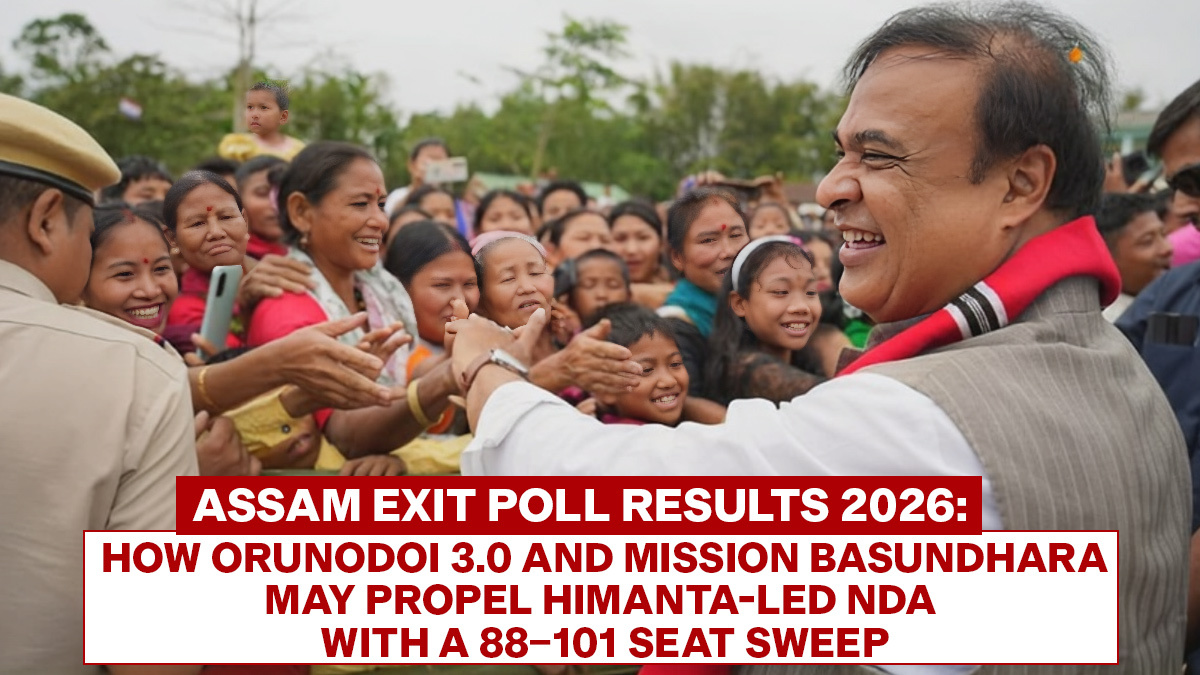
The 2026 Assam Assembly exit polls suggest a decisive mandate for the NDA, signalling a structural consolidation of the "Himanta Era" and a significant fragmentation of the opposition. With a historic voter turnout of 85.9 per cent—surpassing the 2021 record of 82per cent—the state appears to have moved toward a dominant-party system.
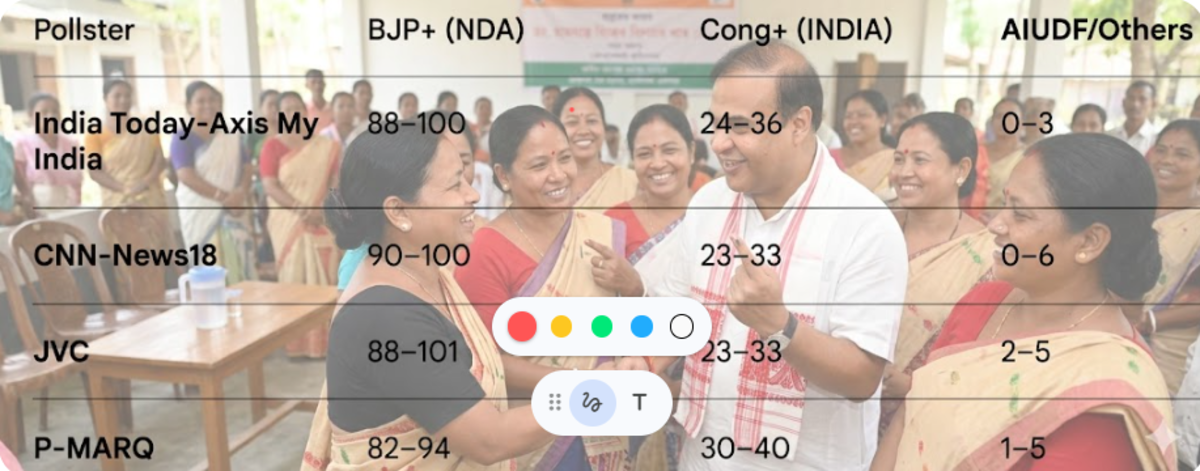
Projections from major pollsters, including India Today-Axis My India and CNN-News18, place the BJP-led alliance between 88 and 101 seats, comfortably crossing the majority mark of 64.
Himanta factor and political hegemony
This election served as a high-stakes referendum on Chief Minister Himanta Biswa Sarma. His transition from a backroom strategist to the emotive face of the BJP in the Northeast is now arguably complete.
Narrative dominance: Sarma successfully framed the contest as a civilisational battle—indigenous Assamese/Hindus vs migrants. This polarisation consolidated the ethnic voting blocs, leaving the Congress-led alliance struggling to find a competing regionalist narrative.
No anti-incumbency paradox: Typically, a decade in power breeds fatigue. However, the leadership swap in 2021 acted as a refresh button. Sarma’s hyper-active administrative style allowed the BJP to campaign as a new government while standing on 10 years of infrastructure growth.
A prestige contest: For Sarma, this wasn't just about winning. It was about proving his brand of aggressive governance could override traditional anti-incumbency patterns. The exit poll vote share (BJP at 48 per cent versus Congress at 38 per cent) suggests he has succeeded.
Welfare economics: Orunodoi gamechanger
The exit polls highlight a massive swing among woman voters and rural demographics, driven by what is now termed Orunodoi economics.
Direct Benefit Transfers (DBT): With roughly 75 per cent of the population touched by at least one state scheme, the Orunodoi program (monthly cash transfers to women) created a loyal "labharthi" (beneficiary) class.
Ownership over subsidy: The BJP shifted the paradigm from the old Congress model of "doles" (blankets, thread and yarn) to direct cash and land ownership rights. For communities like the tea tribes, receiving legal title to land they have occupied for generations was a far more powerful incentive than temporary subsidies.
Gender gap: Polling data suggests that women turned out in higher numbers than men in several districts, with the BJP enjoying a significant gender bonus due to these targeted welfare measures.
Strategic blunders: Opposition’s fragmentation
The Congress-led Asom Sonmilito Morcha appears to have suffered from a lack of ideological clarity and strategic missteps that split their potential base.
AIUDF split: The decision by Congress not to align with Badruddin Ajmal’s AIUDF backfired. Instead of consolidating the anti-BJP vote, it led to a three-way split in minority-heavy regions like Lower Assam and the Barak Valley.
Ideological confusion: Congress cadres were caught in a vacuum—unable to decide whether to lean into Assamese sub-nationalism (competing with the BJP) or secularism (retaining minority votes). This lack of a clear "face" to match Sarma left the alliance rudderless.
Regional players: While parties like Raijor Dal and AJP hoped to capture the anti-incumbency sub-nationalist vote, the high turnout and BJP's massive vote share suggest these regional parties have been marginalised into 1–4 seat niches.
Structural shifts: Delimitation and tea tribe pivot
The results are also a reflection of long-term structural changes initiated by the ruling party.
Impact of delimitation: The 2023 redrawing of constituencies was a masterstroke in electoral engineering. By reorganisation boundaries to maximize the weight of indigenous voters, the BJP successfully insulated itself from demographic shifts in specific districts.
Tea tribe migration: Once the backbone of the Congress party, the tea tribe community has now almost entirely migrated to the BJP. The combination of wage hikes, land titles and the Modi phenomenon has turned a 35-seat belt into a saffron fortress.
JMM factor: Despite efforts by the JMM (supported by Jharkhand CM Hemant Soren) to claw back Adivasi votes for the opposition, the exit polls suggest their impact was marginal, failing to dent the BJP's primary support base.
New political DNA of Assam
If these exit polls hold true on result day, it will mark the end of "identity-only" politics in Assam and the rise of a hybrid model—a mix of hardline cultural identity and digital welfare delivery. The 10 per cent vote share gap between the two major camps indicates that the BJP has not just won an election, but has fundamentally re-engineered the political terrain of the state for the foreseeable future.

