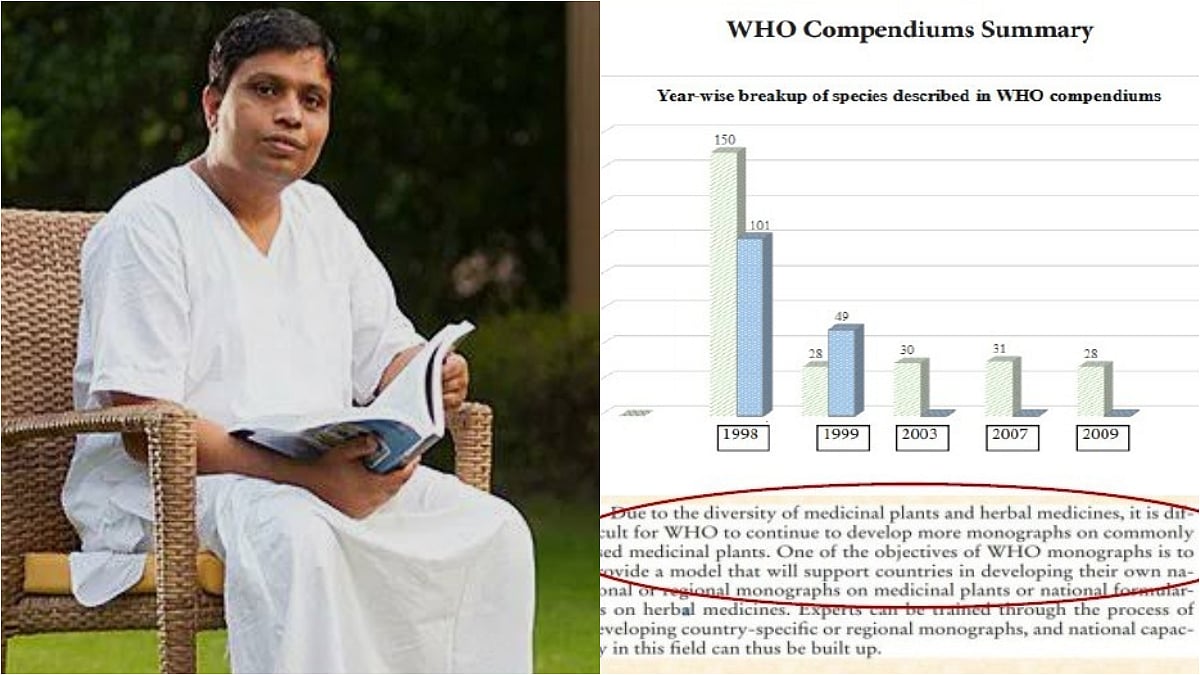
Haridwar: The work that the world’s largest health body once deemed "impossible" and abandoned midway was not only carried forward in India through sheer resolve, but also completed and recorded in history. This is the story of extraordinary perseverance, where dedication, research, and foresight together created a monumental compendium like the Vishwa Bheshaj Samhita (World Herbal Codex). Today, the situation has reached a point where tech giant Google is knocking on Patanjali’s doors to access this very knowledge.
When the WHO stepped back
In 1999, the World Health Organisation (WHO) launched an ambitious project. The goal was to compile plant-based medicinal systems, medicinal plants, and traditional knowledge from across the world into a single global document.
After nearly 11 years of effort, in 2010 the WHO halted the project. The reason was clear: the task appeared extremely vast, complex, and nearly impossible. Ultimately, the WHO could produce only three limited volumes.
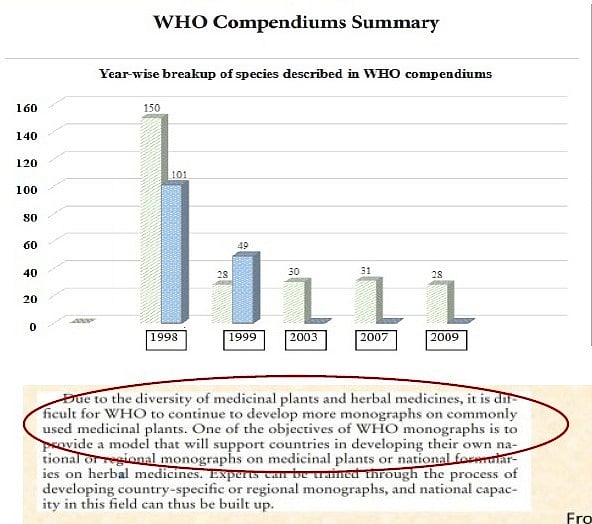
This photo confirms that the WHO published only three volumes and considered the task extremely difficult; this has been stated by the WHO itself in its project. |
A parallel story unfolding quietly in India
At the same time, without any global attention or noise, Patanjali Yogpeeth had begun working in this direction around 2003–04. The institution was not even aware that the WHO had previously worked on a similar project. The difference, however, lay in approach, patience, and dedication. Where the global institution stopped, Patanjali’s journey only accelerated.

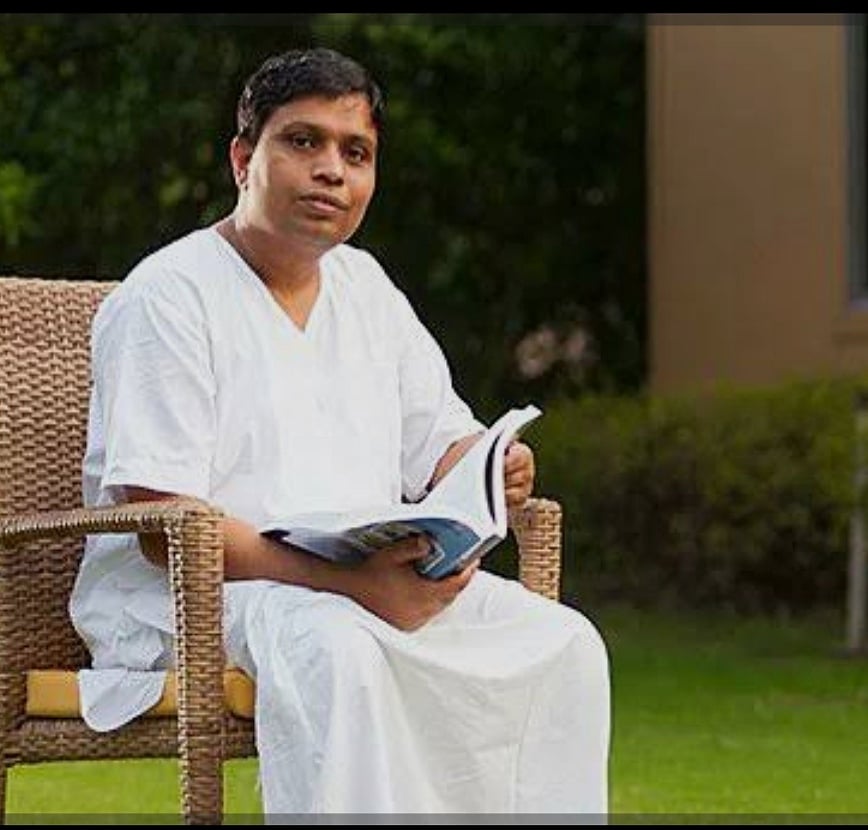
Acharya Balkrishna, General Secretary of Patanjali |
A global knowledge repository built through years of dedication
After nearly two decades of continuous research and compilation, the work was completed in its full form in 2022. During this process:
1. Out of 3.6 lakh plants, 50,000 medicinal plants were identified
2. Traditional knowledge of over 2,000 tribes was documented
3. 964 healing practices were compiled
4. More than 9 medical systems were included
5. Over 12 lakh vernacular names were collected
6. Research was based on more than 2,200 sources
All of this came together to form the World Herbal Encyclopedia, spanning approximately 1.25 lakh pages.
Revelation at the Doon Book Festival
At the Doon Book Festival in Dehradun, revered Acharya Balkrishna himself revealed the completion of all 109 volumes of this monumental work and shared the story behind the effort. This is not merely a publication, but a historic moment in preserving global medical knowledge.
Now Google seeks ‘Patanjali’s compiled data’
The most interesting turn in this story comes here. In today’s era of artificial intelligence and data, when the world depends on digital knowledge, a tech giant like Google has approached Patanjali for evidence-based data. In other words, Google is seeking Patanjali’s compiled, evidence-based data for use in AI, so that it can further strengthen its systems. This is not just a collaboration, but a sign that India’s traditional knowledge has now reached the center of global technology.
Quote from Acharya Balkrishna
“This is not just the story of a book; it is the story of a mindset that challenges the impossible. Where global institutions became limited, Indian tradition, dedication, and scientific vision together created history—one that the world is now not only reading but also learning from. The Vishwa Bheshaj Sanhita stands as proof that when resolve is unwavering, even unfinished stories can become history. Patanjali has been working extensively on such knowledge in recent times. For a tech institution like Google to trust Patanjali’s data is a matter of pride for all Indians.”
— Acharya Balkrishna, General Secretary, Patanjali Yogpeeth, Haridwar
