The Bhartiya Shiksha Board (BSB), a government-recognized education board, aims to merge modern competencies like computer science with traditional Indian knowledge systems such as the Vedas and Sanskrit.
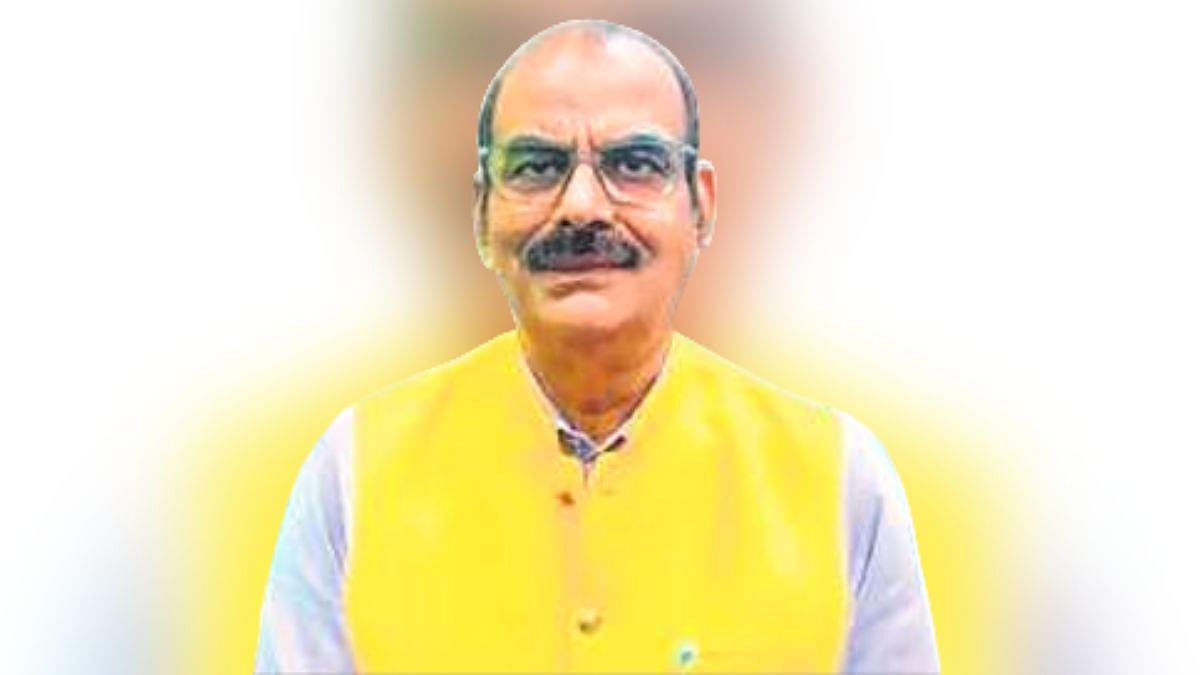
BSB's Executive Chairman Dr NP Singh, a retired IAS officer, tells Gaurav Vivek Bhatnagar of The Free Press Journal how BSB seeks to promote Indian cultural values through its curricula by aligning ancient traditional education systems and wisdom with the National Education Policy (NEP) 2020 and National Curriculum Framework (NCF) 2023.
What were the reasons behind the formation of the Bhartiya Shiksha Board when other boards exist in the country?
The Board has been set up by the Government of India with at least 50 percent members nominated by the GoI and 50 percent from the sponsor body, for selecting which pathway was laid down. The condition was that the mission of the Board will be totally charitable and aim at organic transformation of the national education system.
The objective was that the Board was being set up with the specific purpose of blending the Indian knowledge system with modern education. So we have to work within the core spirit of NEP 2020 and NCF 2023 to design our curriculum, syllabus, textbooks, pedagogy, assessment, school culture and environment.
The Board was set up in March 2019 when the Ministry of Higher Education of GoI selected Patanjali as the sponsor body. They nominated the chairman of CBSE, director of NCERT and vice-chancellors of five central universities as members of the Board. The sponsor body was also allowed to nominate academicians and administrative persons with deep knowledge of Bharat to the board.
How is the working of the BSB different?
We have to integrate the knowledge system created during the whole historical journey of Bharat – including its pre-historic period also – so that we may be able to relate in continuum spectrum the realknowledge chain during the entire period since.
So how do you implement this requirement?
This is a challenge. So, in the textbook for each class, in each subject and each curricular area when we develop any pedagogy, we ensure that the content aligns with any knowledge system from the whole historical journey of Bharat.
What is the definition of Bharat here?
For us Bharat is Akhand Bharat, which is not restricted by any geographical boundaries, or any limitation of our boundaries of any religious faith or language. Rather, it is inclusive of the whole historical experience of Bharat.
What classes does the Board cover?
Like any other board, we also cover syllabus for classes 9 to 12. The Association of Indian Universities (AIU) has granted us equivalence to all boards. From an examination point of view our responsibility is to evaluate students from Class 10 and 12. But from the spirit point of view it is to nurture students with modern global competencies blended withIndian knowledge system journey.
The subconsciousness of any child is framed up to the age of 14-16. If we have to align the nurturing of the children as per the spirit envisaged in our by-laws then we have to teach children from the age of 3 onwards. So, the textbooks cover the entire spectrum for vertical progress to help them harmonise with the total journey.
How do you ensure that students from BSB are able to compete with those from other boards?
We are totally caring and cultivating all kind of capacities which are required for the 21st century challenges. The purpose of education is not only employment, it is also developing the capacity of the students to be knowledge creators and possess capacity to propose meaningful solutions for contemporary concerns.
For becoming leaders in knowledge creation and developing entrepreneurial skills, we believe in blending the vocational aspects with academics. We believe in undoing the Machiavellian impact (that prioritises stability and control over traditional orality or ethical constraints) and decolonising the consciousness of youth. For example, the western philosophy treats the earth as a “resource” while we believe in protecting it like a “mother”.
Therefore, we have to join the “samarthya” (capability) and “sanskar” (culture) in our education system. We have to teach them that fighting over colour, race, religion or language is now part of our philosophy and that we have always been used to assimilating varied thoughts and cultures. Saying “Bharat Mata ki Jai” is fine, but understanding Bharat first is important.
How many students and schools are now enrolled with BSB?
Nearly 1,000 schools from 13 states are part of the affiliation process now. On average each of them has 500-600 students. In keeping with the requirements of various states, we are already publishing textbooks in five languages – Hindi, English, Marathi, Gujarati and Konkani. We will be increasing this to reach out to more and more students.

