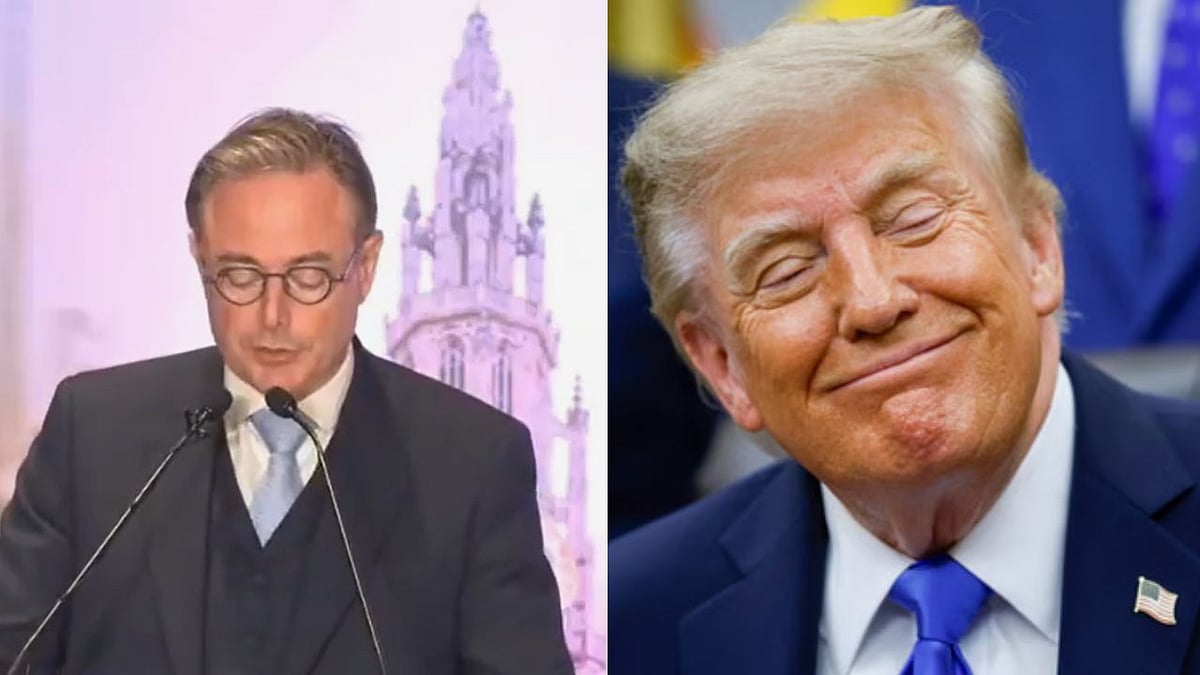
Belgian Prime Minister Bart De Wever may not have taken Donald Trump’s name, but his message on tariffs in Mumbai was loud enough for the audience to know exactly who he was talking about.
Speaking at the India-Belgium High-Level Dialogue on the India-EU Free Trade Agreement on Friday, De Wever took a sharp swipe at what he described as the growing use of arbitrary tariffs and unpredictable trade decisions. His remarks drew loud applause from the audience, turning an otherwise diplomatic trade discussion into one of the day’s most talked-about moments.
“More and more voices today are calling for barriers to go up, for markets to be shut off, for tariffs to be imposed,” De Wever said, before describing a pattern in which decisions are made, withdrawn and reinstated within days.
Then came the line that prompted laughter and applause.
“Your applause tells me you know who I am talking about,” he said.
De Wever stopped short of naming the person. “I will not name the person, but you know who I mean,” he added, making the reference all the more pointed.
His comments were widely interpreted as a veiled criticism of US President Donald Trump’s shifting tariff policies, although De Wever himself did not identify Trump. He argued that such unpredictable trade measures lacked economic logic and were increasingly being used as instruments of power.
‘You know who I mean’
The Belgian leader’s remarks came at a particularly significant moment for India and the European Union, with the recently concluded India-EU Free Trade Agreement expected to deepen economic ties and provide greater certainty for businesses.
De Wever presented the agreement as more than a trade deal. In a world where countries are increasingly turning towards tariffs, barriers and economic pressure, he suggested that stronger partnerships could provide a buffer against disruption and coercion.
He also pointed to the contrast between arbitrary policy shifts and deliberate, structural distortions in global trade, with some reports viewing the latter as a reference to China.
Mumbai applauds, trade takes centre stage
De Wever was speaking during the Mumbai leg of his three-day official visit to India, his first trip to the country as Belgian prime minister and the first visit by a Belgian head of government in roughly two decades.
His Mumbai engagements were heavily focused on commerce, logistics and the diamond industry.
At the Bharat Diamond Bourse in Bandra-Kurla Complex, De Wever met representatives of the diamond sector and highlighted the deep economic connection between Antwerp and Mumbai. Antwerp remains one of the world’s major diamond trading centres, while India has a globally important diamond cutting and polishing industry.
He also inaugurated the renovated and expanded HRD Antwerp diamond grading laboratory in BKC. The upgraded facility is expected to increase its capacity by around 30%, allowing it to process up to 2,000 diamonds a day and potentially creating around 40 jobs.
Antwerp wants a bigger role
At the India-Belgium trade dialogue, De Wever also pitched the Port of Antwerp-Bruges as a major gateway for Indian goods entering the European market.
The discussion covered sectors ranging from diamonds and pharmaceuticals to food processing, maritime services and green hydrogen.
Union Commerce Minister Piyush Goyal and Maharashtra Chief Minister Devendra Fadnavis were among those present at the dialogue.
De Wever said the India-EU FTA would eliminate or reduce tariffs on more than 95% of goods, while also arguing that there was room for further tariff reductions in areas such as diamonds.
For Belgium, the agreement represents an opportunity to strengthen its position as a European logistics and trading hub for Indian businesses.
From Modi praise to tariff warning
De Wever’s Mumbai visit followed meetings in New Delhi with Prime Minister Narendra Modi and other Indian officials. During his India visit, he praised Modi as one of the world’s most inspiring and wise leaders.
But it was his carefully worded tariff remarks that stole the spotlight in Mumbai.
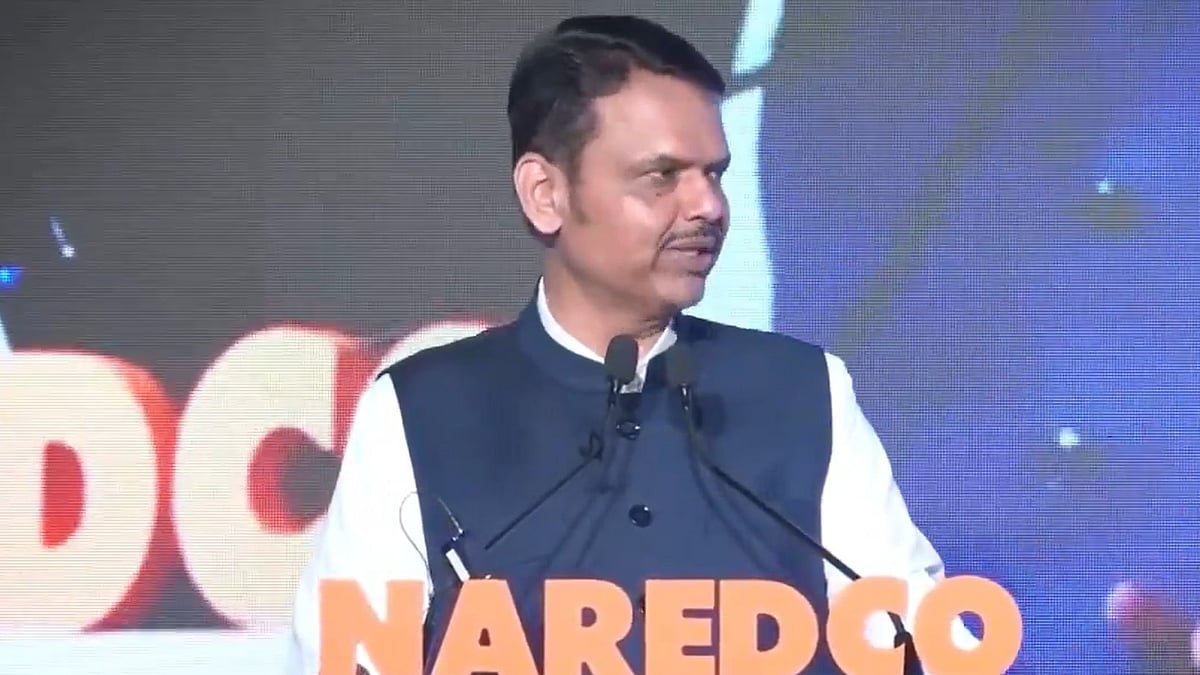
Without naming Trump, De Wever managed to make his target clear enough for the audience to respond. His decision not to say the name only amplified the moment.
Against the backdrop of an evolving global trade order, his message was ultimately a pitch for stability: India and Europe, he suggested, should build stronger economic ties precisely because businesses cannot afford a world where tariffs can appear, disappear and return without warning.

