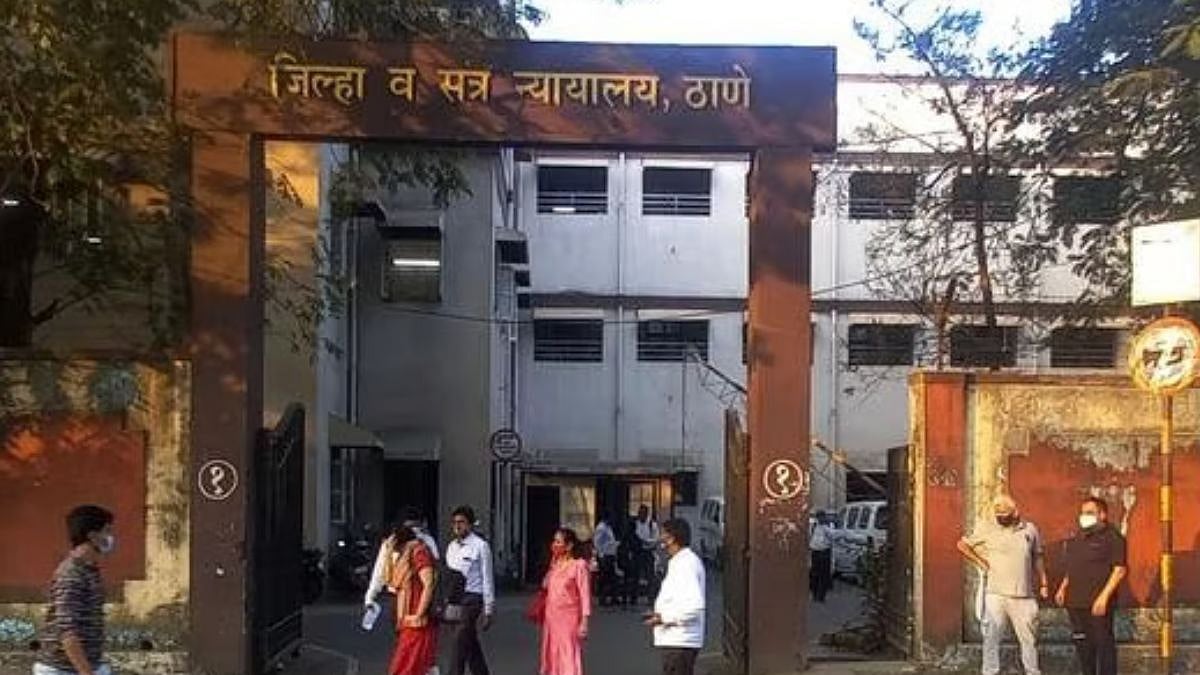
Mumbai, October 29, 2026: A Thane sessions court has upheld the conviction of a 41-year-old woman in a cheque-bounce case involving ₹10.06 lakh, rejecting her defence that she had handed over signed blank cheques as security for her husband’s chit fund membership.
Additional Sessions Judge V. L. Bhosale has dismissed Anjali Santosh Shete’s appeal against her September 2021 conviction under Section 138 of the Negotiable Instruments Act.
The court confirmed the sentence of one month’s simple imprisonment and compensation of ₹15 lakh to Shree Gokulam Chits & Finance Pvt Ltd. The court has directed Shete to pay the compensation within 30 days and surrender before the trial court within the same period to undergo the sentence.
By its judgment, the trial court had convicted the appellant under Section 138 of the Negotiable Instruments Act, 1881 (N.I. Act). She was sentenced to simple imprisonment for one month and directed to pay compensation of ₹15 lakh to the complainant under Section 357(3) of the Code of Criminal Procedure (CrPC), with simple imprisonment for 15 days in default.
Dispute Over Chit Fund Liability
According to the finance company, Shete’s husband, Santosh Baburao Shete, had subscribed to a chit scheme with a total value of ₹25 lakh, which commenced in January 2011. After he emerged as the successful bidder, the company paid him ₹18.74 lakh in March 2011.
Shete had stood as guarantor for her husband and executed a promissory note in March 2011 and a debt acknowledgment in January 2013. After her husband allegedly defaulted on payments, she issued a cheque for ₹10,06,365, dated January 18, 2013, towards the outstanding liability.
The cheque, drawn on The Mahanagar Co-operative Bank’s Kalachowki branch in Mumbai, was returned unpaid on February 5, 2013, with the remark “Payment Stopped by Drawer”. The company subsequently sent a statutory notice on February 23, 2013. As neither payment was made nor a reply received, it filed a complaint on March 26, 2013.
During the trial, Shete denied the allegations and claimed that the company had obtained signed blank cheques from her as security when her husband joined the chit scheme. She also alleged that the case was based on fraudulent documents. She did not examine any witness or produce documentary evidence to support her defence.
The trial court convicted her in September 2021, holding that the company had established the ingredients of the cheque-bounce offence and that the debt acknowledgment supported her liability for the cheque amount.
Woman Challenges Trial Court Verdict
Challenging the conviction, Shete argued that the company’s representatives had not been properly authorised to prosecute the complaint, the chit agreement had not been produced and the company’s witness had admitted that only ₹2 lakh was due.
She also questioned discrepancies in the cheque number and amount mentioned in the complaint, the handling of documentary evidence and the validity of the proceedings.
Court Explains Legal Presumption
Rejecting these arguments, the sessions court observed that once the accused’s signature on a cheque is admitted, the law raises a presumption that it was issued towards a legally enforceable debt or liability. The accused can rebut this presumption by establishing a probable defence, but a mere denial or an unsupported claim that the cheque was given as security is insufficient.
The court noted that Shete had not disputed her signature on the cheque. It also found that her liability arose from the promissory note and debt acknowledgment executed by her, even though she was not herself a subscriber to the chit scheme.
The court further held that a cheque initially given as security can attract Section 138 of the Negotiable Instruments Act if the liability has matured by the time the cheque is presented. A guarantor’s cheque issued towards another person’s liability can also fall within the provision.
Court Upholds Compensation And Sentence
The court also rejected the challenge to the authority of the company’s representatives, holding that the company could prosecute the case through authorised representatives and that no evidence showed that the authority of its witness had been withdrawn.
It found no reason to conclude that the proceedings had been vitiated by the death of an earlier representative or the subsequent substitution of another.
Also Watch:

Upholding the sentence, the court observed that the cheque dated January 2013 had remained unpaid for years and that the complainant had been deprived of the money for more than eight years by the time of the original judgment in September 2021. It held that the compensation of ₹15 lakh was within the permissible limit and served the compensatory purpose of the law.
To get details on exclusive and budget-friendly property deals in Mumbai & surrounding regions, do visit: https://budgetproperties.in/

