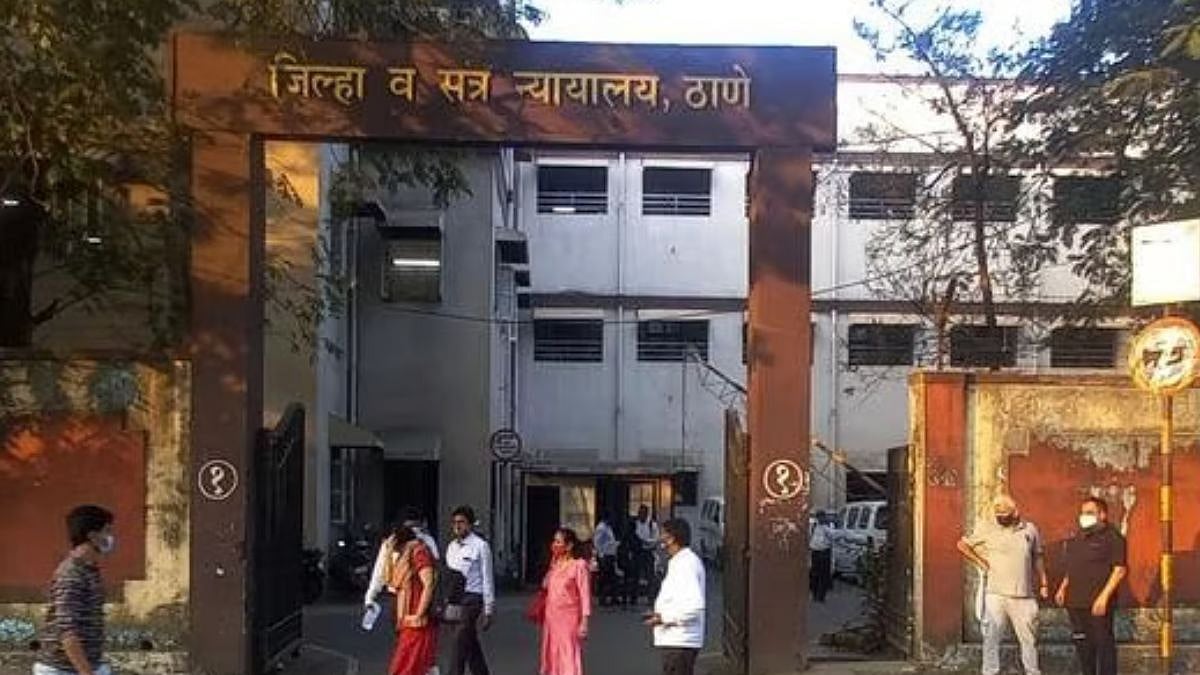
Thane, Feb 17: The Thane Sessions Court has convicted 24-year-old Ankesh Gupta for brutally stabbing Sameer Shashikant Pathare to death in 2021 and sentenced him to life imprisonment.
However, the court acquitted the 23-year-old co-accused, Prashant Gujar, holding that in the absence of clear proof of participation or prior concert, Section 34 of the Indian Penal Code, dealing with common intention, could not be invoked.
The court observed that in criminal jurisprudence, suspicion, however strong, cannot take the place of proof, and granted Gujar the benefit of doubt.
In its detailed judgment, the court held, “The chain of circumstances—assault witnessed, immediate FIR, recovery of weapon at the instance of accused, and presence of blood stains—forms a consistent and unbroken chain pointing towards the guilt of accused No.1, Ankesh Gupta.”
Background of prior complaint
According to the prosecution, the incident dates back to the intervening night of August 5 and 6, 2021. The accused and the deceased were residents of the same locality and knew each other.
In June 2021, Pathare had lodged a complaint at the Mumbra Police Station against Ankesh Gupta and two others, following which a non-cognizable offence under Sections 504 and 506 of the IPC was registered. The prosecution contended that Gupta was enraged by this complaint.
Details of the assault
On the night of the incident, at around 2.30 a.m., Pathare was returning home on his two-wheeler after having dinner with friends. As per the case, the accused intercepted him. It was alleged that Gujar pushed Pathare’s vehicle, causing him to fall, after which Gupta pulled out a knife and stabbed him repeatedly on the neck, chest and abdomen—inflicting 34 stab wounds.
As the victim lay in a pool of blood, he shouted for help. His friends, who were on the main road, rushed towards the spot but were allegedly threatened by the accused. The assailants then fled.
Pathare was rushed to Chhatrapati Shivaji Maharaj Hospital, where he was declared dead. The FIR was lodged by the deceased’s maternal uncle. During the investigation, Gupta appeared at the police station, while Gujar was arrested. The knife used in the assault was recovered at the instance of Gupta, and a charge sheet was subsequently filed.
Court’s assessment of evidence
While assessing the evidence, the court rejected the defence argument that the eyewitnesses were “interested witnesses.” It observed that, considering the late hour of the incident, independent witnesses could not be expected. Merely because local residents gathered after hearing the commotion did not make them eyewitnesses to the actual stabbing.
The court reiterated that the quality of evidence is more important than quantity and held that the ocular testimony of natural witnesses was corroborated by medical and forensic evidence.
The post-mortem report revealed 42 injuries on the victim’s body. The defence argued that some injuries suggested the use of multiple weapons. However, the court noted that the fatal injuries were multiple stab wounds to vital organs in the neck and chest region, and the medical officer had opined that the cause of death was haemorrhagic shock due to multiple stab injuries.
It observed that abrasions or contusions could have resulted from the victim falling on a hard surface after being stabbed and that the injuries were consistent with the use of a single sharp and pointed weapon like the recovered knife.
The recovery of the knife at Gupta’s instance was held to be significant under Section 27 of the Evidence Act. A panch witness testified that Gupta voluntarily disclosed the place where the weapon was concealed and led the police to recover it. The court found no material contradiction in this evidence.
Also Watch:

Life sentence for Gupta, acquittal for Gujar
Concluding that the prosecution had proved its case beyond reasonable doubt against Ankesh Gupta, the court convicted him of murder and sentenced him to life imprisonment.
In contrast, it held that the evidence against Prashant Gujar was insufficient to establish common intention or active participation in the fatal assault, and acquitted him.
To get details on exclusive and budget-friendly property deals in Mumbai & surrounding regions, do visit: https://budgetproperties.in/

