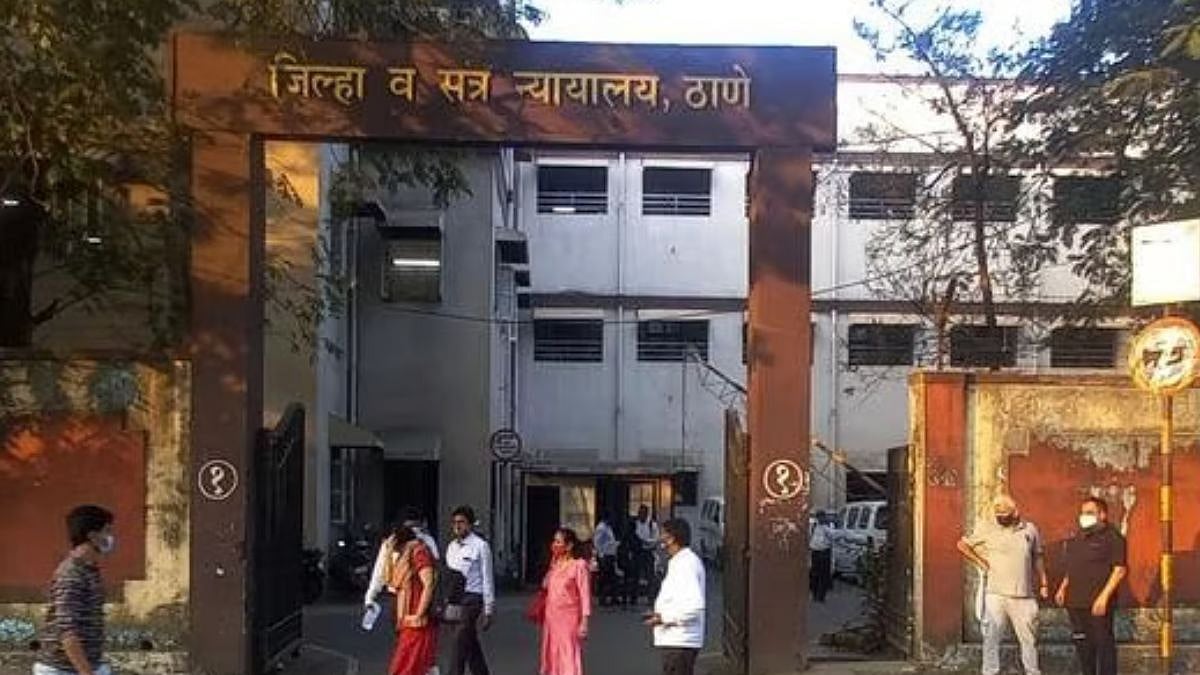
Thane, May 11: A Thane Sessions Court has acquitted a 35-year-old resident of Hiranandani Estate, who was facing charges under the Scheduled Castes and Scheduled Tribes (Prevention of Atrocities) Act since 2014, after holding that the police investigation was not conducted in the manner mandated under law.
Court finds investigation violated mandatory legal procedure
The court observed that major portions of the investigation were carried out by an Assistant Police Inspector (API), despite the law specifically requiring that investigations under the SC/ST (Prevention of Atrocities) Act be conducted by a police officer not below the rank of Deputy Superintendent of Police (DSP).
In its order, the court held that the failure to comply with Rule 7 of the Scheduled Castes and Scheduled Tribes (Prevention of Atrocities) Rules, 1995, rendered significant parts of the investigation illegal, thereby severely weakening the prosecution’s case.
“More importantly, the investigation of the case has not been done in prescribed legal way,” the court observed, adding that seizure of the complainant’s shirt, preparation of seizure and spot panchnamas, recording of witness statements and communication with the medical officer were all carried out by an API instead of a DSP-rank officer.
The court noted that Rule 7 uses the word “shall,” making compliance mandatory.
“Therefore, such part of investigation is against the tenets of law and more particularly against Rule 7 of Scheduled Caste and Scheduled Tribes (Prevention of Atrocities) Rules, 1995. Hence, the above part of investigation is illegal and further gives a major setback to the prosecution case,” the court said.
Case related to 2014 altercation in housing complex
The accused, Upendra Tambade, was charged under Sections 323, 504 and 427 of the Indian Penal Code along with Section 3(1)(x) of the SC/ST (Prevention of Atrocities) Act.
According to the prosecution, the incident took place during the intervening night of December 16 and 17, 2014, in a residential complex where the accused resided. The complainant, Ajay Dandekar, and another security guard, Vijay Waghule, were on duty in adjoining buildings.
The prosecution alleged that Tambade, allegedly under the influence of alcohol, began kicking the main gate of his building and got into an altercation with Waghule after the gate was opened.
Dandekar allegedly intervened following a phone call from Waghule, after which the accused allegedly assaulted him, abused him using caste-based remarks and tore his shirt.
Court acquits accused of all charges
However, while acquitting the accused, the court also found that the prosecution had failed to establish the offence of mischief under Section 427 of the IPC.
Also Watch:
Concluding that the prosecution failed to prove the allegations beyond reasonable doubt, the court acquitted Tambade of all charges.
“After above discussion, it has become apparently clear that the prosecution has failed to prove its case beyond reasonable doubt so as to warrant conviction,” the court held.
To get details on exclusive and budget-friendly property deals in Mumbai & surrounding regions, do visit: https://budgetproperties.in/

