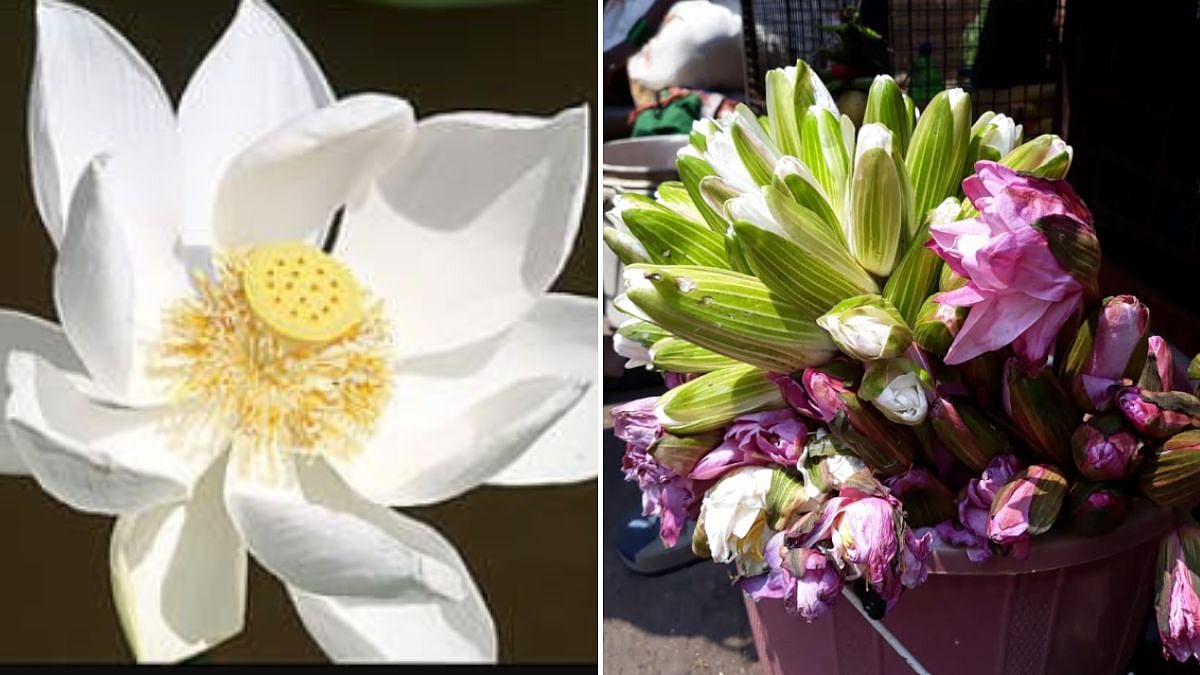
Thane: Step outside any major temple dedicated to Goddess Durga or Goddess Mahalaxmi across Thane this Navratri, and the air is thick with the rich, sweet fragrance of autumn blossoms. But look closer at the vibrant displays spilling onto the sidewalks, and you might spot a gentle case of mistaken identity.
Water Lilies Mistaken For Lotuses
Amidst the rhythmic clanging of brass bells and the chanting of hymns, vendors are eagerly selling colorful water lilies, often affectionately marketed to rushing devotees as "water lotuses." For many worshippers carrying deep-seated traditions in their hearts, the distinction matters little; what counts is offering the freshest, most vibrant petals to the Goddess. Yet, to botanical purists and environmentalists, this mix-up highlights a fascinating disconnect between urban faith and the natural world.
"When you're rushing to buy flowers for a morning puja, you just want the prettiest bloom for the deity," shares Aarti Deshmukh, a lifelong Thane resident and regular visitor to the Kopineshwar temple. "I always thought water lilies were just baby lotuses that hadn't found their height yet! It’s eye-opening to realize we’ve been admiring a completely different wonder of nature all this time."
Beauty with a Botanical Difference
While both aquatic blooms share a mesmerizing charm, science draws a clear line between them. Lotus flowers and their proud leaves rise majestically above the water line, crowned by a distinct yellow seed receptacle at their center. Water lilies, on the other hand, float flat and serene right on the water's surface, boasting a brilliant spectrum of blues, purples, reds, and yellows.
Beyond their aesthetic appeal on temple steps, these plants are the unsung heroes of Thane’s local freshwater ecosystems. They act as natural filters, absorbing excess nutrients to prevent harmful algal blooms while providing vital breeding grounds for fish, amphibians, and beneficial microorganisms.

Bridging Faith and Ecology
Environmental experts emphasize that festive demand should never come at the expense of wetland health. Protecting these natural habitats ensures that urban biodiversity thrives alongside spiritual traditions.
"Faith and nature have always walked hand in hand in our culture," notes Dr. Prashant Sinkar, a Thane-based environmental researcher. "When we teach devotees to appreciate the botanical identity of these flowers, we aren't just correcting a label—we are inspiring a deeper, more mindful stewardship of the very lakes and water bodies that sustain our city."
As the festive lights glow and prayers rise this Navratri, Thane's devotees are learning a new kind of worship: one that honors the divine by fiercely protecting the living waters from which these sacred blossoms grow.
To get details on exclusive and budget-friendly property deals in Mumbai & surrounding regions, do visit: https://budgetproperties.in/

