
Mumbai, September 9, 2026: The Enforcement Directorate’s (ED) ongoing money-laundering investigation into the Cyprus-based illegal online betting platform Parimatch has uncovered an elaborate mechanism in which the betting syndicate allegedly exploited the Cash on Delivery (COD) infrastructure of e-commerce and delivery platforms to swap physical cash collected through legitimate retail transactions against digitally generated betting proceeds, officials familiar with the probe said.
According to investigators, the Parimatch-linked syndicate allegedly weaponised the Cash Management System (CMS) infrastructure used by legitimate e-commerce and delivery platforms as a covert channel for moving betting proceeds. The infrastructure was allegedly exploited without the knowledge or involvement of the parent companies operating the platforms, creating a shadow “cash-swap” arrangement in which physical cash collected through legitimate retail transactions was allegedly exchanged for digital funds generated by the betting network.
Cash Collected Through COD Transactions
The alleged mechanism centred on cash collected by delivery personnel from customers purchasing groceries, food and other products through COD transactions. Investigators allege that this physical cash, collected through otherwise legitimate retail transactions, was diverted through intermediaries to persons linked to the betting network, while an equivalent amount of digitally generated betting proceeds was used to settle the corresponding cash-collection obligation of the e-commerce or delivery platform.
This effectively allowed the two sides of the transaction to be completed separately, with the betting syndicate allegedly receiving physical cash collected from legitimate customers, while digital funds originating from betting proceeds were used to settle the amount owed to the e-commerce or delivery platform.
Investigators have further alleged that the physical cash diverted through the arrangement was subsequently routed through hawala operators and local cryptocurrency intermediaries. The cash was allegedly converted into USDT, a dollar-pegged cryptocurrency, and transferred to crypto wallets controlled by the offshore Parimatch network and other overseas destinations.
CMS Network Allegedly Exploited
According to officials, the modus operandi involved several layers, as major quick-commerce and delivery platforms use CMS networks to handle cash collected through COD orders. The system helps companies manage large volumes of physical currency collected by delivery riders from customers across multiple locations.
Under the standard procedure, a delivery rider cannot retain cash collected from COD deliveries indefinitely. Once the collection reaches a prescribed limit, the rider is required to hand over the cash to an authorised cash-collection network. This is where the CMS distributors and their agents come into play. The agency stated that instead of a delivery rider travelling to the company’s office or a bank branch, the cash can be deposited at an authorised local collection point operated by a CMS agent. The agent records the collection against the rider or the platform, following which the amount is routed through the CMS network and deposited into the platform’s designated bank account.
The agency, however, found that several CMS distributors and their agents allegedly played a dual role, acting as authorised intermediaries for e-commerce and delivery platforms while also facilitating the Parimatch-linked betting network. While they were responsible for collecting and settling cash on behalf of the platforms, the distributors and their agents allegedly diverted physical cash collected through the legitimate delivery network to persons linked to the betting syndicate instead of depositing it into the platform’s designated bank account.
Digital Funds Used For Settlement
To settle the corresponding amount owed to the e-commerce or delivery platform, the distributors allegedly received an equivalent digital payment from mule accounts into which betting proceeds had been collected. The money was then used to settle the platform’s legitimate cash-collection obligation and was ultimately credited to its designated bank account.
The CMS chain, investigators allege, allowed the betting proceeds to enter the legitimate financial system through the platform’s normal settlement process, while the e-commerce and delivery companies, according to investigators, remained unaware that their cash-management infrastructure was allegedly being misused.
Officials said the arrangement also provided a layer of cover for the betting network. Even if investigators traced the betting accounts and followed the transaction trail, the movement of funds could potentially point towards the e-commerce and delivery platforms whose payment and cash-management infrastructure had allegedly been used, creating the impression that these legitimate businesses were involved in routing the betting proceeds.
According to the central agency, the mechanism was allegedly misused repeatedly through multiple CMS distributors and their agents to convert large volumes of physical cash into betting proceeds.
ED Traces Multiple Financial Layers
During searches conducted in Mumbai and Jaipur last week at premises linked to a CMS firm and the software layer supporting its agent network, the ED allegedly found that several distributors and agents had exploited the CMS infrastructure to route and layer betting proceeds. These intermediaries, operating as regional distributors, allegedly managed multiple master accounts and a network of bank accounts through which large volumes of cash deposits and digital transactions were processed for various digital-wallet and payment-aggregation platforms. Investigators found that several crores of rupees were allegedly layered through these accounts and routed abroad over several years. According to the agency, the intermediaries allegedly exploited gaps in the platforms’ monitoring systems to move the betting proceeds while bypassing anti-money laundering controls and transaction-alert mechanisms.
Also Watch:
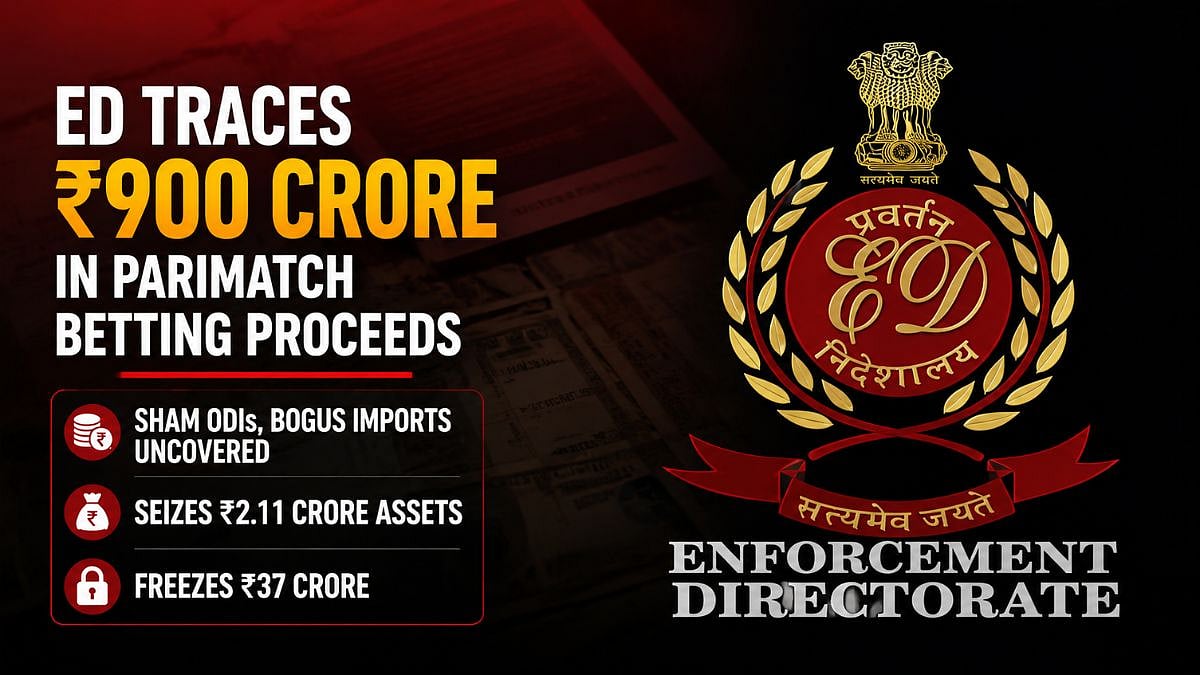
The ED is examining the complete chain to establish the identities of the entities controlling the mule accounts, the role of CMS distributors and agents, the scale of the alleged cash-swap transactions and the beneficiaries who ultimately received the Parimatch-linked betting proceeds.
To get details on exclusive and budget-friendly property deals in Mumbai & surrounding regions, do visit: https://budgetproperties.in/

