
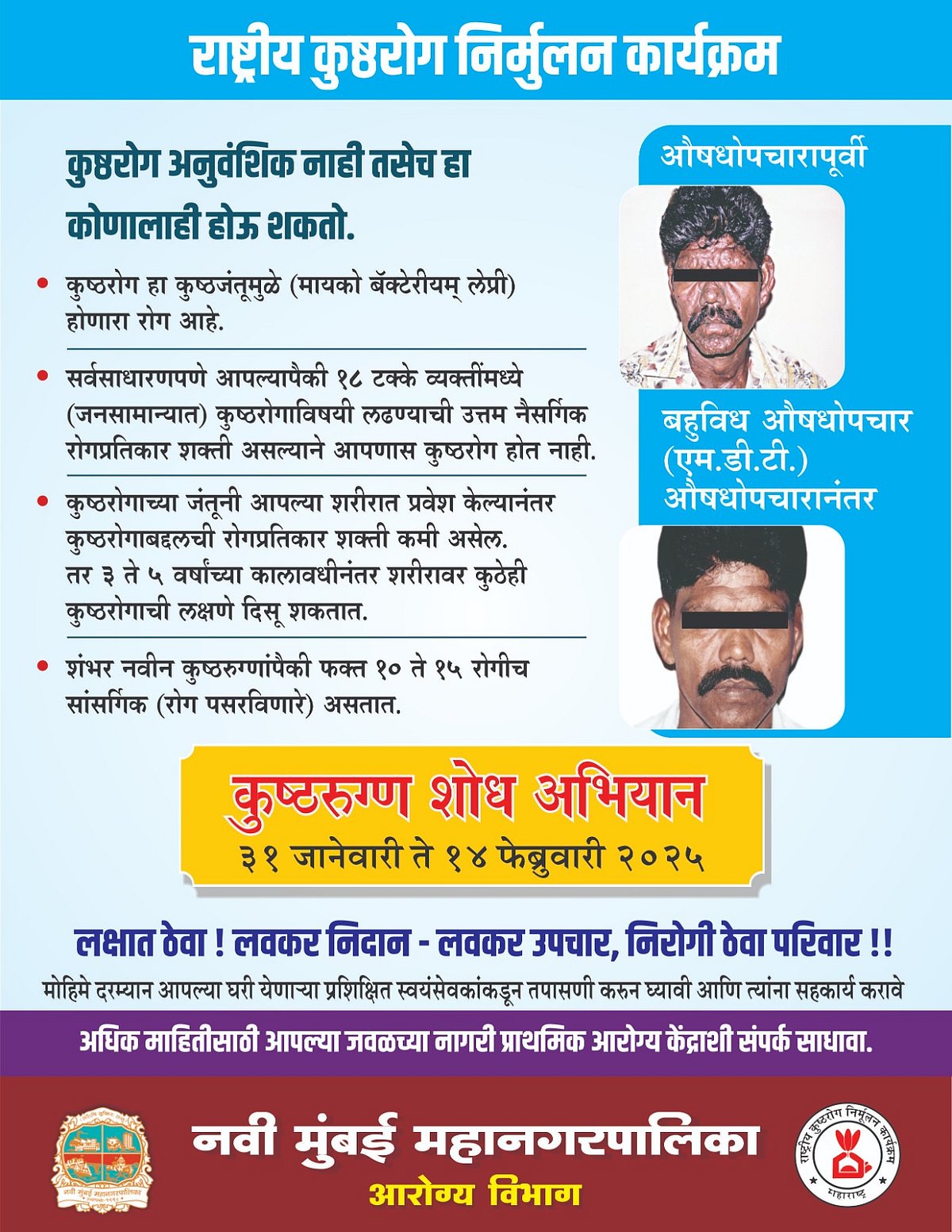
Navi Mumbai: In accordance with the guidelines issued by the central and state governments, the Navi Mumbai Municipal Corporation (NMMC) will conduct a Leprosy Detection Campaign from January 30 to February 14. The campaign aims to identify undiagnosed leprosy patients in society, bring them under treatment, and create public awareness about the disease.
The NMMC Health Department will spearhead the initiative under the guidance of Municipal Commissioner Dr. Kailas Shinde. A total of 181 teams will visit 98,542 households, covering a population of 3,37,522 during the campaign period. Each team will visit 30 houses daily to conduct inspections and collect data effectively.
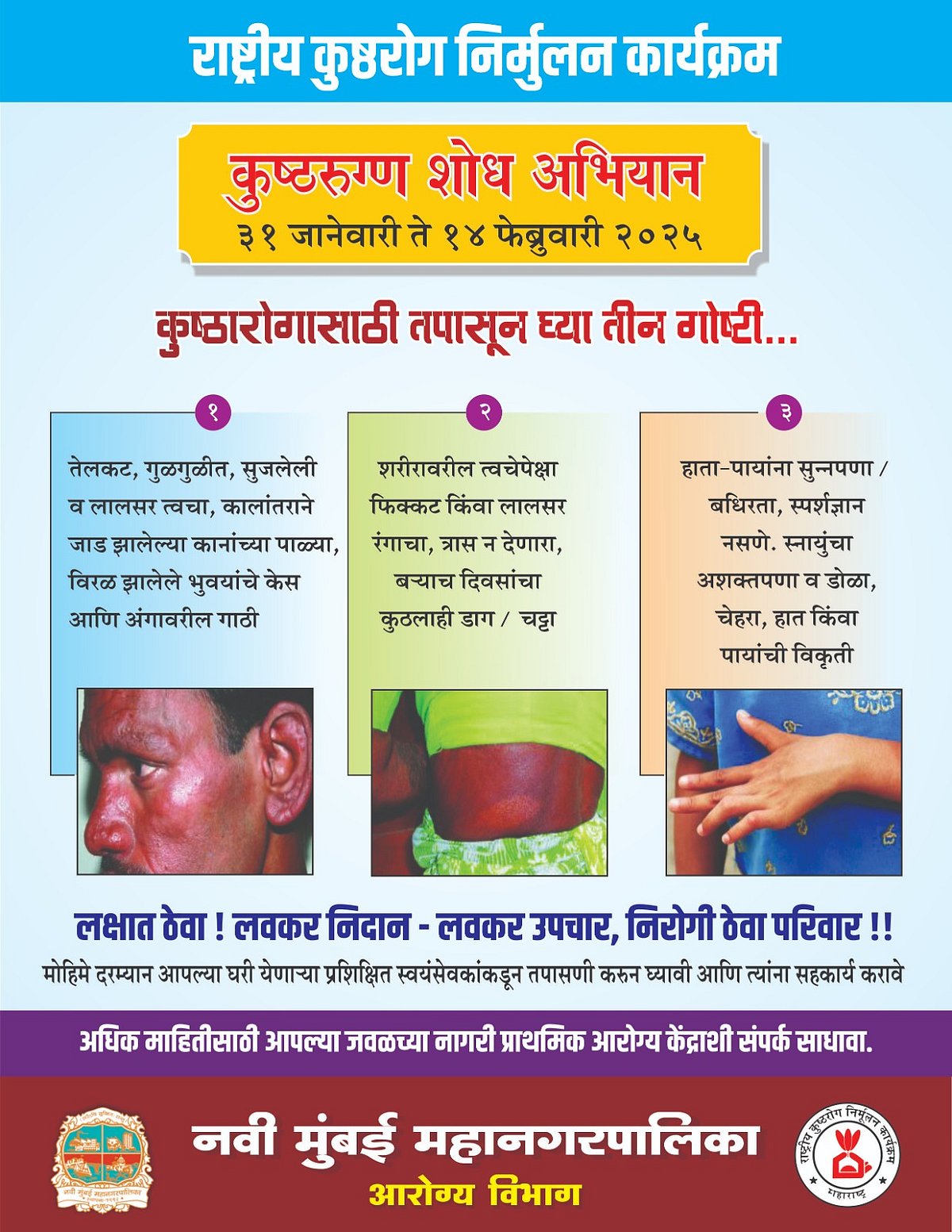
Every team will consist of one male and one female worker. The female workers will examine women in the households, while the male workers will examine the men. The inspections will focus on identifying symptoms such as pale or reddish patches on the skin, areas with no sweating, thickened or numb skin, shiny or greasy skin, lumps on the body, thickened earlobes, sparse eyebrows, or incomplete eye closure. Any individual exhibiting such symptoms will be referred to medical officers for further diagnosis.
The campaign will prioritize areas like slums, construction worker settlements, and quarry zones within NMMC’s jurisdiction, ensuring comprehensive coverage of vulnerable populations.
"The primary goal of this initiative is to detect leprosy cases at an early stage, provide timely multi-drug therapy, and break the chain of infection to reduce its spread. It also aims to raise awareness about leprosy and work towards its eradication, contributing to a healthier society," Dr Shinde said.

Commissioner Dr. Kailas Shinde has appealed to the residents to support the campaign by participating actively in the inspections. He emphasized the importance of early detection and treatment in achieving the objective of a leprosy-free Navi Mumbai.
This campaign is expected to identify undiagnosed cases, bring them under appropriate treatment, and significantly curb the spread of the disease, marking a critical step towards leprosy elimination in the city.

