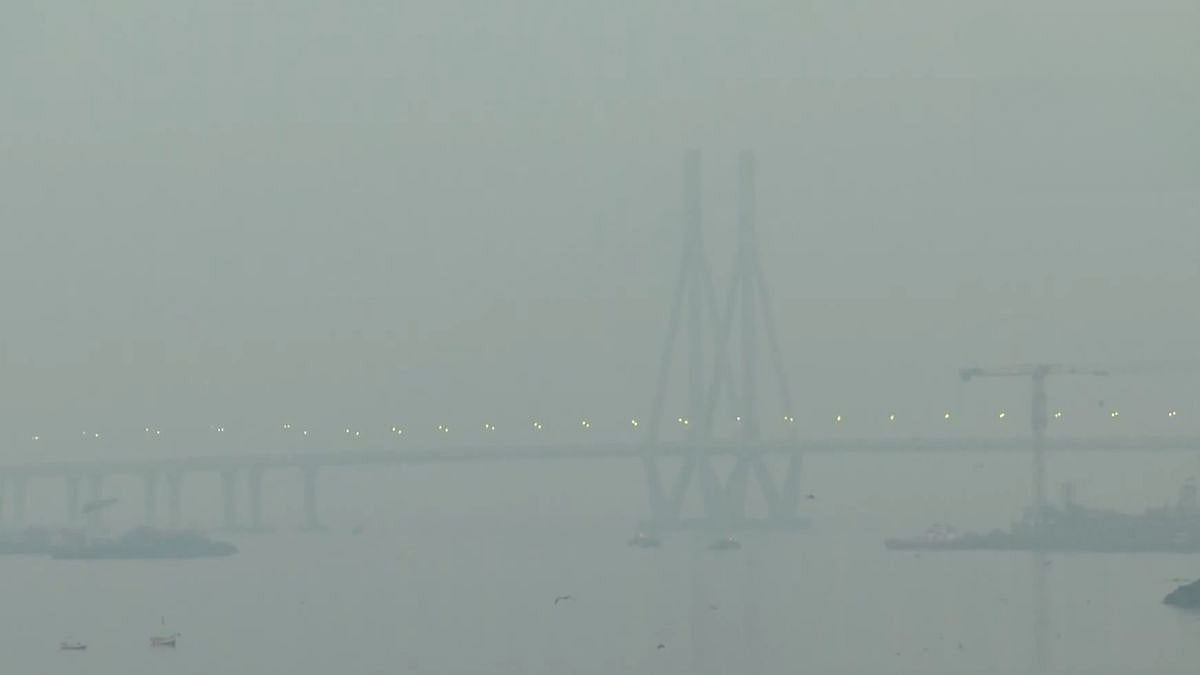
Mumbai: Mumbai experienced a crisp and relatively cool start to Saturday, giving residents a brief respite from the city’s usual humidity. Clear skies, mild winds and lower temperatures made the early hours pleasant. According to the India Meteorological Department (IMD), the minimum temperature hovered around 19°C, while the maximum was expected to reach about 30°C, making it one of the more comfortable winter days of the season.
City Records Unhealthy Air Quality
However, the pleasant weather concealed a persistent environmental concern. A thin layer of haze was visible across several parts of the city, indicating continued deterioration in air quality. Data from air quality monitoring platform AQI.in showed Mumbai’s overall Air Quality Index (AQI) at 224 on Saturday morning, placing it in the ‘unhealthy’ category. Such levels pose health risks, particularly for children, senior citizens and people with respiratory ailments.
The sustained pollution is largely attributed to Mumbai’s ongoing infrastructure boom. Dust and fine particulate matter generated by major government projects, including metro rail corridors, coastal road construction, bridge works and extensive road-widening activities, continue to majorly impact air quality.
In addition, numerous private real estate developments across the city are adding to the pollution burden, especially during winter months when dry conditions allow dust to remain suspended in the air for longer periods.
Chembur Emerges As Worst Hit In Terms Of AQI
Area-wise AQI readings revealed sharp contrasts across the city. Chembur emerged as the most polluted area, recording an alarming AQI of 327, categorised as ‘severe’. At such levels, even healthy individuals may experience breathing discomfort and other health effects.
Wadala East followed closely with an AQI of 326, while Santacruz East recorded 305, both also in the ‘severe’ category. Govandi and Jogeshwari reported ‘unhealthy’ AQI levels of 280 and 277, respectively, remaining dangerously close to the severe threshold.
Suburban areas fared slightly better, though air quality remained far from satisfactory. Andheri East recorded a ‘moderate’ AQI of 97, while Kandivali East and Powai stood at 120 and 163, both falling in the ‘poor’ category. Pollution levels were higher in other suburbs, with Borivali East registering an AQI of 170 and Goregaon East 177, categorised as ‘unhealthy’.
As per standard air quality classifications, AQI levels between 0 and 50 are considered ‘good’, 51 to 100 ‘moderate’, 101 to 200 ‘poor’, 201 to 300 ‘unhealthy’, and readings above 300 fall under the ‘severe’ or ‘hazardous’ category.
To get details on exclusive and budget-friendly property deals in Mumbai & surrounding regions, do visit: https://budgetproperties.in/

