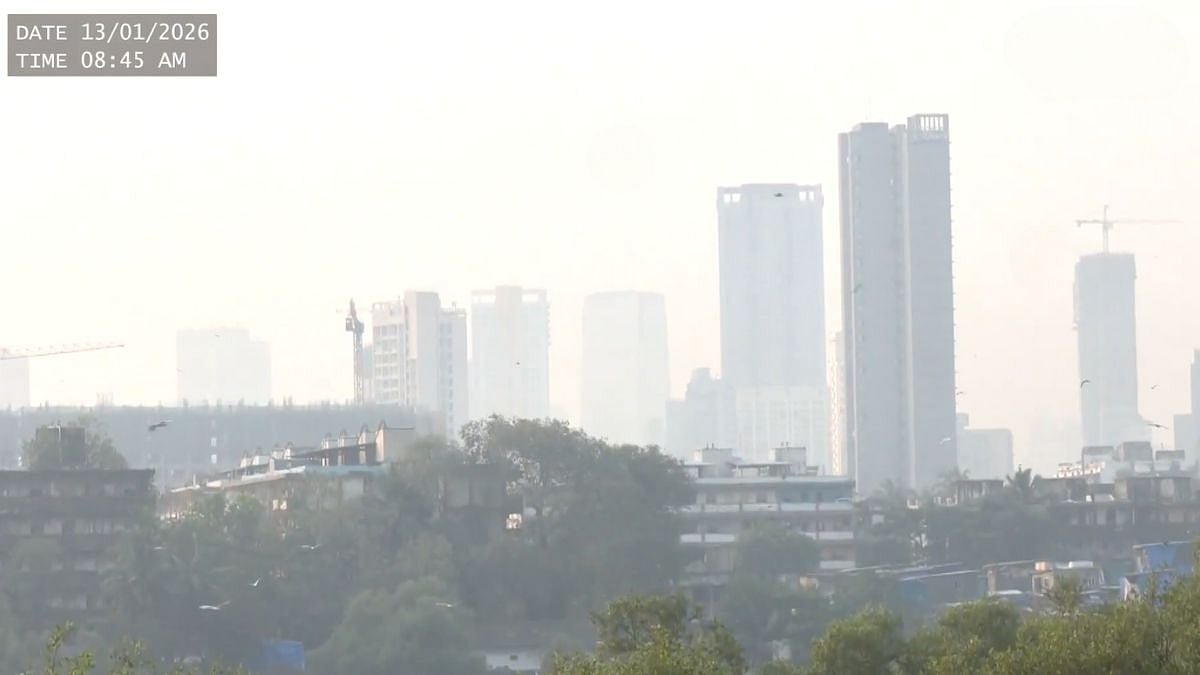
Mumbai: Mumbai residents woke up on Tuesday to what initially appeared to be a perfect winter morning, with clear blue skies, mild winds and a noticeable dip in temperatures. The early hours brought a brief sense of freshness and relief, creating the impression of a pleasant day ahead. However, the calm was short-lived as a thick blanket of smog soon enveloped the city, sharply reducing visibility and once again drawing attention to Mumbai’s worsening air pollution crisis.
Even as weather conditions looked favourable, air quality quickly emerged as the city’s biggest concern. The India Meteorological Department (IMD) had forecast partly cloudy skies for the day, with temperatures expected to range between 19 degrees Celsius and 31 degrees Celsius. Despite this, pollution levels spiked early in the morning, dampening hopes of a clean winter day.
Overall AQI Remains Unhealthy
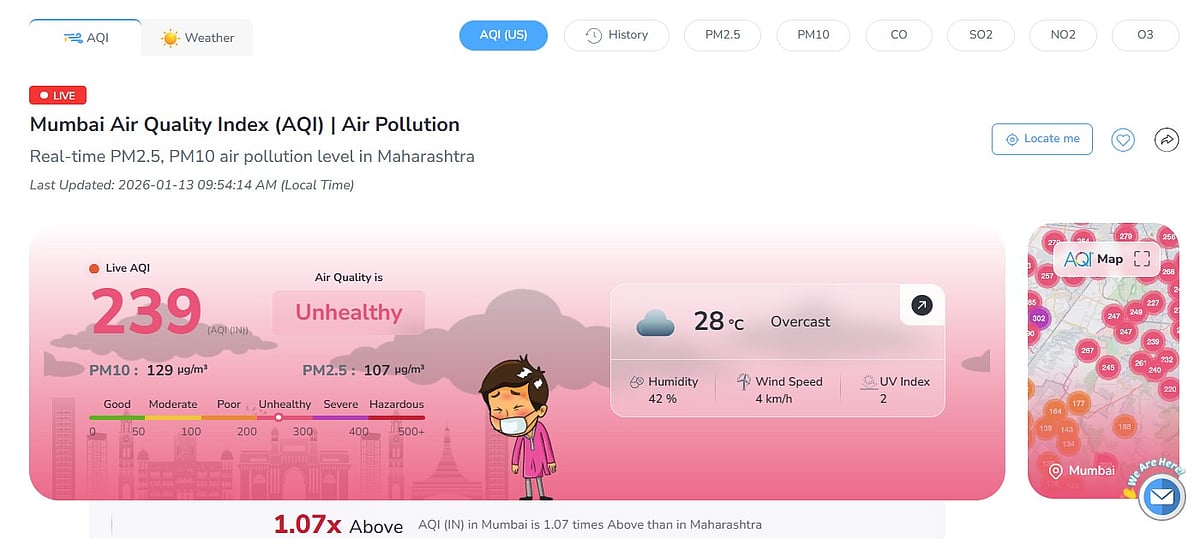
According to data from the air quality monitoring platform AQI.in, Mumbai’s overall Air Quality Index (AQI) touched 239 during the early hours, placing it firmly in the ‘unhealthy’ category. Such levels can pose serious risks to vulnerable groups, including children, senior citizens, and people with respiratory or cardiovascular ailments. These sections of the population were advised to limit outdoor activities as exposure could aggravate existing health conditions.
AQI.in
The persistent pollution is largely being driven by dust and fine particulate matter generated from widespread construction activity across the city. Mumbai is currently witnessing multiple large-scale infrastructure projects, including metro rail corridors, flyovers, coastal road extensions and road-widening works.
In addition to public infrastructure, rapid private real estate development has majorly increased dust emissions. Vehicular pollution, especially during peak traffic hours, has further compounded the problem, making effective air quality management increasingly difficult.
Wadala Remains Major Pollution Hotspot
Several areas emerged as major pollution hotspots on Tuesday. Wadala Truck Terminal recorded a dangerously high AQI of 361, categorised as ‘severe’, posing health risks even to otherwise healthy individuals. Vashi followed closely with an AQI of 337, while Kurla recorded 326. Sewri West and Bandra Kurla Complex (BKC) also reported alarming AQI levels of 309 and 302 respectively, both falling in the severe category.
Suburban areas fared slightly better but were far from safe. Kandivali East and Santacruz East recorded AQI levels of 88 and 98, placing them in the ‘moderate’ category. Meanwhile, Borivali West, Jogeshwari East and Powai reported ‘poor’ air quality, underlining the widespread nature of the pollution problem across the Mumbai Metropolitan Region.
As per standard air quality classifications, AQI values between 0 and 50 are considered ‘good’, 51 to 100 ‘moderate’, 101 to 200 ‘poor’, 201 to 300 ‘unhealthy’, while readings above 300 fall under the ‘severe’ or ‘hazardous’ category.
To get details on exclusive and budget-friendly property deals in Mumbai & surrounding regions, do visit: https://budgetproperties.in/

