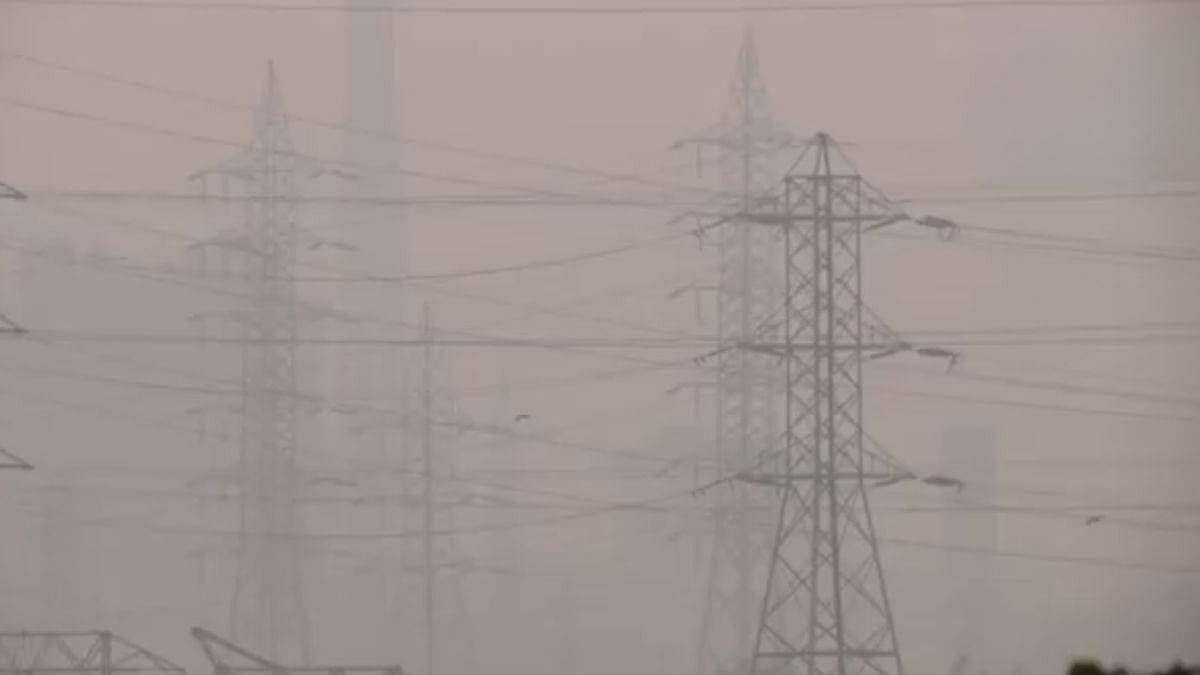
Mumbai: The city woke up to a hazy and unusually warm morning on February 4, but the brief respite did not last long. As the day progressed, a dense layer of smog settled over Mumbai’s skyline, significantly reducing visibility for early-morning commuters and once again spotlighting the persistent air pollution problem that continues to plague the city.
Meteorological data from the Indian Meteorological Department (IMD) indicate that Mumbai will witness partly cloudy skies accompanied by hazy conditions through the day. Temperatures are expected to hover between 21°C and 34°C, a range that signals the gradual transition towards peak summer. Despite the change in weather patterns, air quality levels have largely remained unchanged.
AQI remains unchanged
Mumbai’s overall Air Quality Index (AQI) stood at 280 on Wednesday, categorised as ‘Unhealthy’, almost identical to Tuesday’s reading of 281. Over the past 24 hours, pollution levels fluctuated across the city, with the lowest AQI of 200, still within the ‘Poor’ category, recorded around 7 pm. Prolonged exposure to such conditions can impact even healthy individuals, leading to respiratory discomfort, eye irritation and an increased risk of long-term health complications.
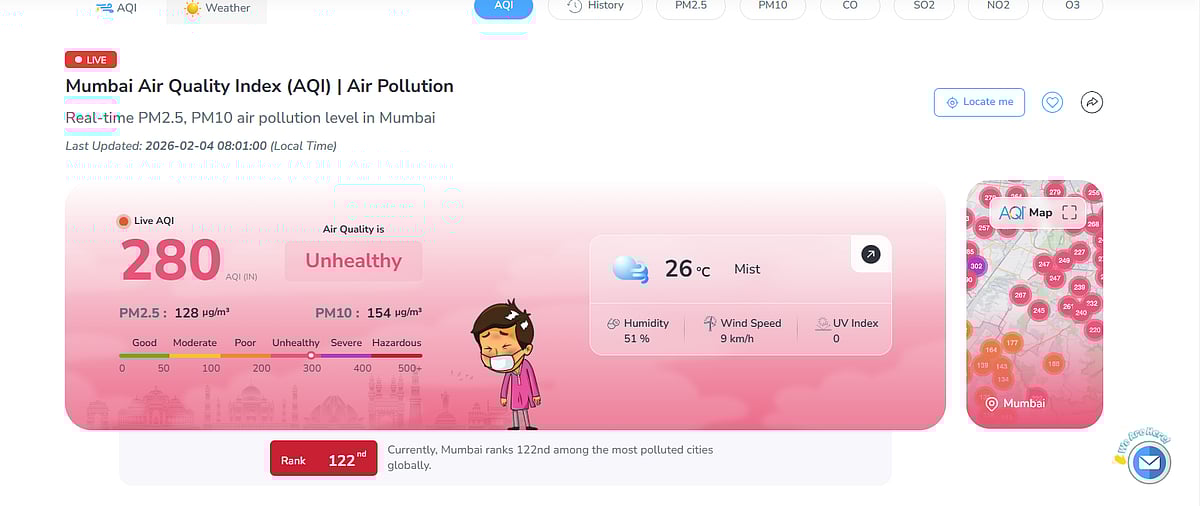
Mumbai's AQI remains largely unchanged | AQI.in
Severe air quality in several pockets
Air quality remained a cause for concern in multiple parts of the city, with several areas reporting ‘Severe’ pollution levels. Sewri West emerged as the most polluted locality, recording an AQI of 368, close to the 400 mark. Other hotspots included Shell Colony (359), Cama Industrial Estate (356), Yagna Nagar (354) and Wadala Truck Terminal (342), reflecting consistently high pollution concentrations in industrial and traffic-heavy zones.
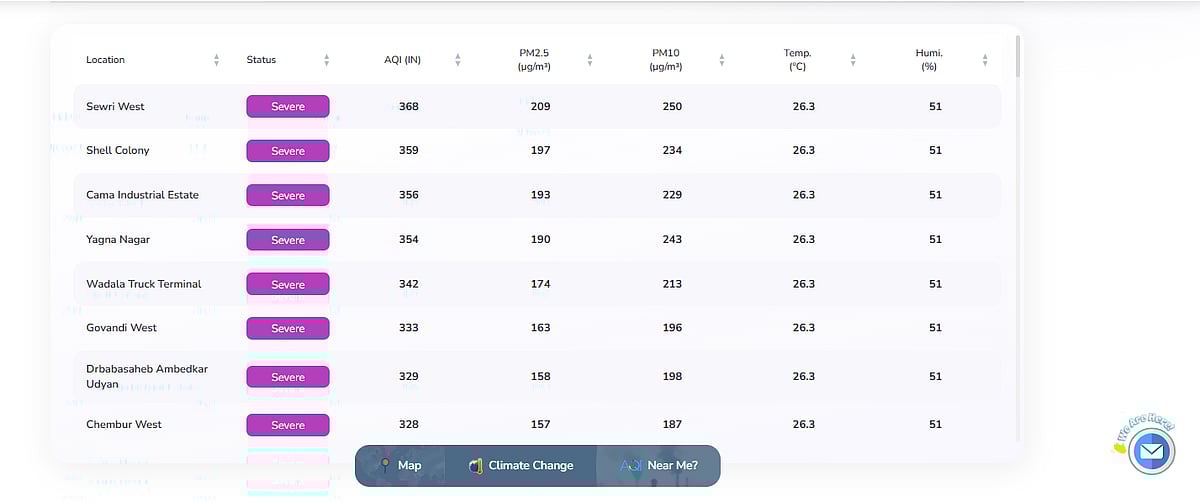
Region-wise AQI | AQI.in
In contrast, relatively lower, though still worrying, AQI levels were observed in a few areas. Shiv Sagar Estate recorded the lowest AQI at 103, followed by Sarvodaya Nagar Station 1 (110), Ambivali (113), Maratha Colony (113) and Dhakoji Sethpada (120), all falling under the ‘Poor’ category.
This marks a reversal from recent trends, when select pockets of Mumbai had briefly reported better air quality. With most regions now slipping back into poor or worse categories, concerns are mounting over the effectiveness of pollution-control measures as the city heads into the hotter month
As per standard air quality classifications, AQI values between 0 and 50 are considered ‘good’, 51 to 100 ‘moderate’, 101 to 200 ‘poor’, 201 to 300 ‘unhealthy’ and levels above 300 are classified as ‘severe’ or ‘hazardous’.
To get details on exclusive and budget-friendly property deals in Mumbai & surrounding regions, do visit: https://budgetproperties.in/

