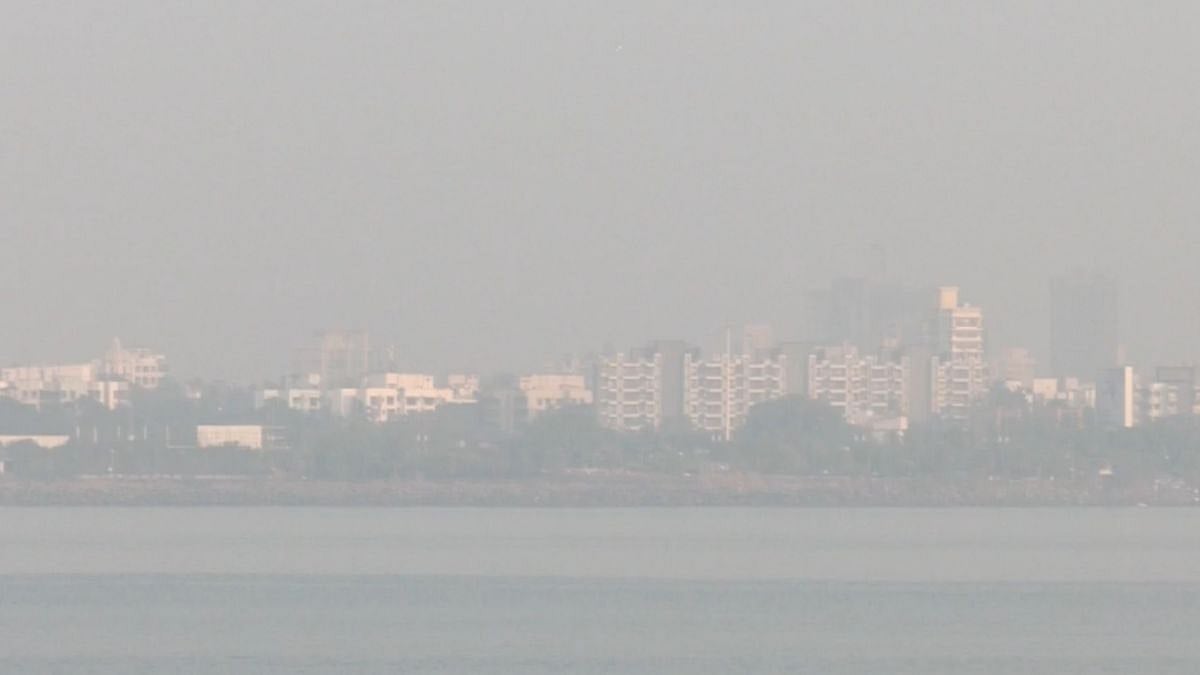
Mumbai: Mumbai greeted residents with a crisp, cool Tuesday morning marked by clear blue skies and gentle winter breezes, offering what seemed like an ideal start to the day. However, a stubborn blanket of haze and smog hangs across the city, signalling a sharp decline in air quality and significantly reduced visibility.
According to the India Meteorological Department (IMD), Mumbai is set to experience clear skies through the day, with maximum temperatures around 31°C and minimum temperatures dropping to about 15°C, typical winter conditions for the city. The mild chill in the air provided early-morning comfort, but the murky skyline revealed that pollution levels had escalated considerably overnight.
This rise in pollution coincides with the rapid pace of infrastructure development underway across Mumbai. A combination of private construction activity and large-scale government projects, including bridges, metro corridors, and road widening works, has majorly contributed to dust suspension and deteriorating air quality.
Overall AQI Remains Unhealthy
AQI.in reported Mumbai’s overall Air Quality Index (AQI) at 256 on Tuesday morning, categorising it as ‘unhealthy.’ The deterioration is notable, especially compared to the moderate AQI values recorded in the first half of November. Many residents complained of eye irritation, throat discomfort, and a faint burning smell in the air, common symptoms of elevated PM2.5 levels. The city’s skyline appeared blurred from several vantage points, further confirming the extent of pollution.
Wadala, Colaba & Worli Report Severe Air Quality
Several locations recorded alarming readings. Wadala Truck Terminal registered an AQI of 321, placing it firmly in the severe category. Deonar (306) and Worli (305) followed close behind, while Colaba (303) and Govandi (303) also reported severe pollution levels. These areas, known for industrial activity and heavy traffic, have consistently struggled with high particulate concentrations.
Suburban regions fared slightly better but still remained in the poor-to-unhealthy brackets. Kandivali East logged an AQI of 103, Powai 150, while Santacruz (167), Malad West (190), and Bhandup West (193) stayed firmly in the poor zone. Despite variations, much of Mumbai remained blanketed in haze, indicating polluted air across the metropolitan area.
For perspective, AQI levels between 0–50 are considered Good, 51–100 Moderate, 101–150 Poor, 151–200 Unhealthy, and anything above 200 falls under the Severe or Hazardous category.
To get details on exclusive and budget-friendly property deals in Mumbai & surrounding regions, do visit: https://budgetproperties.in/

