Mumbai, June 22: In a marathon and heated debate on Mumbai's worsening water crisis, corporators across party lines cornered the BMC administration over shrinking lake levels and demanded an urgent contingency plan.
The civic body admitted that despite rainfall being forecast over the next three days, Mumbai's water security remains heavily dependent on a strong monsoon revival, with only substantial rainfall in July capable of bridging June's deficit.
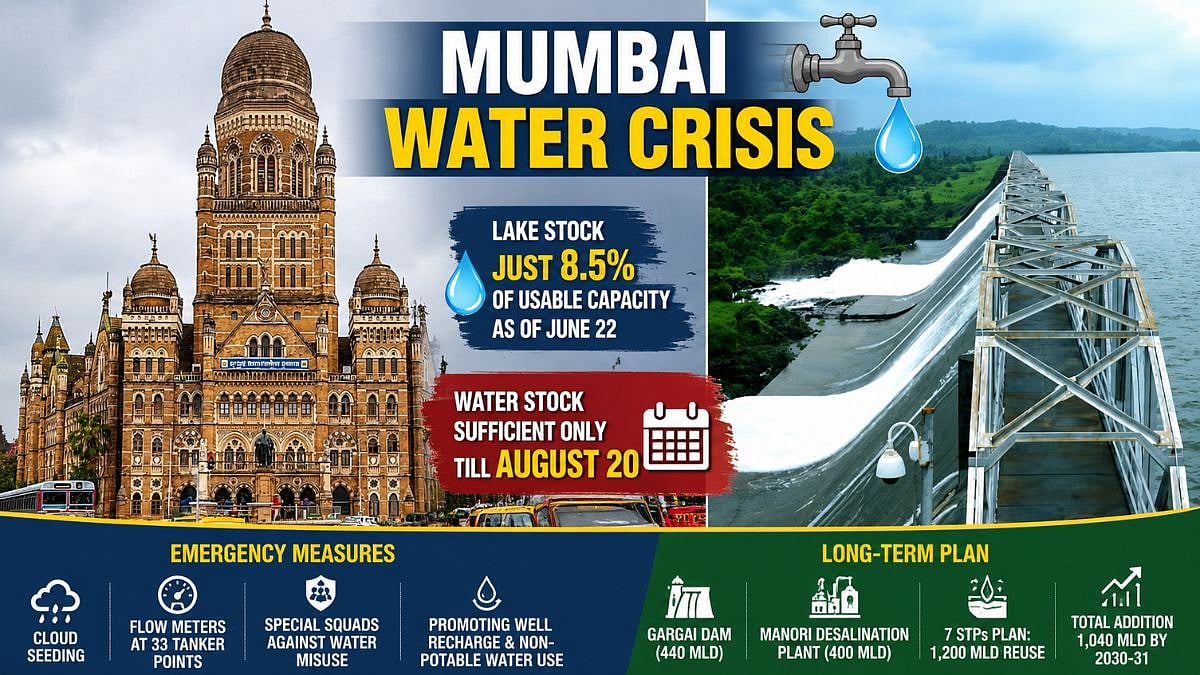
As emergency measures, the BMC is pursuing cloud seeding, installing flow meters at all 33 tanker filling points to curb misuse, deploying special squads against unauthorised water consumption, and promoting well recharge and non-potable water use in housing societies to ease pressure on the city's drinking water reserves.
The debate was initiated by Leader of the House Ganesh Khankar, who flagged the alarming state of Mumbai's water reserves, noting that the seven lakes supplying the city held just 8.5% of their usable stock as of June 22.
Around 35 to 40 corporators across party lines participated in the discussion for five hours, warning that elected representatives would ultimately bear the brunt of public anger if water shortages worsen.
Corporators Raise Concerns Over Water Reserves
Khankar called for the desilting of Vihar and Tulsi lakes, claiming it could increase their storage capacity by 20–25%. He also alleged that several traditional wells in Mumbai have been lost to redevelopment projects and demanded an audit of buildings that secured occupancy certificates on the promise of rainwater harvesting systems, alleging that many have failed to implement or maintain them.
The debate saw participation from several senior corporators, including Opposition Leader Kishori Pednekar, Shiv Sena group leader Amey Ghole, Congress group leader Ashraf Azmi and members from across party lines, reflecting broad concern over Mumbai's worsening water situation.
Replying to the corporators, Additional Municipal Commissioner (Projects) Abhijeet Bangar acknowledged the gravity of the situation, stating that Mumbai can emerge from the crisis only if July receives substantial rainfall to offset June's deficit. "The current situation is challenging. The available water stock is sufficient only till August 20," he said.
BMC Details Immediate Response Measures
Bangar noted that while Mumbai's daily water demand is around 4,600 million litres daily (MLD), the civic body currently supplies about 4,000 MLD, leaving a gap of 500-600 MLD. He said low levels in the master balancing reservoirs have particularly affected water pressure in tail-end localities and chawl areas.
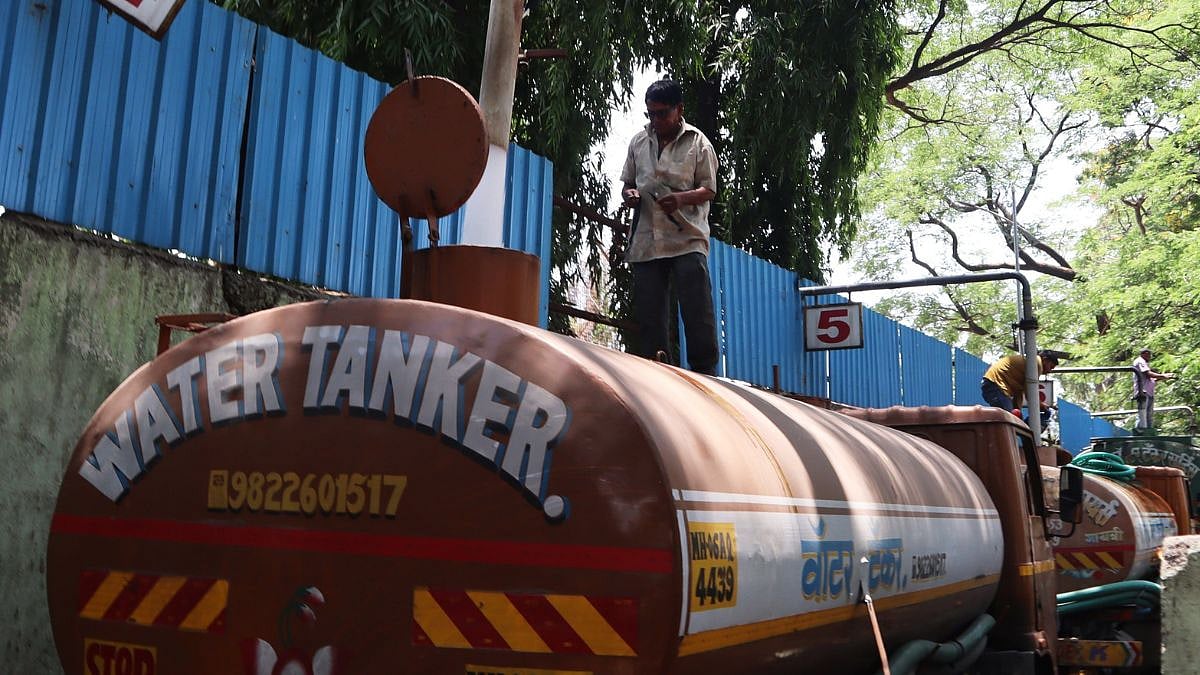
To mitigate the impact, the BMC has prioritised tanker supply to affected neighbourhoods wherever necessary. He also said special squads have been deployed to check the use of potable water at construction sites, swimming pools and vehicle service centres, with penalties and action being taken against violators.
Additionally, the BMC has identified wells across wards and plans to revive them and connect them to nearby housing societies for non-potable uses such as gardening and flushing, thereby conserving treated drinking water.
Long-Term Water Security Projects Planned
Outlining Mumbai’s long-term water security plan, Bangar said the city aims to add about 840 MLD by 2030, mainly through the Gargai Dam (440 MLD) and Manori desalination project (400 MLD), with Gargai expected to begin after clearances in the coming months and be completed by 2029, subject to rehabilitation and large-scale environmental mitigation.
While all clearances required for the desalination plant have been received, the work will start immediately after soil testing. The project is expected to be completed by 2030, with 200 MLD in the first phase and 400 MLD within a year thereafter. He said another 200 MLD from the Versova desalination plant is being tendered, taking the total augmentation to about 1,040 MLD by 2030–31.
Also Watch:
He also highlighted a seven sewage treatment plant-based reuse plan, including 2,400 MLD sewage treatment capacity, with 1,200 MLD treated for non-potable use, supported by a distribution tunnel linking major STPs, along with stricter enforcement of recycled water use.
To get details on exclusive and budget-friendly property deals in Mumbai & surrounding regions, do visit: https://budgetproperties.in/

