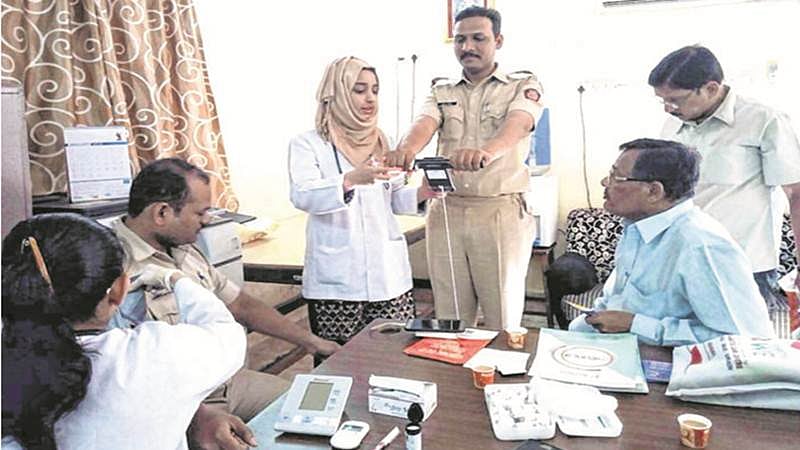
Mumbai: A team of Dr Gadge’s Diabetes Care Centre led by Dr Pradeep Gadge, Mumbai’s leading Diabetologist organised a diabetes awareness and check up at Goregaon police station on R-Day. More than half of police from Goregaon police station have unhealthy lifestyle, and lack of exercise and erratic dietary timings could be creating more chances of lifestyle diseases like diabetes, blood pressure, etc.
The team organised screening for blood glucose, body weight, height, blood pressure, BMI index and body fat inspection. Total 62 policemen were examined, out of which 56 were male and 6 were female. All 6 female were obese (BMI >25kg/m2). Out of 56 male 42 were obese (BMI >25 KG/m2) and 23 policemen were below the age of 40yrs.
Ten were known hypertensive. Almost 32 policemen gave intake of alcohol/tobacco occasionally which was stress related. Among them 8 were known Diabetic. From the group of 8 policemen who were known diabetic, among them only 3 were having normal blood sugars level. Rest 5 were not controlled due to poor dietary compliance and hectic schedule
Dr Pradeep Gadge, a leading Diabetologist, Gadge Diabetes Centre says, “Most of the policemen are mentally stressed and they do not get adequate time for their own health. Dietary timings are erratic due to long duty hours & work pressure. No time for adequate sleep or exercise. All these are leading to increase in the chances of lifestyle diseases.”
“Lifestyle changes, such as eating a healthy diet and becoming more active can lead to improvements in many of the clinical factors that contribute to heart disease, like cholesterol levels, glucose levels and blood pressure. To accomplish this, policemen need to take a more active role in imbibing healthy lifestyle behaviors and encouraging their near ones to eat healthy foods and to exercise more. One should also know to manage stress. It is not the stress that kills, but the reaction to it kills more often,” adds Dr Gadge.
