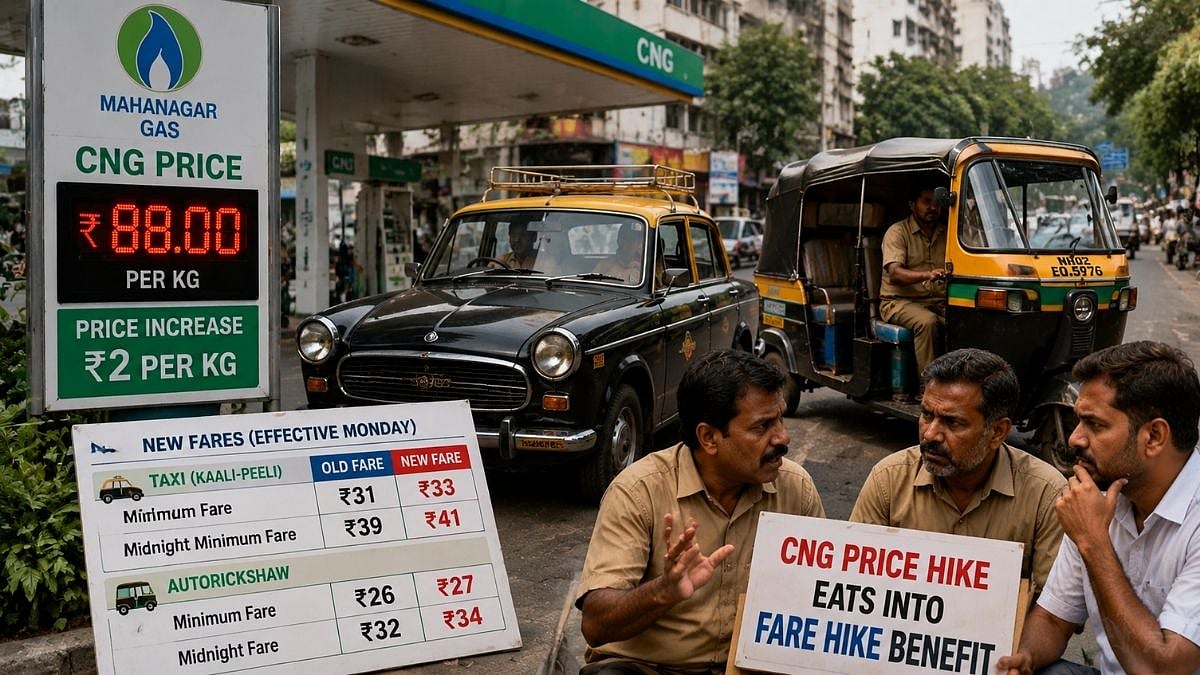
Mumbai, September 1, 2026: Mumbai's taxi and autorickshaw drivers woke up to higher fares on Monday, but the relief was short-lived. On the same day, Mahanagar Gas Limited (MGL) raised the price of CNG by Rs 2 per kg, taking the rate to Rs 88 per kg. Drivers say the simultaneous fuel price hike has significantly reduced the financial benefit they had expected from the revised fares.
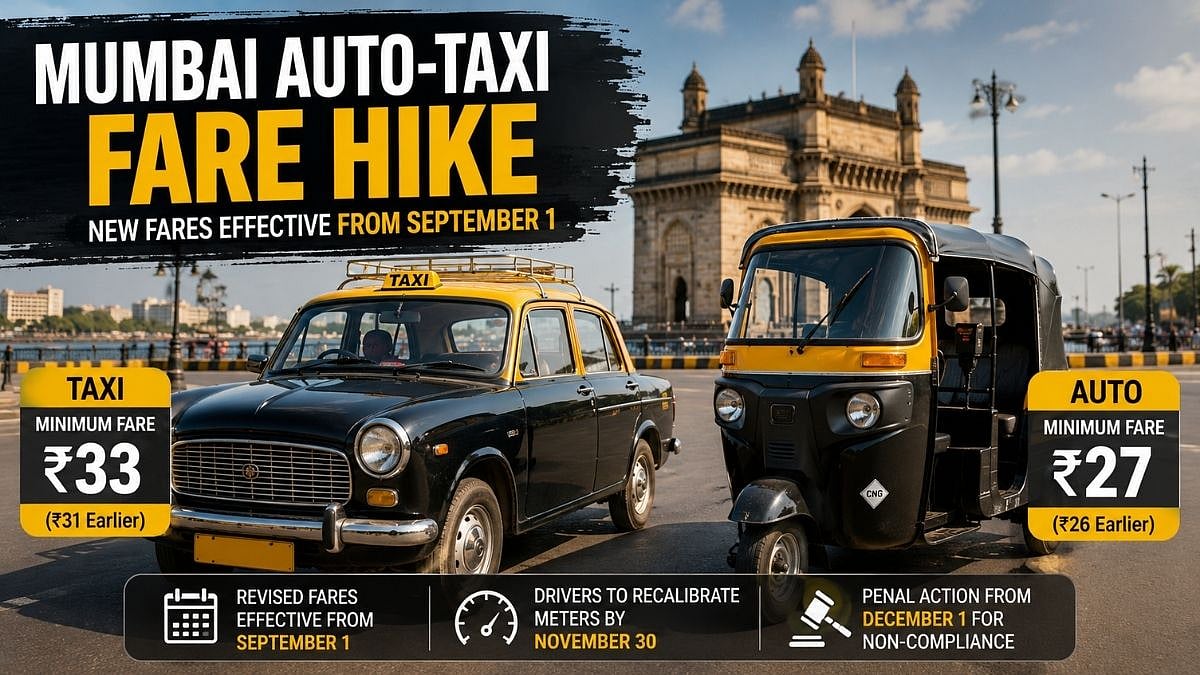
Under the new fare structure, the minimum fare for Mumbai's kaali-peeli taxis has increased from Rs 31 to Rs 33, while the midnight minimum fare has gone up from Rs 39 to Rs 41.
For autorickshaws, the minimum fare has risen from Rs 26 to Rs 27 and the midnight fare from Rs 32 to Rs 34. While the fare revision was expected to provide some relief amid rising operating costs, drivers said the higher CNG price has added to their daily expenses.
Drivers Say Fuel Hike Erodes Relief
“Fare revision may look like a relief, but the CNG price hike has taken away most of the benefit,” said Umesh Rajbhar, an autorickshaw driver. “Our daily fuel expenses have increased significantly. After paying for CNG, vehicle maintenance and other expenses, there is hardly any improvement in our earnings.”
Another driver, Md Iqbal, said auto drivers had expected better earnings after the fare revision. “But the simultaneous increase in CNG prices has disappointed us. Running an auto has become expensive. The revised fare will not make much difference unless fuel prices are also controlled,” he said.
Taxi driver Munna Yadav echoed the concern. “The fare hike is necessary, but increasing CNG prices on the same day has reduced its benefit. Fuel, maintenance and repair costs are constantly rising. At the end of the day, drivers are left with very little actual profit,” he said.
Unions Call Fare Hike Inadequate
Auto unions said the increase was too small to offset rising expenses. Thampi Kurien, president of the Auto-Rickshaw Union, said a major part of the Rs 1.08-per-km fare increase was already linked to inflation, while the fresh CNG hike had further increased operating costs.
“In reality, drivers are unlikely to see any substantial increase in profits. The fare revision itself was delayed by nearly three months, causing additional losses to the fraternity,” he said.
Auto & Taxi unions, too, described the revised rates as inadequate. Shashank Rao of the Taxi Union said drivers had demanded at least a Rs 3 increase in fares.
“It is surprising that fares in Pune are higher despite Mumbai having a much higher cost of living. We had opposed this decision, but it has now been implemented,” he said.
Also Watch:
For drivers, therefore, Monday's twin revisions have created a familiar problem: higher fares on paper, but little improvement in actual earnings once the rising cost of fuel and vehicle maintenance is taken into account.
To get details on exclusive and budget-friendly property deals in Mumbai & surrounding regions, do visit: https://budgetproperties.in/

