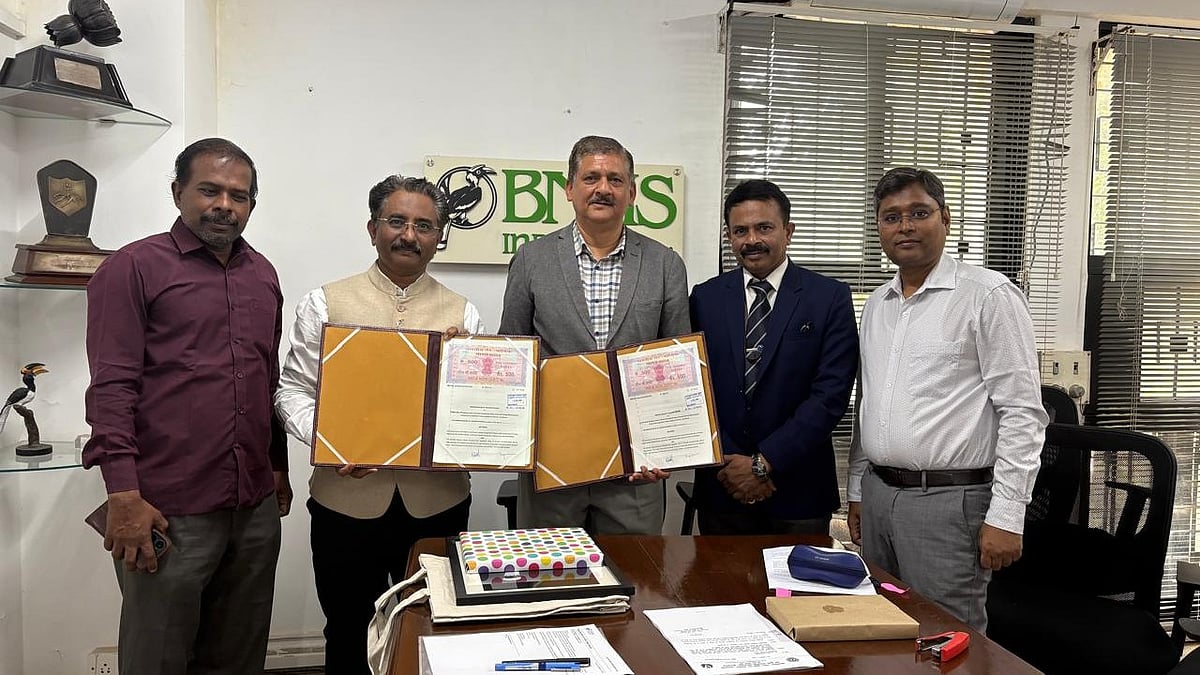
The Bombay Natural History Society (BNHS) signed a Memorandum of Understanding (MoU) with the chief wildlife warden, Jharkhand in Mumbai on Thursday to strengthen the vulture conservation breeding programme for two critically endangered Gyps vulture species—the Oriental White-backed Vulture and the Long-billed Vulture.
Five-Year Collaboration
The five-year collaboration, commencing from the financial year 2025–26, aims to support scientific breeding, monitoring, and long-term conservation of these key scavenger species, marking a significant step towards strengthening biodiversity conservation efforts in the state.
MoU Signed in Mumbai
Principal chief conservator of forests, wildlife, and chief wildlife warden, Paritosh Upadhyay, and director of BNHS Kishor Rithe signed the MoU at Hornbill House, the BNHS headquarter in Mumbai. Chief conservator of forests S R Natesha, divisional forest officer Awanish Kumar Chaudhary from the forest department of Jharkhand, and Dr Sathiyaselvam, deputy director and senior scientist with BNHS, were present at the occasion.
Ecological Role of Vultures
Vultures play a critical ecological role by disposing of animal carcasses and preventing the spread of disease. BNHS is pioneering Vulture Captive Breeding Programmes and has established four such dedicated centres in India. BNHS also supports zoos to undertake conservation breeding. The VCBC in Jharkhand would be the newest addition in the journey of vulture conservation in India, said BNHS.
Favourable Conditions in Jharkhand
"The agriculture sector in Jharkhand is still dominated by organic farming. The people have eco-friendly lifestyles. These features are certainly favorable factors to welcome vultures, once bred in captivity," said Rithe.
Also Watch:
Technical Support Framework
The breeding stock of vultures would be brought to Muta from BNHS’s established breeding centers in India. Under the MoU, the department of forests, environment and climate change, Government of Jharkhand, will implement the programme in collaboration with BNHS that will provide technical support, including training to field and veterinary staff, health monitoring of vultures, maintenance of biological and pedigree databases, and guidance on best practices for conservation breeding and management.
Monitoring and Oversight
A dedicated technical sub-committee will supervise day-to-day operation and ensure smooth implementation of project activities. This step reflects Jharkhand’s strong commitment to safeguarding threatened wildlife species and contributes meaningfully to national efforts aimed at reviving vulture populations and maintaining ecological balance.
Critically Endangered: Programme focuses on the Oriental White-backed and Long-billed Vultures.
Nature’s Scavengers: Vultures prevent disease spread by disposing of animal carcasses.
The Roadmap: BNHS will provide technical expertise and breeding stock from other Indian centers starting in FY 2025–26.
To get details on exclusive and budget-friendly property deals in Mumbai & surrounding regions, do visit: https://budgetproperties.in/

