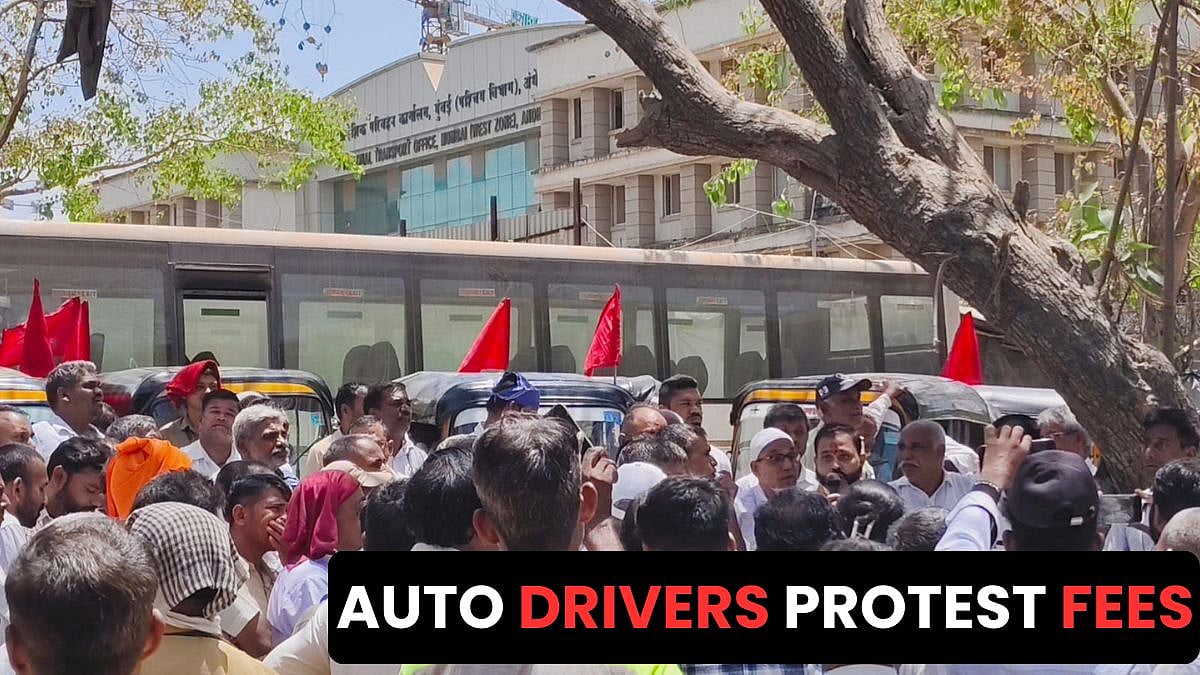
Autorickshaw drivers and owners gathered in large numbers outside the Andheri Regional Transport Office, RTO, on Tuesday morning, voicing strong opposition to mandatory registration under the state welfare board. The protest, which began around 11 am, saw participation from multiple unions, with drivers raising concerns over rising financial burdens and alleged coercion by authorities.
Union representatives claimed the Maharashtra government implemented the decision without adequate consultation with stakeholders, leading to widespread dissatisfaction across the sector.
Fee structure sparks outrage
At the centre of the protest is the requirement for drivers to pay Rs 500 as a registration fee and Rs 300 annually, taking the total to Rs 800. Protesters argued that the amount contradicts the very purpose of a welfare board, which is meant to support workers rather than impose additional costs.
Union leader Shashank Rao criticised the fee as excessive, pointing out that several other welfare boards charge a nominal registration amount. He said autorickshaw drivers already bear multiple expenses, including permit fees, fuel costs, and maintenance, making the additional charge difficult to justify.
Allegations of pressure tactics
Adding to the unrest are allegations that RTO officials are informally pressuring drivers to register by delaying routine services. Protesters claimed that fitness certificates, permit renewals, and other vehicle related approvals are being held up for those who have not enrolled in the scheme.
Union leaders described these practices as coercive, stating that no driver should be forced to pay a fee to access essential services. They warned that such measures could disrupt livelihoods, especially for drivers who depend on daily earnings.
Questions over fund utilisation
Unions also raised concerns about the scale of funds that could be collected through the scheme. With an estimated 15 lakh autorickshaw drivers across Maharashtra, representatives suggested the government could generate around Rs 120 crore annually.
“This raises serious questions about transparency and intent,” Rao said, questioning whether the funds would truly be used for drivers’ welfare.
Wider participation expected
The April 8 protest is expected to see growing support from auto unions across the state, with Mumbai witnessing one of the largest turnouts. Drivers have indicated that further action could follow if their demands are not addressed.
For many in the city, the protest reflects deeper anxieties around rising costs and the struggle to sustain livelihoods in an increasingly regulated transport sector.

