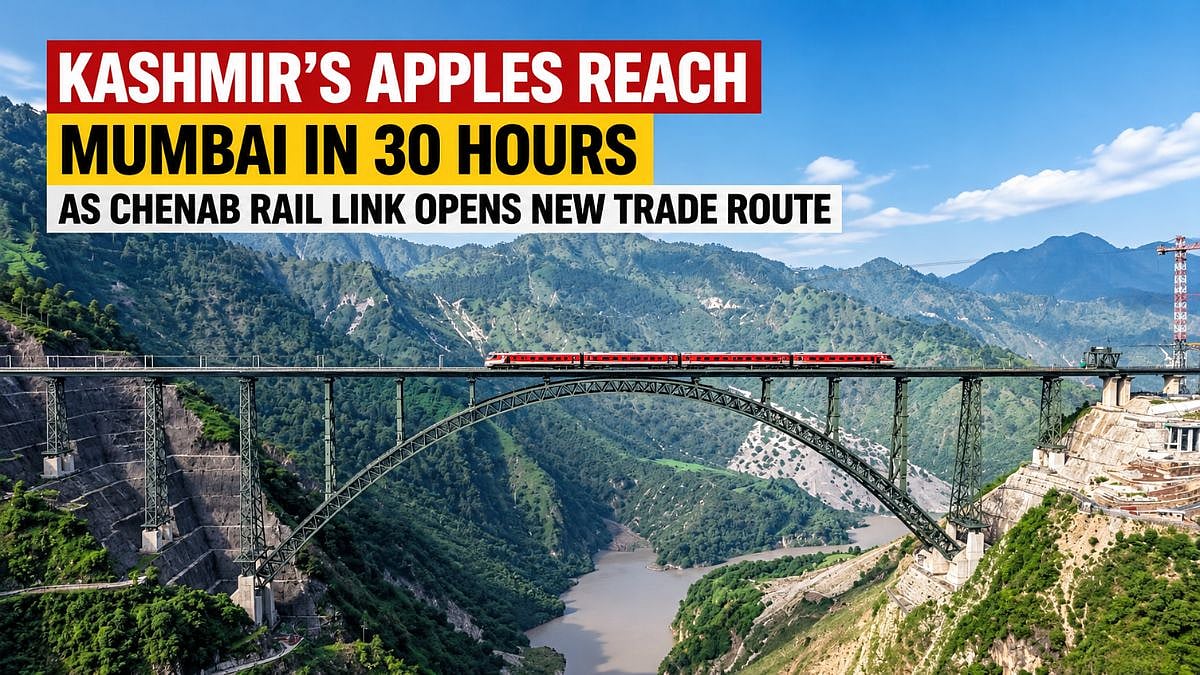
Mumbai, October 10, 2026: Kashmir’s fruit trade with Mumbai is getting a faster rail connection, with a parcel van carrying 24 tonnes of cherries reaching Bandra from Katra in around 30 hours.
The service, which began on June 3, 2025, highlights how the Udhampur-Srinagar-Baramulla Rail Link (USBRL), including the Chenab Bridge, could reduce transportation time and costs for businesses moving perishable goods between the Valley and Maharashtra.
Rail transport expands Kashmir’s fruit trade
The impact extends beyond cherries. Since September 15, 2025, more than 20,000 tonnes of apples have been transported by rail from Kashmir, according to the figures provided.
A scheduled Joint Parcel Product-Rapid Cargo Service (JPP-RCS) between Budgam and Adarsh Nagar in Delhi, launched on September 13, has helped establish a regular rail-based supply chain for the Valley’s apple trade.
While the scheduled service currently connects Kashmir with Delhi, the cherry movement to Bandra has demonstrated the potential of rail transport for linking Kashmir’s produce with Mumbai’s wholesale markets. Faster movement is particularly important for cherries and apples, which can lose value if delayed in transit.
Faster deliveries, lower transport costs
The shift from road to rail could make a difference to traders dealing in seasonal fruit. The supplied figures show that the journey to Delhi, which earlier took up to 48 hours by road, now takes around 23 hours by rail. Freight costs have fallen by an estimated 50–60%, while spoilage has reportedly declined by around 50%.
For Mumbai’s fruit traders, such improvements could mean more predictable deliveries and better management of perishable stock. However, the benefits will depend on the availability of regular services, parcel capacity and the arrangements for moving consignments from railway stations to wholesale markets.
Kashmir’s walnuts, saffron, carpets and shawls are among the other products that could benefit from improved rail-based access to markets outside the region.
Mumbai also stands to gain from cheaper supplies
The trade is not a one-way movement. The railway link is also helping bring goods into Kashmir at lower transportation costs, with potential benefits for businesses supplying construction materials and other commodities.
More than 1.5 lakh tonnes of cement have been transported to the Valley by rail since the first consignment arrived at Anantnag from Punjab on August 9, 2025. Cement prices have declined from around Rs 520–530 per bag to Rs 460–470, while the reported rail freight cost is about Rs 10 per bag, compared with Rs 85–90 by road.
For Mumbai-based logistics companies and traders, the larger opportunity lies in building reliable supply chains that connect Maharashtra’s markets with Kashmir’s agricultural and handicraft sectors. The rail corridor could support movement in both directions, although regular commercial links and terminal arrangements will determine the scale of future trade.
Chenab Bridge’s economic significance
The opening of the 63-km Katra-Sangaldan section on June 6, 2025, marked a major step in connecting Kashmir with the national railway network. The section includes the 359-metre-high Chenab Bridge, the world’s highest railway arch bridge.
The rail link also provides an alternative to National Highway 44, which is vulnerable to landslides and weather-related disruptions.
Also Watch:

For Mumbai, the significance is not simply the arrival of Kashmiri fruit. It is the possibility of a more dependable transport link between two distant markets, reducing the time and cost involved in moving goods. The next test will be whether the early movements translate into regular, higher-volume freight services that benefit growers, traders and consumers alike.
To get details on exclusive and budget-friendly property deals in Mumbai & surrounding regions, do visit: https://budgetproperties.in/

