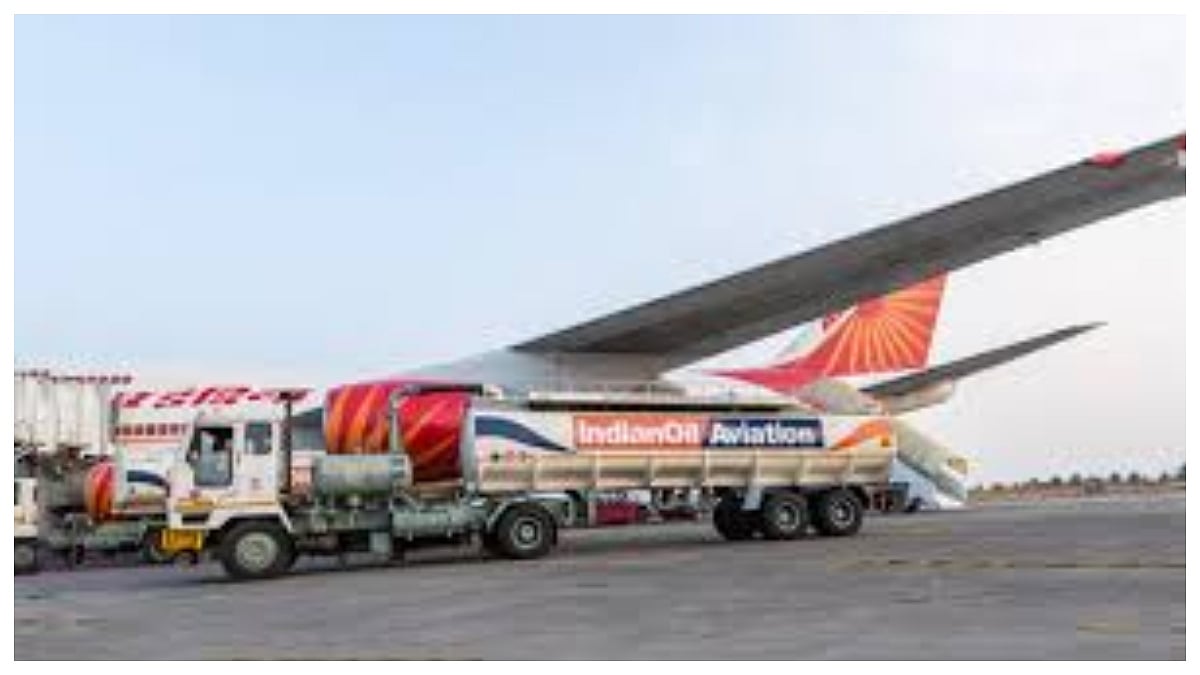
The Ministry of Petroleum and Natural Gas (MoPNG) has permitted the blending of synthesised hydrocarbons into aviation turbine fuel (ATF). The move cleared the legal hurdle for the large-scale adoption of sustainable aviation fuel (SAF) as the global aviation industry is actively pushing for decarbonising the skies.
Amendment Details
The union government, on Friday, amended the Aviation Turbine Fuel (Regulation of Marketing) Order, 2001, and recognised man-made and synthetic hydrocarbons as legitimate components of ATF. The amendment, issued under the Essential Commodities Act, 1955, updated the standards for jet fuel to include advanced, low-emission alternatives.
Under the latest amendment, the union government defines ATF as a mixture of hydrocarbons conforming or its blend with synthesised hydrocarbons. The order also aligned search and seizure protocols with the Bharatiya Nagarik Suraksha Sanhita, 2023, replacing legacy colonial-era legal references.

Notably, India imports nearly 87% of its crude oil demand. This policy shift is designed to address the country's energy security and environmental commitments. SAF, which is often derived from agricultural waste, used cooking oil, or ethanol-linked pathways, can significantly reduce the carbon footprint of flight operations without requiring modifications to existing aircraft engines. The move also prepares India for the International Civil Aviation Organisation’s ‘carbon offsetting and reduction scheme for international aviation framework’, which becomes mandatory for most countries in 2027.
India has opted for a phased approach for SAF blending for international flights initially, aiming for 1% by 2027, 2% for 2028 and 5% for 2030. Currently, Bharat Petroleum (BPCL) plans to commission its first SAF production facility by the end of 2026, while Air India and IOCL have entered into strategic MoUs to secure future supplies.

